by Nepal Yoga Home | Sep 29, 2026 | Yoga
You stand up after a long day at your desk, and your hips feel like rusty hinges. Yoga for hip mobility gives you a simple way to loosen them without a gym or special equipment.
This guide covers 20 beginner-friendly poses, grouped by how you sit, stand or lie down. Each pose comes with an easy option, so you can start today with yoga for hip mobility even if you have never touched a mat.
We teach these poses to beginners every week at our yoga retreat in Nepal. If you want to go deeper later, our 200-hour yoga teacher training teaches alignment and safe practice in detail.
What is Hip Mobility, and Why Do Hips Get Tight?
Hip mobility is how freely your hip joint moves through its range. The hip is a ball-and-socket joint, so it bends, extends, rotates and swings out to the side.
Hours of sitting shorten the hip flexors and switch off the glutes. Heavy packs, long stair descents and simple aging add more strain. If your team sits all day, our corporate yoga sessions bring relief to the office.
How Does Yoga for Hip Mobility Work Over Time?
Yoga for hip mobility works because it stretches tight muscles, strengthens weak ones and teaches you to move the joint in every direction. You hold each shape long enough for the muscle to soften, and you breathe slowly so your body stops guarding the joint.
Most beginners feel looser within a few weeks, though results vary from person to person. Steady practice beats one long session every month.
Ground Rules Before You Start
- Warm up with two minutes of easy walking or arm circles.
- Move slowly and never force a stretch.
- Hold each pose for five to eight breaths, about 30 to 60 seconds.
- Practise both sides.
- Talk to your doctor first if you have a hip replacement, an injury, ongoing pain or a pregnancy.
If tightness keeps coming back, our therapeutic yoga retreat offers gentle, guided work.
Part 1: Seven Seated and Kneeling Poses
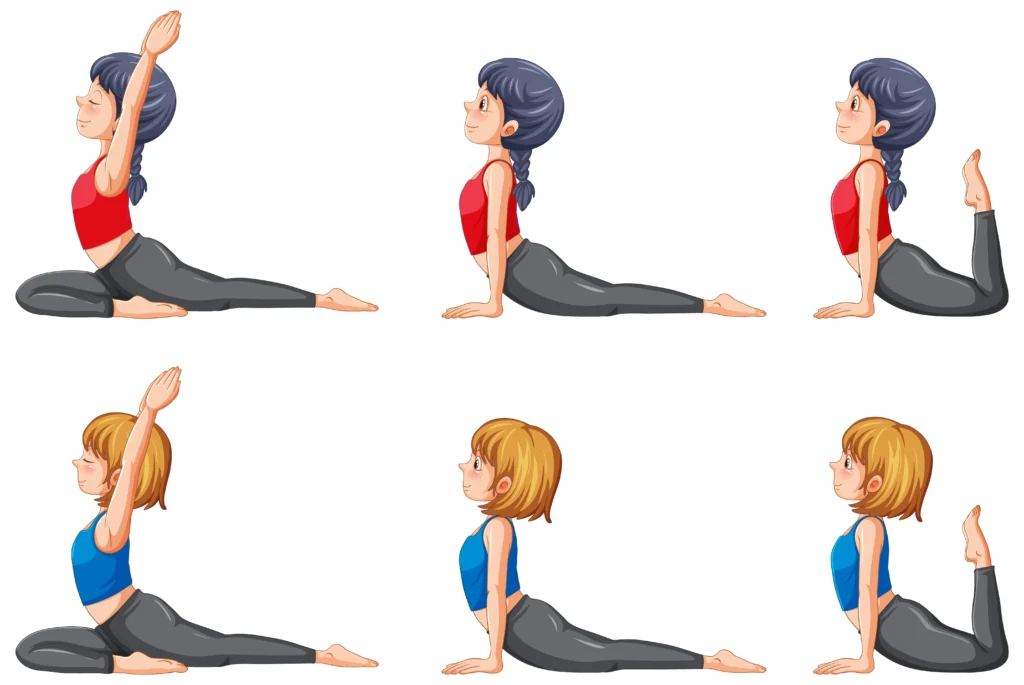
Seated poses make the best start to yoga for hip mobility because the floor supports your weight.
| Pose |
What it opens |
Beginner option |
| Easy Pose |
Outer hips |
Sit on a folded blanket |
| Butterfly |
Inner thighs |
Prop your knees with cushions |
| Fire Log |
Outer hips and glutes |
Sit higher on a block |
| Hero Pose |
Quads and hip flexors |
Place a block under your seat |
| Child’s Pose |
Hips and lower back |
Widen your knees |
| Cow Face Legs |
Outer hips |
Sit on a cushion and stack knees loosely |
| Wide-Angle Fold |
Inner thighs and hamstrings |
Bend your knees slightly |
Our yoga teachers show each of these shapes in class, so you can see the alignment before you try it.
Part 2: Seven Lunges and Standing Poses
Standing poses build strength around the joint, which helps your hips hold the new range.
| Pose |
What it opens |
Beginner option |
| Low Lunge |
Hip flexors |
Rest your back knee on a towel |
| Lizard |
Deep hips and groin |
Stay on your hands |
| Warrior II |
Hip rotation |
Shorten your stance |
| Goddess |
Inner thighs and glutes |
Bend your knees less |
| Garland |
Ankles, hips and groin |
Put a blanket under your heels |
| Tree |
Hip rotation and balance |
Use a wall for support |
| Standing Figure-Four |
Glutes and outer hips |
Hold a chair |
If you enjoy moving between lunges, try Ashtanga Vinyasa yoga in Nepal for a flowing style.
Part 3: Six Floor and Reclined Poses
Lying down lets your muscles let go, so stay longer in these shapes.
| Pose |
What it opens |
Beginner option |
| Resting Pigeon |
Glutes and outer hips |
Keep your front shin angled and sit on a cushion |
| Reclined Figure-Four |
Glutes and deep hip muscles |
Hold behind your thigh |
| Happy Baby |
Inner hips and groin |
Hold your shins |
| Reclined Butterfly |
Inner thighs |
Prop your knees with pillows |
| Bridge |
Hip extension and glutes |
Lift only halfway |
| Reclined Twist |
Hips and lower back |
Support your knees with a cushion |
Breathe and Rest Between Poses
Your breath sets the pace of yoga for hip mobility. Inhale to lengthen your spine, then exhale as you sink a little deeper. When you hold your breath, your muscles tense and the stretch stops working.
Finish every session with three to five minutes of rest on your back. To make that rest deeper, explore our yoga nidra training or the breathing practices in our pranayama and meditation retreat.
Which Poses Fit Your Life?
Pick the poses that match your daily habits.
A 10-Minute Hip Mobility Routine
Short sessions beat long ones you skip. Follow this order for a quick round of yoga for hip mobility:
- Easy Pose, 1 minute
- Butterfly, 1 minute
- Low Lunge, 1 minute per side
- Garland, 1 minute
- Reclined Figure-Four, 1 minute per side
- Bridge, 1 minute
- Reclined Twist, 1 minute per side
A Four-Week Plan
Build slowly. This plan for yoga for hip mobility keeps the load light at first.
| Week |
Days |
Focus |
| 1 |
3 |
Part 1 poses, one round each |
| 2 |
3 to 4 |
Add Part 3 poses |
| 3 |
4 |
Add lunges and standing poses |
| 4 |
5 |
Full 10-minute routine |
Mistakes to Avoid

- Forcing your knee down in a rotation pose. Let the hip do the work.
- Bouncing in a stretch. Stay still and let the muscle soften.
- Ignoring pain. Sharp pain, pinching or numbness means you stop and see a professional.
Practise With Guidance at Nepal Yoga Home
Reading helps, but a teacher in the room helps more. You can join a one-week yoga class in Nepal or settle in for a one-month yoga retreat in Kathmandu and make yoga for hip mobility a daily habit. Check our services and facilities for details on rooms and meals, then book your stay when you are ready.
Frequently Asked Questions
What is the best yoga for hip mobility for beginners?
Low Lunge, Butterfly, Reclined Figure-Four and Child’s Pose make a gentle start. They ask for little balance and let you control how deep you go. Begin with the 10-minute routine above and add poses as your hips loosen.
How often should I practise?
Three to five short sessions a week work well at the start. Once your hips feel comfortable, move to ten minutes every day. Short, regular practice helps more than one long class on the weekend.
Can yoga help tight hips from sitting all day?
Yes, lunges and reclined poses ease the stiffness that long sitting creates. Stand up and walk every hour as well, because movement breaks matter as much as stretching. Regular practice counts for more than how deep you go.
Is discomfort normal in hip-opening poses?
A mild stretch is normal, but sharp pain, pinching or numbness is not. Ease out of the pose slowly and rest for a minute. If the feeling returns, check with a doctor or physiotherapist before you continue.
Do I need a mat or props?
A mat helps, but you can practise on a carpet or a towel. A folded blanket or cushion works in place of a block. A sturdy chair or a wall also gives you support in standing poses.
Are these poses safe for seniors or people with hip pain?
Many poses suit seniors when you use a chair, a wall and shorter holds. If you have a hip replacement or ongoing pain, get your doctor’s approval first. Go slowly, and skip any pose that feels wrong in your joint.
by Nepal Yoga Home | Sep 18, 2026 | Yoga
Someone rings a small bell outside the meditation hall a little before 6 am. It’s still dark, cold and nobody in the group looks especially thrilled about it, though nobody’s complaining out loud either.
That’s roughly what mornings look like at a yoga ashram in Nepal, minus the filtered sunlight and neat rows of mats you’d see on a studio’s Instagram page.
Here in this blog, we have covered what an ashram actually is, what a real day feels like and who can be better off skipping it.
What Does the Word “Ashram” Actually Mean?
Ashram is Sanskrit, it means a shelter for spiritual work, which is a fair bit different from how the word gets used now. Back when the term first meant something, a student lived close to their teacher, followed a fixed routine, and treated discipline as the entire reason for being there. Comfort wasn’t really part of the deal.
A lot of what’s marketed as an ashram today skips most of that. The ones actually worth your time in Nepal still hold onto the old version pretty closely, meaning basic food, a set schedule, and not much room for negotiation.
Nepal Yoga Home lays this out fairly directly on its goals page, which honestly says more than most retreat sites bother to.
Yoga Ashram vs Retreat vs Studio: What’s the Real Difference?
These three get used all the time interchangeably, and that’s usually where things go sideways for people booking their first trip.
| Setting |
Structure |
Best For |
| Yoga studio |
Drop-in classes, no fixed schedule |
Locals or short visits wanting a single session |
| Yoga retreat |
A few days to a few weeks, guided but flexible |
Travelers wanting yoga plus some free time |
| Yoga ashram |
Full daily schedule, community living and simple food |
People wanting deep, disciplined practice |
One thing that’s a bit unusual: Nepal Yoga Home runs all three at once. Their services and facilities page breaks down what each option actually includes, so you can show up for one class, book a short retreat, or move in for the full ashram experience. Whichever matches how much structure you’re actually willing to put up with.
Why Nepal Is a Serious Place for Yoga Ashram Living?
India tends to get all the attention when this topic comes up, and sure, that’s the older tradition. But Nepal built its own version alongside it, shaped by Himalayan and Buddhist practice going back a long way, not just borrowed.
Kathmandu Valley still has pockets that haven’t been paved into a parking lot. Nagarjuna Hill is a good example. Forested, close enough to reach in fifteen minutes, but far enough from the traffic that it might as well be a different city.
Also worth checking the teachers page before booking. Who’s leading your sessions changes the whole experience more than the scenery ever will.
Your Day Inside an Ashram
This is the part most brochures conveniently leave out:
- Wake-up somewhere around 5 or 5:30am
- Meditation or breathing practice
- Asana session
- Simple vegetarian breakfast
- A philosophy or theory class
- Rest, or time for personal study
- Another asana or workshop block later in the day
- Evening satsang, chanting, or meditation
- Lights out, usually by 10pm
Not a lot of gaps in there. That’s not an oversight, it’s basically the whole method. One 5am wake-up won’t change much about a person but even of them back-to-back tends to.
There’s more on this on the meditation page, but the short version is the schedule itself does most of the teaching.
What Food Looks Like in a Yoga Ashram?

Meals lean satvik with fresh, vegetarian, light on onion and garlic and not much spice. None of that’s because those ingredients are bad, it’s more that heavy or stimulating food works against the calm the whole routine’s aiming for.
If you’re coming off a typical Western diet, this is usually the hardest adjustment of the entire stay, harder than the physical yoga most days. Give it three or four days before deciding it’s not for you.
The yoga detox retreat is basically built around this shift, and past guests bring up the food change more often than anything else when asked what surprised them.
Who Should Actually Consider a Yoga Ashram in Nepal?
Not everyone should do this, and any website telling you otherwise just wants the booking.
Here are a few people who can consider a yoga ashram in Nepal:
- Beginners who genuinely want structure rather than content for later
- Burned-out professionals after something closer to an actual reset
- Long-term students working toward a yoga teacher training course
- People who can go a week without checking their phone every ten minutes
If what you actually want is downtime and flexibility, a lighter option like the therapeutic yoga retreat is probably a better fit for you.
Final Thoughts
A yoga ashram in Nepal isn’t a lounge chair with a green juice sitting on the armrest. It’s built around discipline, plain food and a decent amount of discomfort in the early days, and that discomfort is honestly doing most of the heavy lifting.
The people who walk away changed usually aren’t the most experienced yogis in the room. They’re the ones who got up at 5am without making a production of it, ate the same simple meal and sat through boredom instead of grabbing their phone out of habit.
If you’ve made it this far and the idea still sounds appealing rather than exhausting, that’s probably a good sign. From here, either the yoga retreat programs at Nepal Yoga Home or the booking page is the next reasonable step.
Frequently Asked Questions
Is a yoga ashram in Nepal only for religious people?
No. Guests come from every kind of background, religious or not, and nobody’s asked to sign onto any belief system to stay there. Most people treat it as personal discipline rather than worship, so plenty never engage with the spiritual side beyond the daily practice itself.
How long should a first stay be?
A few days up to a week is usually enough to get a feel for it without blowing your whole trip on something you’re unsure about. After that, you’ll have a much better sense of whether a longer program or a full teacher training is worth the money, and the FAQ page covers the boring but necessary logistics, visas, transport and payment.
Is ashram life physically hard?
Yes. The wake-up time combined with a packed schedule catches nearly everyone off guard in the first couple of days, and that stretch tends to be the low point of the whole stay. Most people say it eases up noticeably by around day five, once the body stops fighting it.
Can I leave the ashram grounds during my stay?
Depends on the program, but there’s usually a bit of free time or an occasional outing worked into the week somewhere. It’s not a lockdown situation, though it’s also not really built for independent sightseeing, so plan a few extra days before or after if exploring Kathmandu is actually on your list.
by Nepal Yoga Home | Sep 14, 2026 | Yoga
The best yoga retreat center in Nepal can look identical in photos and turn out to be a completely different experience once you’re standing in the actual dining hall. The food, teaching and room you sleep in, none of that shows up properly on a website.
Kathmandu, Pokhara and the hills around Nagarkot are packed with best yoga retreat center in Nepal and most of their websites say almost the same thing: Himalayan views, inner peace and a life-changing week. What actually separates a good week from a forgettable one is usually something nobody puts in the hero image.
Here, we have listed 10 things to consider while choosing them in the order we’d think about if we were booking ourselves. By the end, you’ll have something solid to compare any retreat against, ours included.
10 Things to Consider While Choosing the Best Yoga Retreat Center
Consider going through these ten main factors before making your decision:
1. Location and Accessibility
Where you think your best yoga retreat center is located matters more than people expect. Something inside the Kathmandu Valley means a short ride from the airport and no long drive on mountain roads after a flight.
Head further out toward Pokhara and you trade that convenience for quiet. Nepal Yoga Home sits on a hill at the edge of the valley, close enough for an easy arrival, far enough that you stop hearing the city by day two.
2. Instructor Certification and Experience
This is the one people skip and shouldn’t.
Before booking, find out these things about your best yoga retreat center:
- Whether the teachers are actually Yoga Alliance registered, not just “trained” in some vague sense
- How long the lead instructor has been teaching, not just practicing personally
- If it’s the same teacher all week, or a rotating cast
- Whether anyone has therapeutic yoga training, worth asking if you’re carrying an old injury
3. Retreat Structure and Daily Schedule
A rough day at most solid centers looks something like this:
| Time |
Activity |
| 5:30 AM |
Wake-up, herbal tea |
| 6:00 AM |
Pranayama and meditation |
| 7:30 AM |
Asana practice |
| 9:00 AM |
Breakfast |
| 11:00 AM |
Workshop or philosophy session |
| 4:00 PM |
Evening practice |
| 7:00 PM |
Dinner, quiet time |
Our yoga detox retreat sticks to that rhythm on purpose, building up to the harder sessions instead of front-loading them.
4. Accommodation Standards
Be honest with yourself here. A shared dorm room is fine if you like the communal feel, but say so upfront if you’d rather have your own bathroom and a door that shuts.
Small things like hot water timing, wifi, and whether laundry costs extra tend to matter more on day five than they did when you booked. Our Ayurveda retreat page lays out what we offer on this front.
5. Food and Dietary Accommodations
Meals aren’t a side detail at a good retreat, they’re half the point:
- Vegetarian, vegan or flexible and how allergies get handled in practice
- Whether ingredients are grown or sourced nearby
- How fasting days are introduced, gradually or dropped on you without warning
- Whether special requests need advance notice
Our yogic detoxification program eases people into fasting rather than starting cold.
6. Group Size and Personal Attention
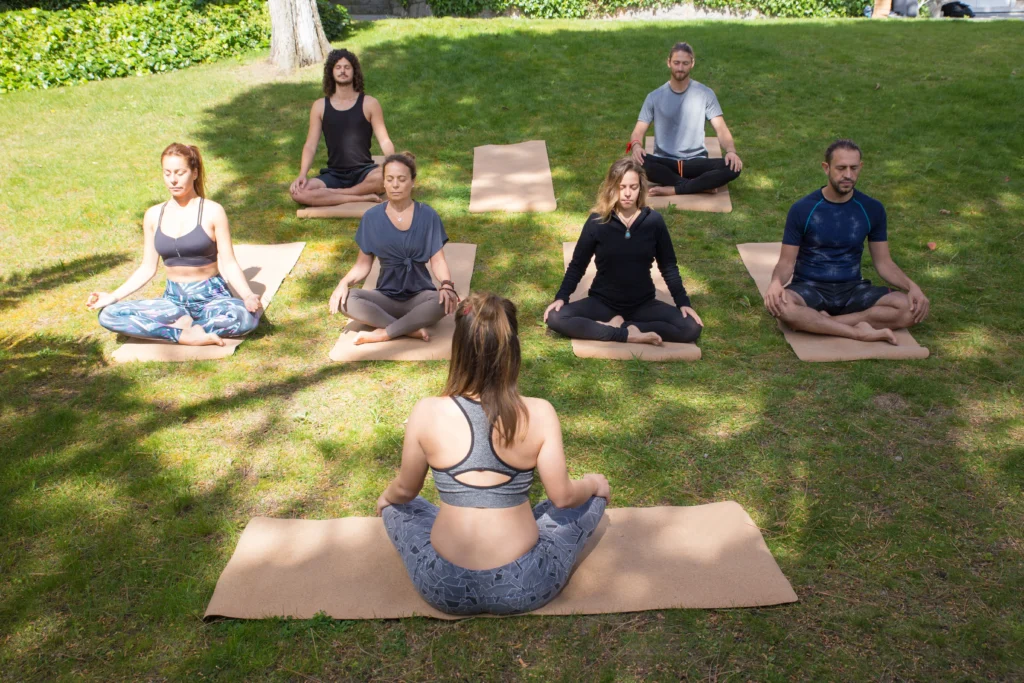
Six people in a room means a teacher can watch your alignment and correct it. Thirty means you’re mostly guessing.
Ask directly how many guests are usually booked for your dates and how many instructors will actually be there. We list current small-group availability on our booking page.
7. Program Specialization
Not every center runs the same kind of retreat:
8. Safety, Hygiene and Medical Preparedness
A center confident in its own program will tell you plainly who shouldn’t join (recent surgery, pregnancy, certain chronic conditions) instead of burying that in a waiver.
Ask how drinking water is handled, whether anyone knows basic first aid, and what happens if something goes wrong beyond a headache.
Our FAQ page answers a lot of this directly, and Nepal’s tourism board has decent general travel health guidance too.
9. Reviews, Reputation and Transparency

Reviews on a center’s own site are useful but incomplete. Nobody publishes their worst feedback voluntarily. Check Google or TripAdvisor too, where people have less reason to be polite.
The ones worth trusting mention specifics: a teacher’s name, a particular meal, a scheduling mix-up. Our own testimonials page includes the mixed feedback along with the glowing stuff.
10. Pricing Transparency and What’s Included
| Often Included |
Sometimes Extra |
| Accommodation |
Airport pickup |
| Daily meals |
Massage or spa add-ons |
| Yoga and meditation sessions |
Excursions outside the center |
| Basic Ayurveda consultation |
Single-room upgrade |
A quote that spells out exactly what you’re paying for won’t hit you with surprises on day three. If you’re weighing one best yoga retreat center in Nepal against another, get this breakdown before comparing the headline price, since a cheaper number often just means less is included.
Conclusion
None of these ten things are exciting to think about. They’re not why anyone dreams about the best yoga retreat center in the Himalayas in the first place.
But they’re the reason one week feels completely different from another, even when both centers used almost the same photo of the mountains. Go through the list before you book, and ask the questions out loud.
Nepal isn’t short on options. A bit of homework before you commit is usually what separates a week you’d repeat from one you’re just relieved is over.
Frequently Asked Questions
How long should a first-time best yoga retreat center stay be?
A week tends to be the sweet spot. Long enough to feel different by the end, short enough that it’s not a huge commitment if the fit isn’t perfect.
Two or three days can work if you just want a taste. The catch is that fasting or a real cleanse needs more runway than that. If you get there and want more time, most centers, ours included, can extend on the spot.
Do I need prior yoga experience to join?
No. Most beginner-friendly retreats assume you’ve never held a downward dog, and plan accordingly.
Instructors read the room and adjust. A group of total beginners with a couple of advanced students isn’t unusual, and a decent teacher handles both without leaving anyone out. Still, mention your level when you book. It helps the center plan sessions that don’t leave anyone lost on day one.
What’s the best time of year to visit?
Autumn wins for most people. Late September through November brings clear mornings and comfortable temperatures.
Spring runs a close second, especially March and April, before it gets too hot. Monsoon season gets overlooked, but it means cheaper rates and near-empty centers, which some people genuinely prefer.
Is it safe for solo travelers to join alone?
Solo travelers aren’t the exception at most established retreat centers in Nepal. They’re often the majority. Booking a center rather than piecing together your own trip removes a lot of the usual solo-travel stress, since meals and daily plans are already sorted.
It’s still worth checking two things: whether there’s female staff on-site if that matters to you, and whether airport pickup is included.
by Nepal Yoga Home | Sep 12, 2026 | Yoga
Here’s usually how it starts, when life gets loud, sleep gets short and one yoga class a week stops doing much of anything. That’s the point where people start looking into the benefits of joining a yoga retreat.
A retreat works differently than a class because it gives you days, not an hour. Several in a row, actually. No rushing off to the next thing after. That alone is often what it takes to feel a real shift in your body and your head, not just a nice hour of stretching.
Nepal helps too because we have mountain air, slower mornings and a yoga tradition that’s been around for centuries in that part of the world. A studio back home just isn’t set up to compete with that and honestly it was never trying to.
In this blog, we have covered 10 genuine benefits of joining a yoga retreat. These are based on what actually happens over a real multi-day program.
Why Nepal Adds to the Benefits of Joining a Yoga Retreat?
A lot of what gets taught in meditation and yoga classes worldwide traces back to Nepal in the first place. A Yoga Retreat in Nepal usually sits somewhere quiet and green, well clear of traffic and the constant buzz of your phone.
That setting isn’t just for the photos. Fresh air, natural light, fewer things pulling at your attention, it all adds up. Your body slows down faster there and that’s a big part of why the benefits of joining a yoga retreat show up quicker in Nepal than they would at home.
10 Benefits of Joining a Yoga Retreat
Here’s a short detail on table before we get into more detail later:
|
Benefit |
Mainly Helps |
| 1 |
Improved flexibility and joint mobility |
Body |
| 2 |
Better sleep quality |
Body |
| 3 |
Lower cortisol and reduced stress |
Mind |
| 4 |
Stronger breathing and lung capacity |
Body |
| 5 |
Improved posture and core strength |
Body |
| 6 |
Mental clarity and sharper focus |
Mind |
| 7 |
Emotional resilience |
Mind |
| 8 |
A reset relationship with food |
Body |
| 9 |
A genuine support community |
Wellbeing |
| 10 |
A practice you can sustain at home |
Wellbeing |
1. Improved Flexibility and Joint Mobility
One class a week barely touches flexibility. A week or two of daily practice does. Tight hips, hamstrings, shoulders, all of it starts to loosen in a way you can actually feel, not just read about.
A teacher’s also watching your form every day instead of once a week, so bad habits get caught before they set in.
2. Better Sleep Quality
You’ll have active days where phones are mostly off. That’s really it, and it does more for sleep than most apps or supplements manage on their own.
Some retreats add an evening wind-down too, slow stretching or a short meditation before bed. Your body starts to learn when it’s supposed to switch off.
3. Lower Cortisol and Reduced Stress
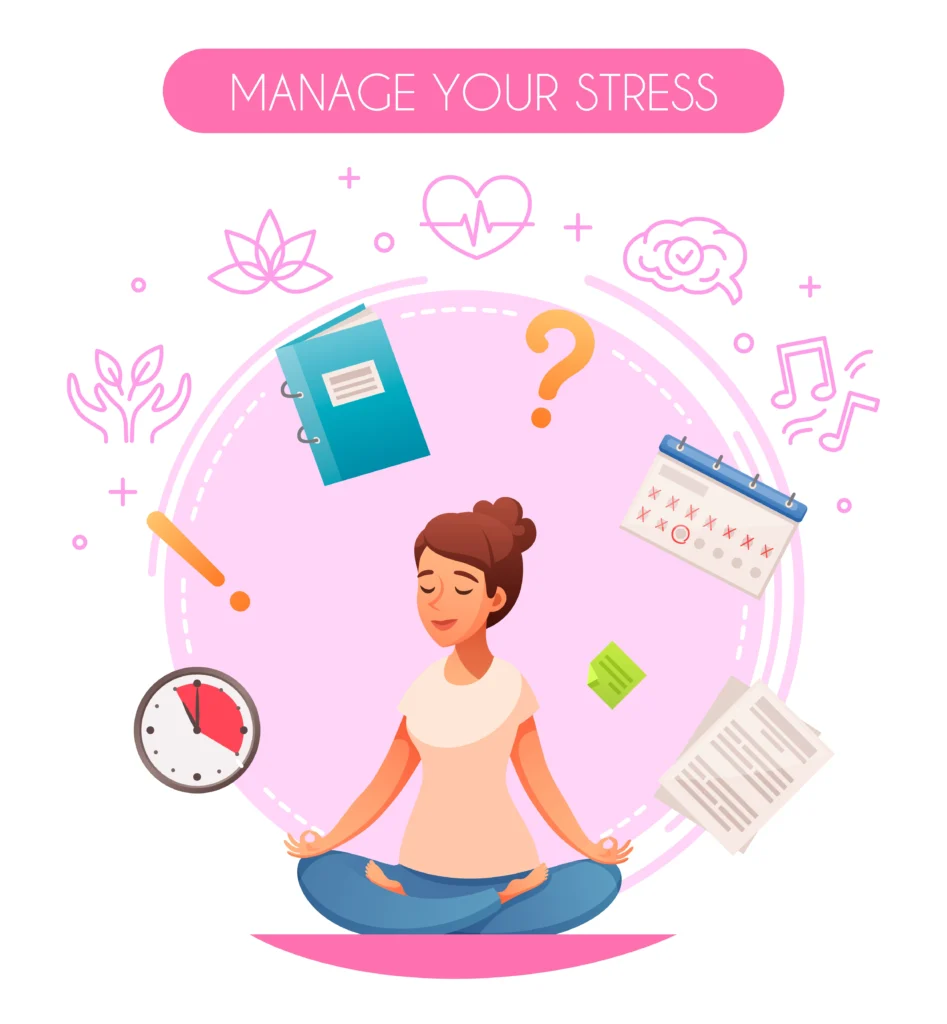
Cortisol is your stress hormone. Keep the pressure on long enough and it stays high, and that shows up as bad sleep, low mood and sometimes even stomach trouble.
A retreat takes that pressure away for a stretch and swaps it for something steadier. That’s why people go looking for a stress management retreat specifically.
4. Stronger Breathing and Lung Capacity
Pranayama, or breath control, gets practiced daily on most retreats. Give it a week or two and lung capacity and breath awareness both improve, more than most people expect.
There’s a bonus here. Better breathing calms the nervous system on its own, which is part of why stress eases so fast once you’re actually there.
5. Improved Posture and Core Strength
Sitting at a desk all day wears down the muscles holding your spine up. Daily asana rebuilds them, slowly, but it works.
And because someone corrects you in person every day, small posture problems get fixed early instead of becoming years of back pain.
6. Mental Clarity and Sharper Focus
Less screen time and less multitasking. Add a daily meditation practice, and most people notice their thinking gets quieter within a few days. It’s a strange feeling at first, almost too quiet.
That clarity tends to stick around after you get home too, at least if you keep even a few minutes of the habit going.
7. Emotional Resilience
Living close with a group. Following someone else’s schedule. Sitting with your own thoughts during meditation, which sounds easy until you try it. None of that feels comfortable right away. A little frustration or homesickness in the first day or two is normal, not a sign something’s wrong.
Working through it, with teachers and other students around, builds a kind of resilience that outlasts the retreat.
8. Reset Relationship with Food

Meals are simple, fresh, vegetarian and served at the same time every day. No delivery apps, no skipping lunch because you’re busy and no snacking at midnight out of boredom.
By the last few days, plenty of guests notice they’re actually hungry before they eat, instead of eating because the clock says noon.
9. Genuine Support Community
You end up sharing meals, morning practice and quiet afternoons with people who came for roughly the same reason you did. Friendships form fast here, faster than most people expect walking in.
This one’s easy to overlook on paper. But ask anyone who’s actually done a retreat and this is usually the first thing they bring up.
10. Practice You Can Actually Sustain at Home
One class doesn’t build a habit. Fourteen straight days of doing it, without skipping, usually does.
By the end, asana, breathing and a short morning meditation stop feeling like a task and start feeling like just part of the day. That’s the shift that makes it stick once you’re home.
What a Typical Day Looks Like on a Yoga Retreat in Nepal?
Days at Nepal Yoga Home don’t change much from one to the next and that repetition is kind of the whole point:
- Early morning pranayama and meditation
- Asana practice before breakfast
- Fresh vegetarian breakfast
- Yoga philosophy or workshop session
- Vegetarian lunch and rest time
- Optional walk, reading, or free time
- Evening meditation or asana class
- Dinner and an early, screen-free wind-down
Each piece feeds one of the 10 benefits above. Morning pranayama builds lung capacity. Evening meditation supports sleep. It keeps going like that down the whole list.
Is a Yoga Retreat Worth It?
If you want more than a weekend reset, yes. Better sleep, lower stress, a habit that actually sticks, these are the real benefits of joining a yoga retreat and they generally need more than two or three days before any of it shows up.
That’s part of why the 14-day meditation and yoga retreat and the 21-day yoga meditation retreat run as long as they do. Both are set up for total beginners, so no prior experience needed.
If you’d rather check the research than take our word for it, Harvard Medical School has a decent explainer on how yoga affects the body and stress response. The National Center for Complementary and Integrative Health also lays out what current studies actually show, worth a look if you’d rather trust data than testimonials.
In Short
A yoga retreat won’t fix your whole life in two weeks. It was never supposed to. What it gives you is rarer than that: an actual stretch of time to reset, without your phone going off every five minutes.
Between the daily practice, the food, the setting and the people you meet along the way, the benefits of joining a yoga retreat tend to go a lot further than the mat itself.
If Nepal’s been sitting in the back of your mind for a while, this is as good a reason as any to finally book it. Book your retreat and find out what a couple of weeks in the Himalayas actually does.
Frequently Asked Questions
How many days does it take to feel the benefits of a yoga retreat?
Sleep is usually one of the first things to improve, often within three or four days. Nepal Yoga Home runs programs from one week up to a full month, so pick a length based on how deep a change you’re after.
Do I need prior yoga experience to join?
No. Complete beginners join right alongside experienced practitioners and teachers adjust every pose to wherever you happen to be starting.
What is the food like on a retreat?
Simple, fresh, vegetarian meals, three times a day, always at set times. It comes up in almost every guest review as one of the best parts of the whole stay.
Is Nepal Yoga Home certified?
Yes. It’s registered with Yoga Alliance and has been running retreats in Nepal for over 15 years now, from a quiet spot near Nagarjun jungle, not far outside Kathmandu.
Can I combine a yoga retreat with meditation or Ayurveda?
Yes, several programs blend yoga with meditation, breath work, or Ayurveda treatments. Check the retreat page or reach out through the contact page to see what’s currently running.
by Nepal Yoga Home | Sep 11, 2026 | Yoga, yoga training and yoga courses
Every school selling a 200-hour yoga teacher training in Nepal calls itself the best one. That’s marketing, not information and it doesn’t tell you much about what your actual month will look like.
Nepal has become a go-to spot for Yoga Teacher Training over the last decade because it’s cheaper than the West without cutting corners on tradition. Not ready to commit a full month yet? Nepal Yoga Home runs yoga teacher training in Nepal that works as a smaller first step.
In this blog, we’ve covered what a normal day looks like, the curriculum, what you’ll pay and a few questions worth asking before you send anyone a deposit. This training is tough and nobody should pretend otherwise.
What is a 200-Hour Yoga Teacher Training in Nepal?
The “200 hours” is instruction time, not the number of days you’ll be there. It’s the entry-level certification under Yoga Alliance, and finishing it lets you register as an RYT-200 and start teaching beginner to intermediate classes.
Nepal schools tend to squeeze those hours into 3 to 4 weeks rather than spreading them out. Ask around and you’ll find that’s basically the standard here.
Why Aspiring Teachers Choose Nepal for Certification?
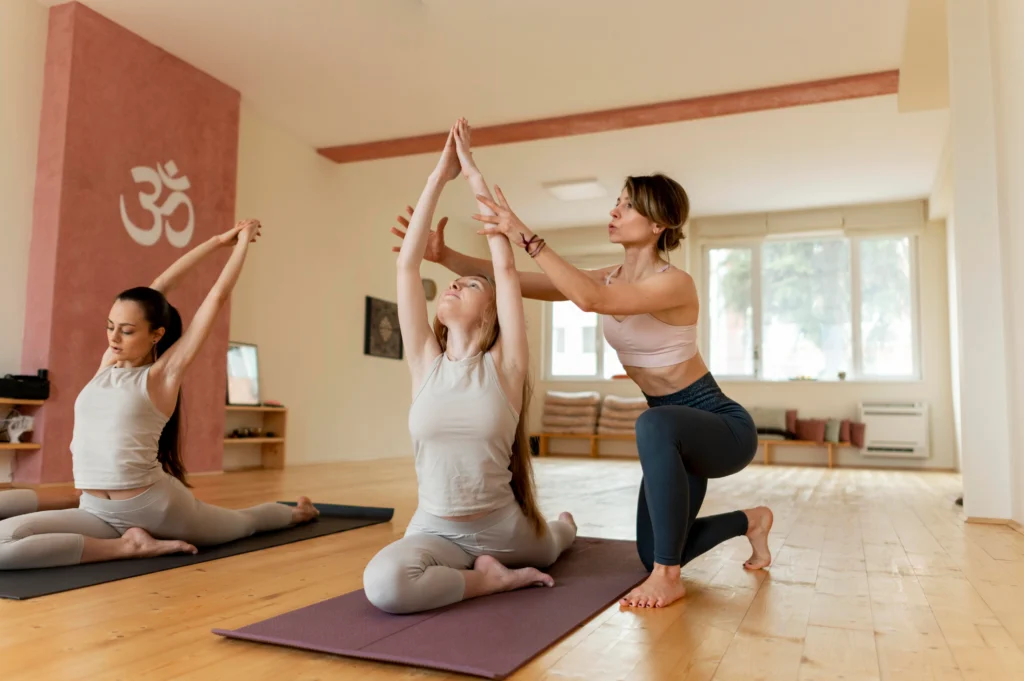
Most people shop around between Nepal, India and Bali before deciding, and price is usually what tips the scale. But there’s more going on than just the exchange rate.
Reasons students give when you ask them directly:
- Costs less than a comparable course back home, sometimes by half
- Hatha and Ashtanga teaching here traces back through actual lineages, not weekend workshops
- Class sizes stay smaller than the bigger training hubs in Rishikesh
- Mountains outside your window tend to keep phones in pockets
- Easy to tack on an Ayurveda detox right after, if you want more time there
None of that guarantees Nepal is right for you specifically. It just explains why so many people end up here.
Who a Yoga Teacher Training in Nepal is Right For?
Our yoga teacher training in Nepal is suitable for you if you can wake up at 5:30 AM, Six-day weeks and spend hours on your feet.
It is a good fit for you if:
- You already have some kind of practice, even a shaky one
- Early mornings don’t wreck you by day three
- You want the philosophy and meditation, not just the poses for Instagram
We suggest you to wait if:
- You’re recovering from surgery or an injury that isn’t fully healed
- You’re pregnant
- Your calendar can’t handle a solid month with no gaps
If you’re confused or concerned about anything, just ask. Nepal Yoga Home will tell you honestly whether 100 hours or 200 makes more sense for where you’re at.
What Does Your Day Look Like?
There’s not much rest included in your schedule.
Your normal day will look something like this:
| Time |
Activity |
Focus |
| 5:30 AM |
Wake up, tea |
Getting going |
| 6:00 AM |
Pranayama, meditation |
Breath |
| 7:00 AM |
Asana |
Alignment |
| 9:00 AM |
Breakfast |
Rest |
| 10:30 AM |
Lecture (anatomy/philosophy) |
Theory |
| 1:00 PM |
Lunch, free time |
Rest |
| 3:00 PM |
Teaching practice |
Skills |
| 5:00 PM |
Evening asana |
Practice |
| 7:00 PM |
Dinner, journaling |
Wind down |
Sundays ease up a bit, usually a hike or a walk through one of the older temples nearby.
The Core Curriculum You’ll Study
Yoga Alliance sets a floor for how many hours go into each subject. Most schools stay close to it, though a few stretch the numbers.
| Subject |
Approx. Hours |
What It Covers |
| Asana |
90 |
Postures, adjustments |
| Teaching methodology |
25 |
Class planning, cueing |
| Anatomy |
20 |
How the body moves |
| Philosophy and ethics |
30 |
Yamas, niyamas, older texts |
| Pranayama and meditation |
20 |
Breath, focus |
| Practicum |
15 |
Supervised teaching |
Get the exact breakdown before you sign anything. Some schools quietly pad the asana column and shortchange anatomy, and you won’t notice until you’re there.
Here’s how Nepal Yoga Home structures theirs, for comparison.
Kathmandu vs. Pokhara: Choosing Your Location

Kathmandu puts you near the old temples, a bigger community of teachers, and flights that don’t require three connections. Pokhara swaps that for a lake, mountain views, and considerably less noise.
Both work, it really just comes down to whether you want a city buzzing around you or something quieter. Plenty of students do the training in Kathmandu, then head to Pokhara for a few days once it’s over.
How to Choose a Legitimate, Certified School?
Anyone can put a Yoga Alliance logo on their website. Not everyone is actually registered, and checking takes five minutes.
- Search the school’s name directly in the Yoga Alliance directory yourself
- Ask how long the lead teacher has been teaching classes, not just how long they’ve practiced
- Get the real schedule, day by day, before you pay anything
- Look for reviews somewhere other than the school’s own site
- Confirm exactly what’s covered in the price before comparing two schools side by side
If they won’t answer one of these clearly, that tells you something already.
Cost and How to Prepare Before You Arrive
Figure on $900 to $1,800 for a 200-hour yoga teacher training in Nepal and room type is what mostly drives that gap. Dorm-style shared rooms sit at the bottom, private rooms with their own bathroom push you toward $1,800.
Usually covered:
- Room for the whole course
- Three meals daily, mostly vegetarian
- Manuals and materials
- The certificate itself
Usually not covered:
- Flights
- Visa fees
- Extras like day trips or airport pickup
A week or two before you leave, cut back on caffeine and start some kind of daily practice, even ten minutes.
Pack clothes you can actually move in, and bring a notebook, the self-reflection side of this catches a lot of people off guard. Nepal Yoga Home’s booking page has current visa info if your trip is coming up soon.
Start Your 200-Hour Yoga Teacher Training in Nepal
A 200-hour yoga teacher training in Nepal takes real time and real money, and it should, since nobody leaves with actual teaching skills from something easy.
If 100 hours feels safer as a starting point, Nepal Yoga Home’s beginner course was built for that. Whichever school you pick, make them answer the hard questions first.
Check dates and pricing here, or read what past students said before booking anything.
Frequently Asked Questions
Do I need prior yoga experience to join a 200-hour yoga teacher training in Nepal?
No, most schools take complete beginners without any issue. A rough home practice beforehand just makes the first week less rough.
Is the certification recognized internationally?
Yes, as long as the school is properly registered with Yoga Alliance, not just claiming it. That’s what lets you register as an RYT-200 and teach almost anywhere afterward.
How long does the training actually take?
Most run 3 to 4 weeks, full days, no breaks in between. A few schools offer slower, part-time versions, but that’s rare in Nepal specifically.
What’s included in the course fee?
Room, meals, and materials are almost always bundled into the quoted price. Flights, visas, and whatever you spend on yourself are separate.
Can I go straight into 300-hour training after finishing 200-hour yoga teacher training in Nepal?
Plenty of people do exactly that to reach 500 hours sooner. Worth messaging the school ahead of time since combining both courses sometimes comes with a better rate.