by Nepal Yoga Home | Sep 12, 2026 | Yoga
Here’s usually how it starts, when life gets loud, sleep gets short and one yoga class a week stops doing much of anything. That’s the point where people start looking into the benefits of joining a yoga retreat.
A retreat works differently than a class because it gives you days, not an hour. Several in a row, actually. No rushing off to the next thing after. That alone is often what it takes to feel a real shift in your body and your head, not just a nice hour of stretching.
Nepal helps too because we have mountain air, slower mornings and a yoga tradition that’s been around for centuries in that part of the world. A studio back home just isn’t set up to compete with that and honestly it was never trying to.
In this blog, we have covered 10 genuine benefits of joining a yoga retreat. These are based on what actually happens over a real multi-day program.
Why Nepal Adds to the Benefits of Joining a Yoga Retreat?
A lot of what gets taught in meditation and yoga classes worldwide traces back to Nepal in the first place. A Yoga Retreat in Nepal usually sits somewhere quiet and green, well clear of traffic and the constant buzz of your phone.
That setting isn’t just for the photos. Fresh air, natural light, fewer things pulling at your attention, it all adds up. Your body slows down faster there and that’s a big part of why the benefits of joining a yoga retreat show up quicker in Nepal than they would at home.
10 Benefits of Joining a Yoga Retreat
Here’s a short detail on table before we get into more detail later:
|
Benefit |
Mainly Helps |
| 1 |
Improved flexibility and joint mobility |
Body |
| 2 |
Better sleep quality |
Body |
| 3 |
Lower cortisol and reduced stress |
Mind |
| 4 |
Stronger breathing and lung capacity |
Body |
| 5 |
Improved posture and core strength |
Body |
| 6 |
Mental clarity and sharper focus |
Mind |
| 7 |
Emotional resilience |
Mind |
| 8 |
A reset relationship with food |
Body |
| 9 |
A genuine support community |
Wellbeing |
| 10 |
A practice you can sustain at home |
Wellbeing |
1. Improved Flexibility and Joint Mobility
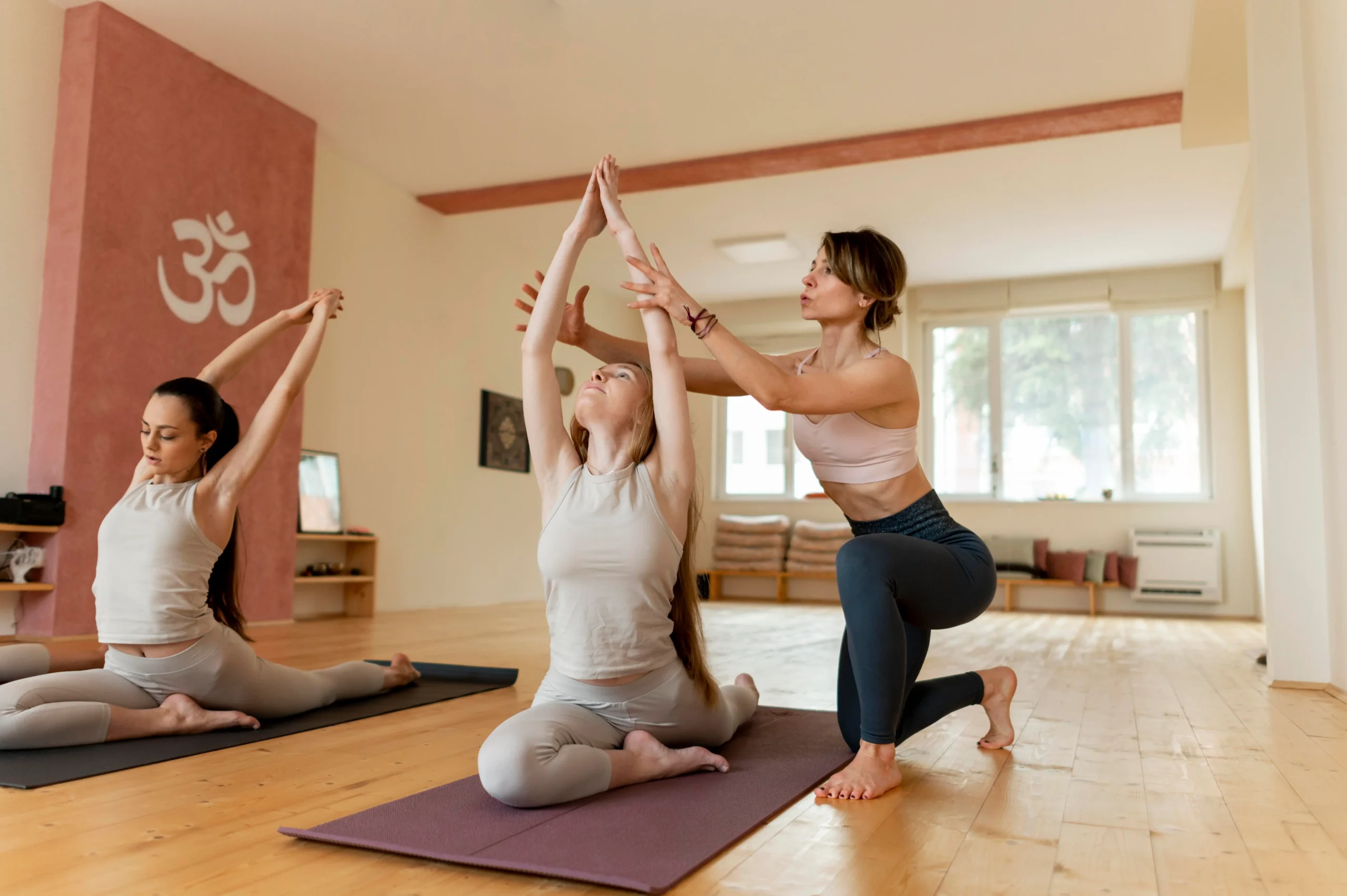
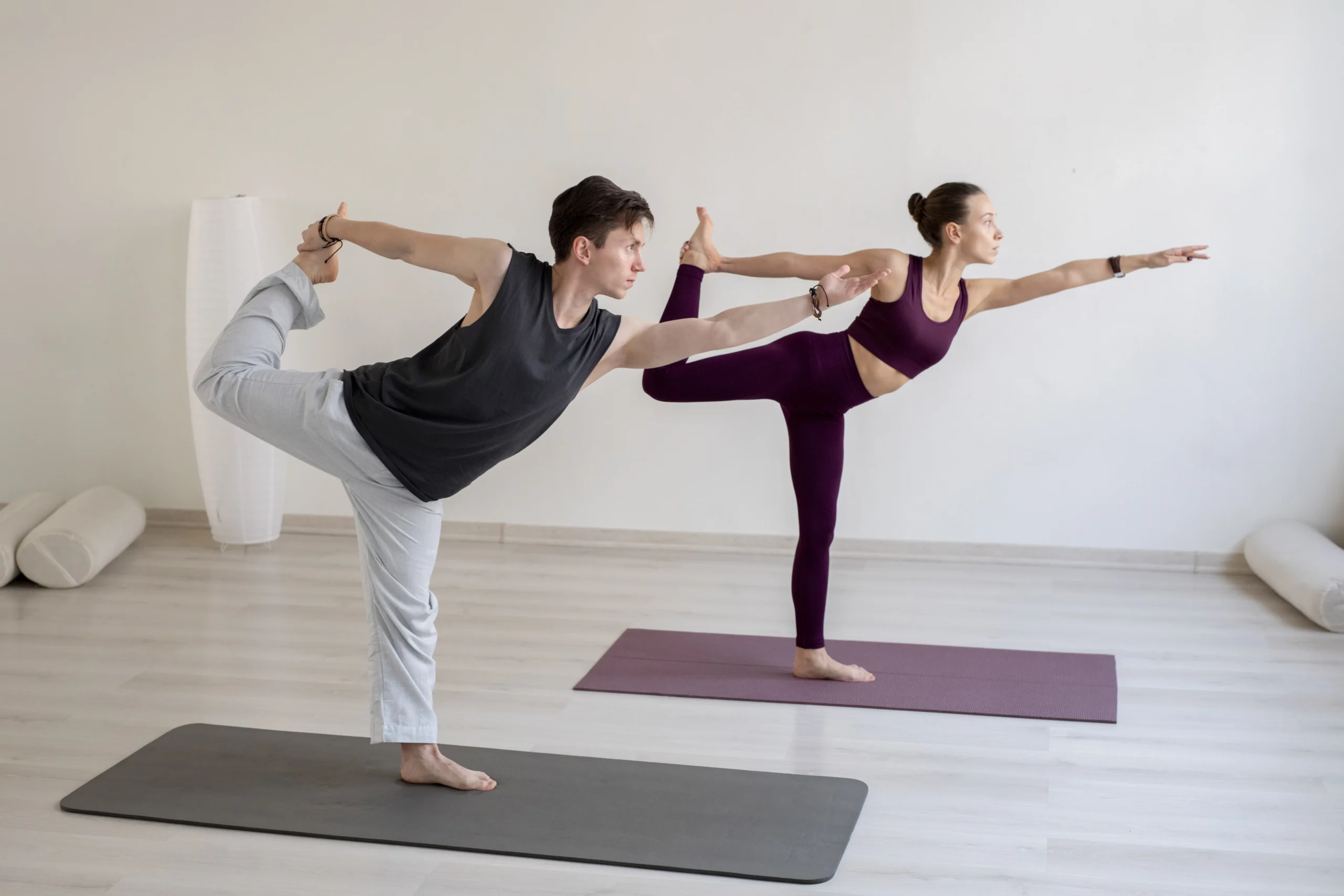
One class a week barely touches flexibility. A week or two of daily practice does. Tight hips, hamstrings, shoulders, all of it starts to loosen in a way you can actually feel, not just read about.
A teacher’s also watching your form every day instead of once a week, so bad habits get caught before they set in.
2. Better Sleep Quality
You’ll have active days where phones are mostly off. That’s really it, and it does more for sleep than most apps or supplements manage on their own.
Some retreats add an evening wind-down too, slow stretching or a short meditation before bed. Your body starts to learn when it’s supposed to switch off.
3. Lower Cortisol and Reduced Stress
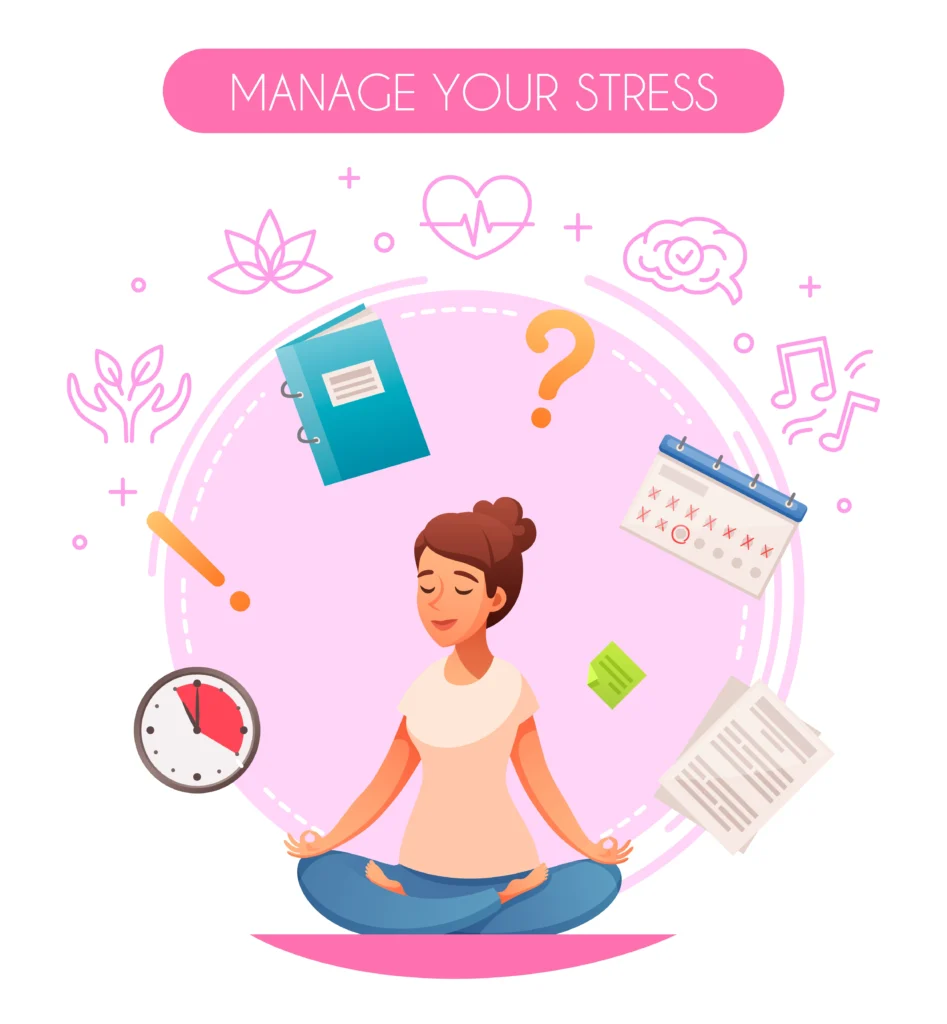
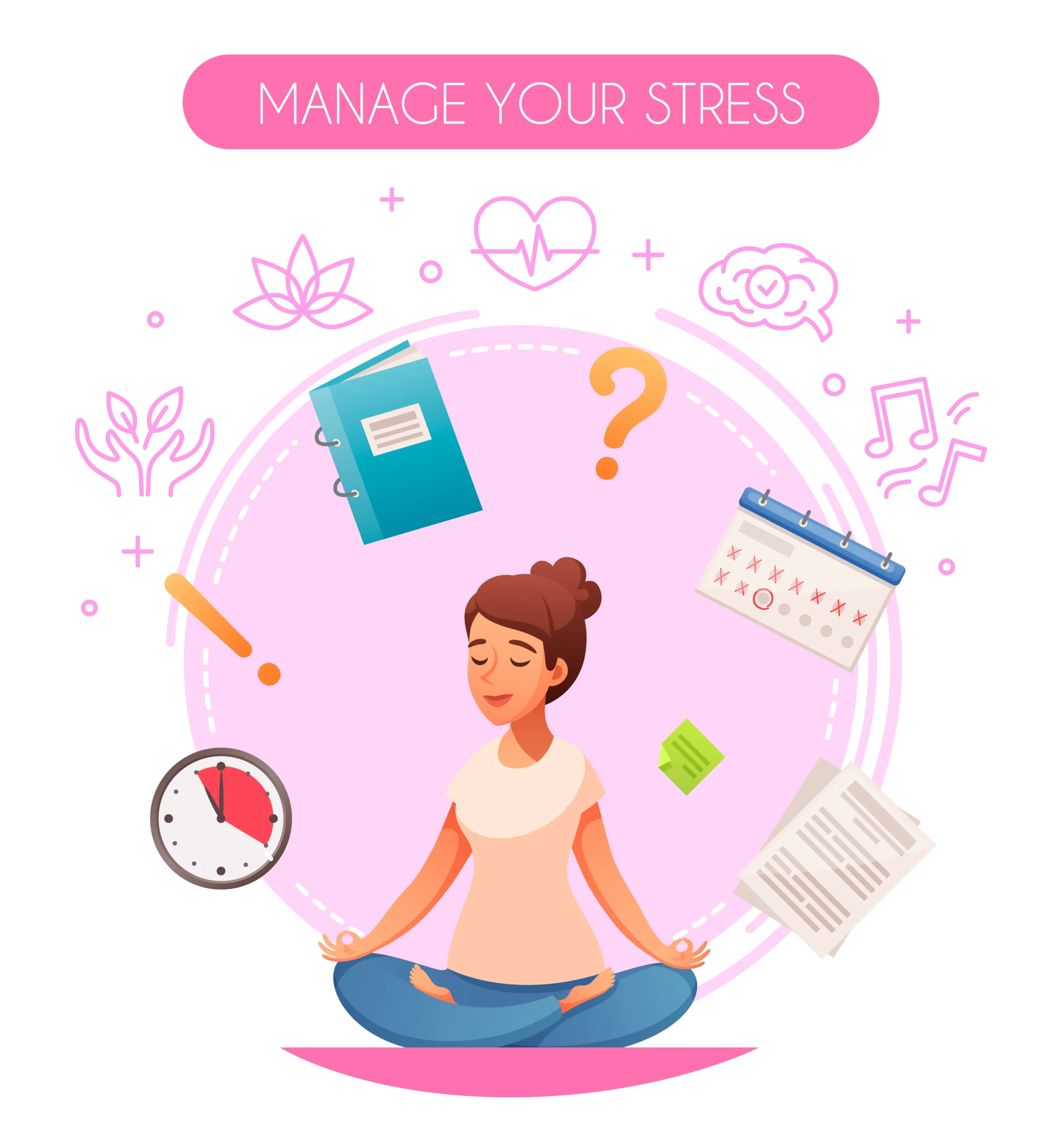
Cortisol is your stress hormone. Keep the pressure on long enough and it stays high, and that shows up as bad sleep, low mood and sometimes even stomach trouble.
A retreat takes that pressure away for a stretch and swaps it for something steadier. That’s why people go looking for a stress management retreat specifically.
4. Stronger Breathing and Lung Capacity
Pranayama, or breath control, gets practiced daily on most retreats. Give it a week or two and lung capacity and breath awareness both improve, more than most people expect.
There’s a bonus here. Better breathing calms the nervous system on its own, which is part of why stress eases so fast once you’re actually there.
5. Improved Posture and Core Strength
Sitting at a desk all day wears down the muscles holding your spine up. Daily asana rebuilds them, slowly, but it works.
And because someone corrects you in person every day, small posture problems get fixed early instead of becoming years of back pain.
6. Mental Clarity and Sharper Focus
Less screen time and less multitasking. Add a daily meditation practice, and most people notice their thinking gets quieter within a few days. It’s a strange feeling at first, almost too quiet.
That clarity tends to stick around after you get home too, at least if you keep even a few minutes of the habit going.
7. Emotional Resilience
Living close with a group. Following someone else’s schedule. Sitting with your own thoughts during meditation, which sounds easy until you try it. None of that feels comfortable right away. A little frustration or homesickness in the first day or two is normal, not a sign something’s wrong.
Working through it, with teachers and other students around, builds a kind of resilience that outlasts the retreat.
8. Reset Relationship with Food

Meals are simple, fresh, vegetarian and served at the same time every day. No delivery apps, no skipping lunch because you’re busy and no snacking at midnight out of boredom.
By the last few days, plenty of guests notice they’re actually hungry before they eat, instead of eating because the clock says noon.
9. Genuine Support Community
You end up sharing meals, morning practice and quiet afternoons with people who came for roughly the same reason you did. Friendships form fast here, faster than most people expect walking in.
This one’s easy to overlook on paper. But ask anyone who’s actually done a retreat and this is usually the first thing they bring up.
10. Practice You Can Actually Sustain at Home
One class doesn’t build a habit. Fourteen straight days of doing it, without skipping, usually does.
By the end, asana, breathing and a short morning meditation stop feeling like a task and start feeling like just part of the day. That’s the shift that makes it stick once you’re home.
What a Typical Day Looks Like on a Yoga Retreat in Nepal?
Days at Nepal Yoga Home don’t change much from one to the next and that repetition is kind of the whole point:
- Early morning pranayama and meditation
- Asana practice before breakfast
- Fresh vegetarian breakfast
- Yoga philosophy or workshop session
- Vegetarian lunch and rest time
- Optional walk, reading, or free time
- Evening meditation or asana class
- Dinner and an early, screen-free wind-down
Each piece feeds one of the 10 benefits above. Morning pranayama builds lung capacity. Evening meditation supports sleep. It keeps going like that down the whole list.
Is a Yoga Retreat Worth It?
If you want more than a weekend reset, yes. Better sleep, lower stress, a habit that actually sticks, these are the real benefits of joining a yoga retreat and they generally need more than two or three days before any of it shows up.
That’s part of why the 14-day meditation and yoga retreat and the 21-day yoga meditation retreat run as long as they do. Both are set up for total beginners, so no prior experience needed.
If you’d rather check the research than take our word for it, Harvard Medical School has a decent explainer on how yoga affects the body and stress response. The National Center for Complementary and Integrative Health also lays out what current studies actually show, worth a look if you’d rather trust data than testimonials.
In Short
A yoga retreat won’t fix your whole life in two weeks. It was never supposed to. What it gives you is rarer than that: an actual stretch of time to reset, without your phone going off every five minutes.
Between the daily practice, the food, the setting and the people you meet along the way, the benefits of joining a yoga retreat tend to go a lot further than the mat itself.
If Nepal’s been sitting in the back of your mind for a while, this is as good a reason as any to finally book it. Book your retreat and find out what a couple of weeks in the Himalayas actually does.
Frequently Asked Questions
How many days does it take to feel the benefits of a yoga retreat?
Sleep is usually one of the first things to improve, often within three or four days. Nepal Yoga Home runs programs from one week up to a full month, so pick a length based on how deep a change you’re after.
Do I need prior yoga experience to join?
No. Complete beginners join right alongside experienced practitioners and teachers adjust every pose to wherever you happen to be starting.
What is the food like on a retreat?
Simple, fresh, vegetarian meals, three times a day, always at set times. It comes up in almost every guest review as one of the best parts of the whole stay.
Is Nepal Yoga Home certified?
Yes. It’s registered with Yoga Alliance and has been running retreats in Nepal for over 15 years now, from a quiet spot near Nagarjun jungle, not far outside Kathmandu.
Can I combine a yoga retreat with meditation or Ayurveda?
Yes, several programs blend yoga with meditation, breath work, or Ayurveda treatments. Check the retreat page or reach out through the contact page to see what’s currently running.
by Nepal Yoga Home | Sep 11, 2026 | Yoga, yoga training and yoga courses
Every school selling a 200-hour yoga teacher training in Nepal calls itself the best one. That’s marketing, not information and it doesn’t tell you much about what your actual month will look like.
Nepal has become a go-to spot for Yoga Teacher Training over the last decade because it’s cheaper than the West without cutting corners on tradition. Not ready to commit a full month yet? Nepal Yoga Home runs yoga teacher training in Nepal that works as a smaller first step.
In this blog, we’ve covered what a normal day looks like, the curriculum, what you’ll pay and a few questions worth asking before you send anyone a deposit. This training is tough and nobody should pretend otherwise.
What is a 200-Hour Yoga Teacher Training in Nepal?
The “200 hours” is instruction time, not the number of days you’ll be there. It’s the entry-level certification under Yoga Alliance, and finishing it lets you register as an RYT-200 and start teaching beginner to intermediate classes.
Nepal schools tend to squeeze those hours into 3 to 4 weeks rather than spreading them out. Ask around and you’ll find that’s basically the standard here.
Why Aspiring Teachers Choose Nepal for Certification?
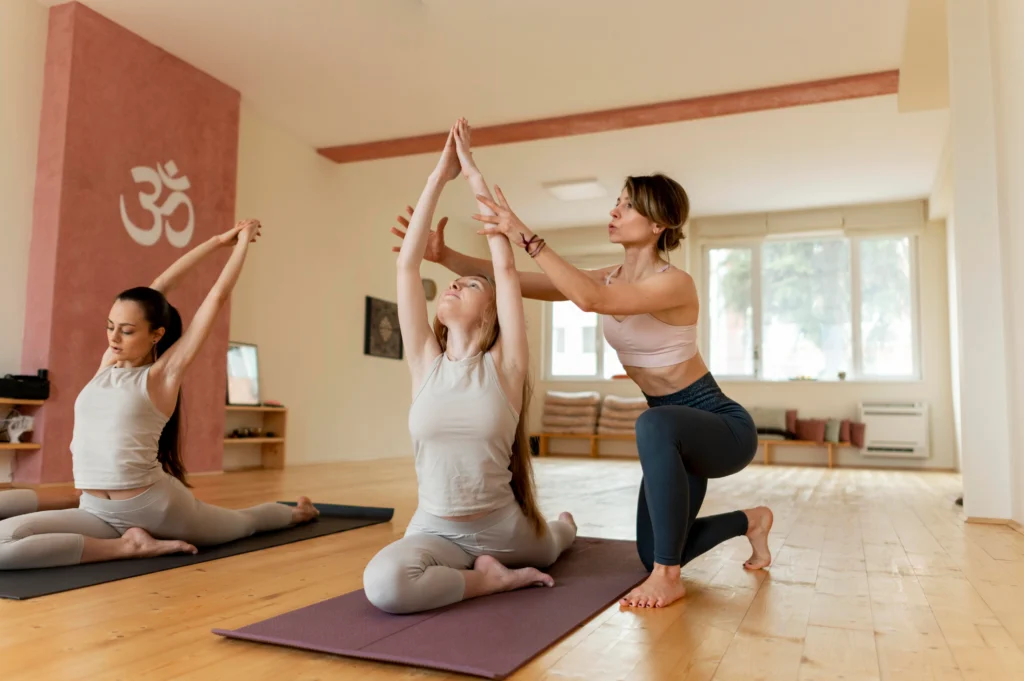
Most people shop around between Nepal, India and Bali before deciding, and price is usually what tips the scale. But there’s more going on than just the exchange rate.
Reasons students give when you ask them directly:
- Costs less than a comparable course back home, sometimes by half
- Hatha and Ashtanga teaching here traces back through actual lineages, not weekend workshops
- Class sizes stay smaller than the bigger training hubs in Rishikesh
- Mountains outside your window tend to keep phones in pockets
- Easy to tack on an Ayurveda detox right after, if you want more time there
None of that guarantees Nepal is right for you specifically. It just explains why so many people end up here.
Who a Yoga Teacher Training in Nepal is Right For?
Our yoga teacher training in Nepal is suitable for you if you can wake up at 5:30 AM, Six-day weeks and spend hours on your feet.
It is a good fit for you if:
- You already have some kind of practice, even a shaky one
- Early mornings don’t wreck you by day three
- You want the philosophy and meditation, not just the poses for Instagram
We suggest you to wait if:
- You’re recovering from surgery or an injury that isn’t fully healed
- You’re pregnant
- Your calendar can’t handle a solid month with no gaps
If you’re confused or concerned about anything, just ask. Nepal Yoga Home will tell you honestly whether 100 hours or 200 makes more sense for where you’re at.
What Does Your Day Look Like?
There’s not much rest included in your schedule.
Your normal day will look something like this:
| Time |
Activity |
Focus |
| 5:30 AM |
Wake up, tea |
Getting going |
| 6:00 AM |
Pranayama, meditation |
Breath |
| 7:00 AM |
Asana |
Alignment |
| 9:00 AM |
Breakfast |
Rest |
| 10:30 AM |
Lecture (anatomy/philosophy) |
Theory |
| 1:00 PM |
Lunch, free time |
Rest |
| 3:00 PM |
Teaching practice |
Skills |
| 5:00 PM |
Evening asana |
Practice |
| 7:00 PM |
Dinner, journaling |
Wind down |
Sundays ease up a bit, usually a hike or a walk through one of the older temples nearby.
The Core Curriculum You’ll Study
Yoga Alliance sets a floor for how many hours go into each subject. Most schools stay close to it, though a few stretch the numbers.
| Subject |
Approx. Hours |
What It Covers |
| Asana |
90 |
Postures, adjustments |
| Teaching methodology |
25 |
Class planning, cueing |
| Anatomy |
20 |
How the body moves |
| Philosophy and ethics |
30 |
Yamas, niyamas, older texts |
| Pranayama and meditation |
20 |
Breath, focus |
| Practicum |
15 |
Supervised teaching |
Get the exact breakdown before you sign anything. Some schools quietly pad the asana column and shortchange anatomy, and you won’t notice until you’re there.
Here’s how Nepal Yoga Home structures theirs, for comparison.
Kathmandu vs. Pokhara: Choosing Your Location

Kathmandu puts you near the old temples, a bigger community of teachers, and flights that don’t require three connections. Pokhara swaps that for a lake, mountain views, and considerably less noise.
Both work, it really just comes down to whether you want a city buzzing around you or something quieter. Plenty of students do the training in Kathmandu, then head to Pokhara for a few days once it’s over.
How to Choose a Legitimate, Certified School?
Anyone can put a Yoga Alliance logo on their website. Not everyone is actually registered, and checking takes five minutes.
- Search the school’s name directly in the Yoga Alliance directory yourself
- Ask how long the lead teacher has been teaching classes, not just how long they’ve practiced
- Get the real schedule, day by day, before you pay anything
- Look for reviews somewhere other than the school’s own site
- Confirm exactly what’s covered in the price before comparing two schools side by side
If they won’t answer one of these clearly, that tells you something already.
Cost and How to Prepare Before You Arrive
Figure on $900 to $1,800 for a 200-hour yoga teacher training in Nepal and room type is what mostly drives that gap. Dorm-style shared rooms sit at the bottom, private rooms with their own bathroom push you toward $1,800.
Usually covered:
- Room for the whole course
- Three meals daily, mostly vegetarian
- Manuals and materials
- The certificate itself
Usually not covered:
- Flights
- Visa fees
- Extras like day trips or airport pickup
A week or two before you leave, cut back on caffeine and start some kind of daily practice, even ten minutes.
Pack clothes you can actually move in, and bring a notebook, the self-reflection side of this catches a lot of people off guard. Nepal Yoga Home’s booking page has current visa info if your trip is coming up soon.
Start Your 200-Hour Yoga Teacher Training in Nepal
A 200-hour yoga teacher training in Nepal takes real time and real money, and it should, since nobody leaves with actual teaching skills from something easy.
If 100 hours feels safer as a starting point, Nepal Yoga Home’s beginner course was built for that. Whichever school you pick, make them answer the hard questions first.
Check dates and pricing here, or read what past students said before booking anything.
Frequently Asked Questions
Do I need prior yoga experience to join a 200-hour yoga teacher training in Nepal?
No, most schools take complete beginners without any issue. A rough home practice beforehand just makes the first week less rough.
Is the certification recognized internationally?
Yes, as long as the school is properly registered with Yoga Alliance, not just claiming it. That’s what lets you register as an RYT-200 and teach almost anywhere afterward.
How long does the training actually take?
Most run 3 to 4 weeks, full days, no breaks in between. A few schools offer slower, part-time versions, but that’s rare in Nepal specifically.
What’s included in the course fee?
Room, meals, and materials are almost always bundled into the quoted price. Flights, visas, and whatever you spend on yourself are separate.
Can I go straight into 300-hour training after finishing 200-hour yoga teacher training in Nepal?
Plenty of people do exactly that to reach 500 hours sooner. Worth messaging the school ahead of time since combining both courses sometimes comes with a better rate.
by Nepal Yoga Home | Sep 10, 2026 | Yoga, yoga training and yoga courses
“Should I book a retreat or a teacher training?” That question shows up in the Nepal Yoga Home inbox almost weekly, and it’s a fair one to ask. Yoga training vs yoga retreat is a topic most of you might be confused about. Yoga, Nepal, a few weeks away from your normal routine. In practice, they’re aimed at two completely different people.
A retreat is for slowing down, whereas training is for leveling up. Get that backward, and you’ll either sit through a certification course you never really wanted, or find yourself burnt out on a “relaxing” trip that turned into a full academic schedule.
In this blog, we’ve covered yoga training vs yoga retreat, who tends to actually enjoy each one and how the two connect at a school that’s been running both for 15-plus years now.
What is a Yoga Retreat?
A retreat is basically a wellness holiday that happens to have a schedule. Morning yoga, maybe a session in the evening, decent food and a lot of open space in between. No exams, no homework and nobody’s going to quiz you on Sanskrit.
Most retreats last anywhere from a long weekend to a few weeks and it genuinely doesn’t matter if you’ve never done yoga before.
That’s kind of the whole point, Yoga Retreat in Nepal programs are built for people who need rest more than a curriculum, and the setting usually carries half the experience anyway. A week tucked into the hills outside Kathmandu just hits differently than a Tuesday evening class back home.
According to the U.S. National Center for Complementary and Integrative Health, research links regular yoga practice to reduced stress and improved general wellbeing, which lines up with why most people book a retreat in the first place.
What is Yoga Teacher Training (YTT)?
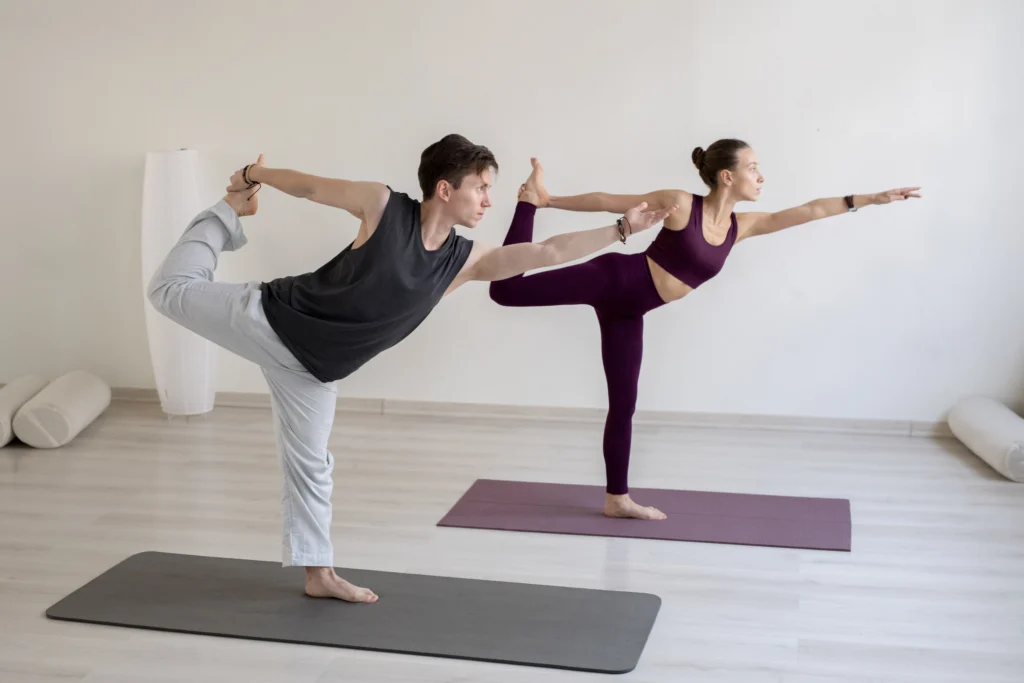
Teacher training is a different beast. It’s a fixed-length course, usually 100, 200, 300, or 500 hours, following a syllabus that bodies like Yoga Alliance actually sign off on. You’re covering anatomy, philosophy, alignment and how to cue an actual class, not just how to flow through your own practice.
Nepal Yoga Home’s 200 Hours Yoga Teacher Training runs for 21 days, and the days fill up fast, Hatha in the morning, theory after lunch and practice teaching in the evening. Ashtanga and Kundalini both get covered too. What you leave with is a Yoga Alliance certificate, and that piece of paper matters the moment you try to teach a class anywhere outside your living room.
Yoga Training vs Yoga Retreat: Main Differences
Here’s a detailed table with a side-by-side comparison to help you understand yoga training vs yoga retreat:
| Area |
Yoga Retreat |
Yoga Teacher Training |
| Main goal |
Rest and reconnecting with your body. Nothing to prove. |
Building enough knowledge to actually teach yoga to someone else. |
| Daily rhythm |
Loose, maybe one or two sessions a day with room to breathe. |
Packed, ten-hour days aren’t unusual between practice and study. |
| Prior experience |
None needed. Complete beginners show up constantly. |
Some practice helps, but committed beginners still get accepted. |
| End result |
No teaching credential, just a well-rested version of you. |
A recognised certificate, either 200-hour or 500-hour RYT. |
| Length |
Usually a weekend up to around three weeks. |
21 to 29 days for a full program. |
| Who it suits |
Travellers and burnt-out professionals wanting an actual reset. |
Anyone serious about teaching, or about studying yoga deeply. |
Who Should Book a Yoga Retreat?
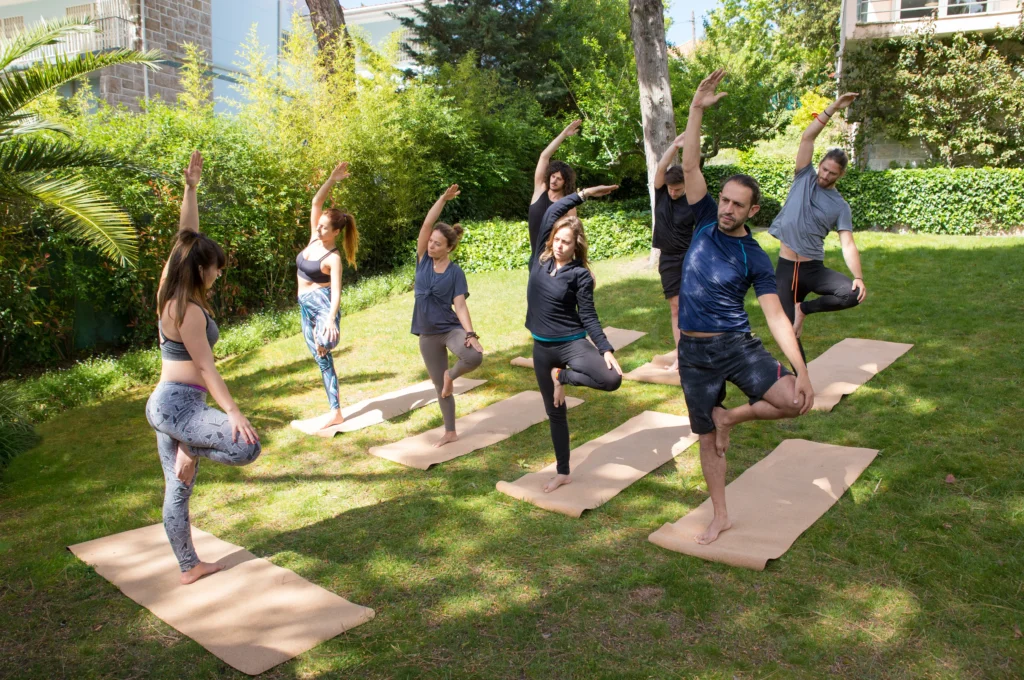
A retreat is probably your option if any of this matches with what you want:
- Your idea of a good holiday is one where you come home calmer, not just with a tan.
- You’ve never rolled out a mat before and would rather not have your first attempt be a three-week course.
- Work’s been relentless and what you need is a break, not a syllabus.
- Maybe you’re traveling with someone who isn’t really “into yoga” but would still enjoy the trip.
- If you’re honest with yourself, given the choice between a nap and an anatomy lecture, you’re taking the nap.
The Wellness Retreat in Nepal and 1 Month Yoga Detox Retreat pages were more or less built with this exact person in mind. Daily yoga, Ayurvedic meals and enough unscheduled time to actually enjoy it.
Who Should Book Yoga Teacher Training Instead?
You can consider booking teach training instead if:
- You already have a practice and want the “why” behind every pose instead of just the “how.”
- It suits anyone who needs an actual certificate before they can teach, whether that’s at a studio, a gym, or online.
- It suits the serious students chasing the deepest version of yoga study available, even if they’ve got zero interest in ever teaching a class.
- It suits people who like structure and would rather follow a schedule than figure things out as they go.
Nepal Yoga Home’s Yoga Teacher Training Course page lays out every level on offer, from a 100 Hours Beginner Yoga Teacher Training up through the 500 Hours Advanced Yoga Teacher Training, so there’s a reasonable starting point no matter your background.
How to Decide Between Yoga Training vs Yoga Retreat in 4 Questions?
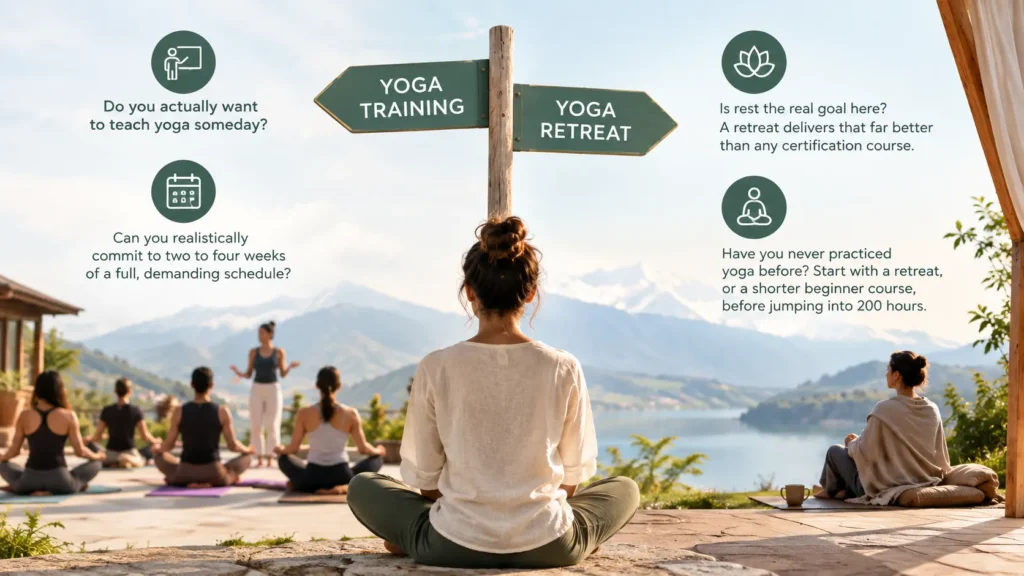
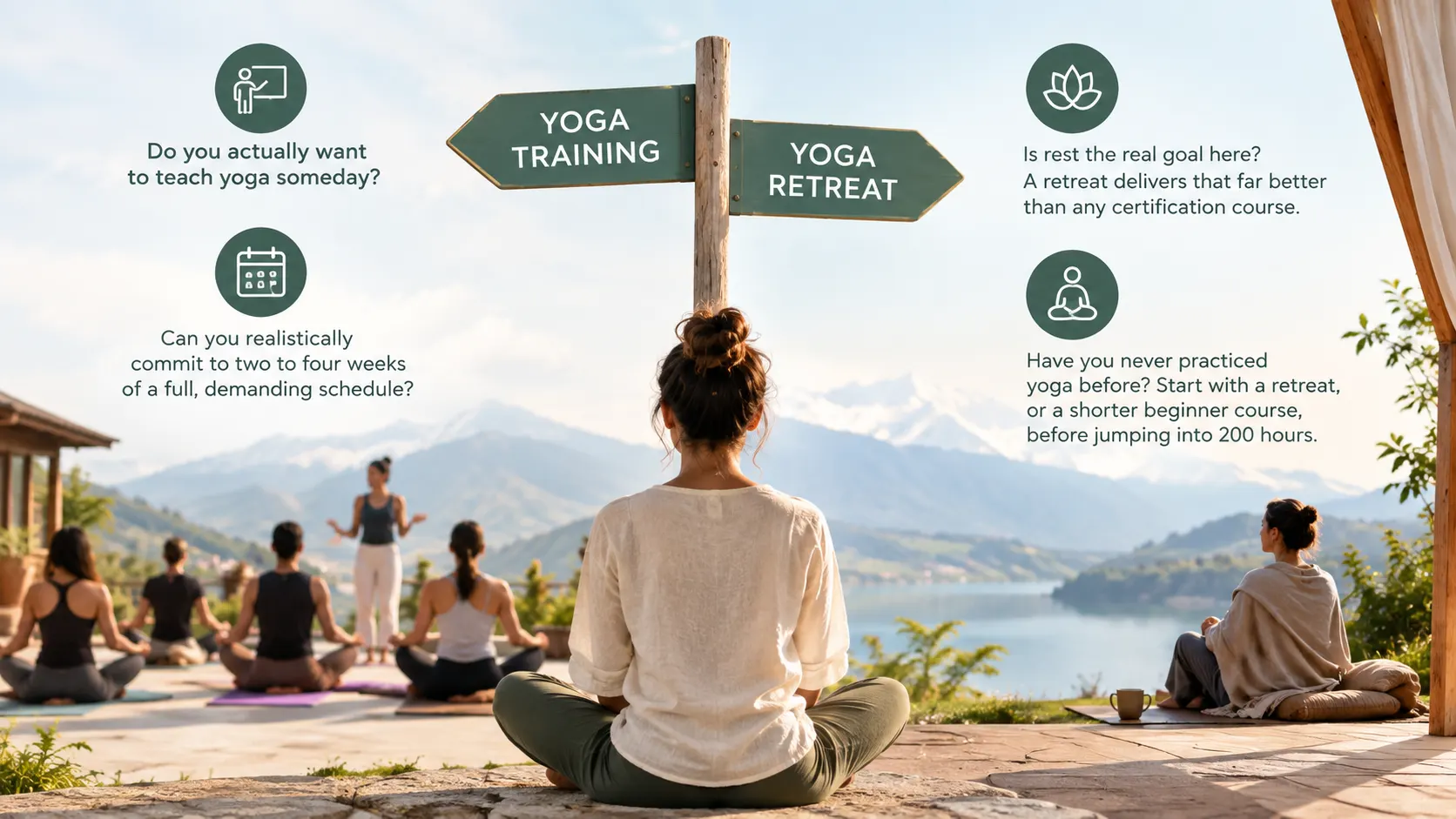
- Do you actually want to teach yoga someday? If yes, a retreat won’t get you there but training will.
- Can you realistically commit to two to four weeks of a full, demanding schedule?
- Is rest the real goal here? A retreat delivers that far better than any certification course.
- Have you never practiced yoga before? Start with a retreat, or a shorter beginner course, before jumping into 200 hours.
Can You Do Both: Yoga Training vs Yoga Retreat?
Plenty of students start with a retreat, like the trip, and come back later for full teacher training once they’ve gotten a feel for the place.
It happens often enough that it’s basically a pattern by now. Dr. Prakash Acharya, who founded Nepal Yoga Home. His teaching team have been running both programs from the same forested campus near Nagarjuna Hill for over 15 years, so this crossover isn’t rare here.
The Booking page has current dates if you’d rather line up a retreat and a training course back to back. You can also check the school’s Testimonials page to see what that crossover actually looked like for past students.
Frequently Asked Questions
Is a yoga retreat cheaper than yoga teacher training?
Usually, yes. Retreats are shorter and skip the extended curriculum, materials and certification fees a training course carries. A short retreat can cost a fraction of a full 200-hour program, though the final price still depends on your accommodation.
Does time on a retreat count toward a teacher training certificate later?
Not really. Yoga Alliance and similar bodies want a completed, structured course, not informal retreat hours. A retreat can still be decent groundwork, it just won’t shave anything off the hours you’ll eventually need.
Do you need to be fit for either one?
No. Both retreats and beginner-level training are built to work around different fitness levels, and poses get modified when needed. What matters more is showing up and putting in the effort day after day.
Is the food or accommodation different between the two?
Both usually include vegetarian meals and a choice of shared or private rooms. Training courses tend to run on a tighter meal and rest schedule because the syllabus demands more of your time, while retreats leave more room to move at your own pace.
What do people usually walk away with?
Retreat guests tend to leave calmer, with a handful of tools for managing stress on their own. Training graduates leave with a Yoga Alliance-recognized certificate, and often enough confidence to start teaching within a few weeks of getting home.
by Nepal Yoga Home | Sep 4, 2026 | Ayurveda, Yoga
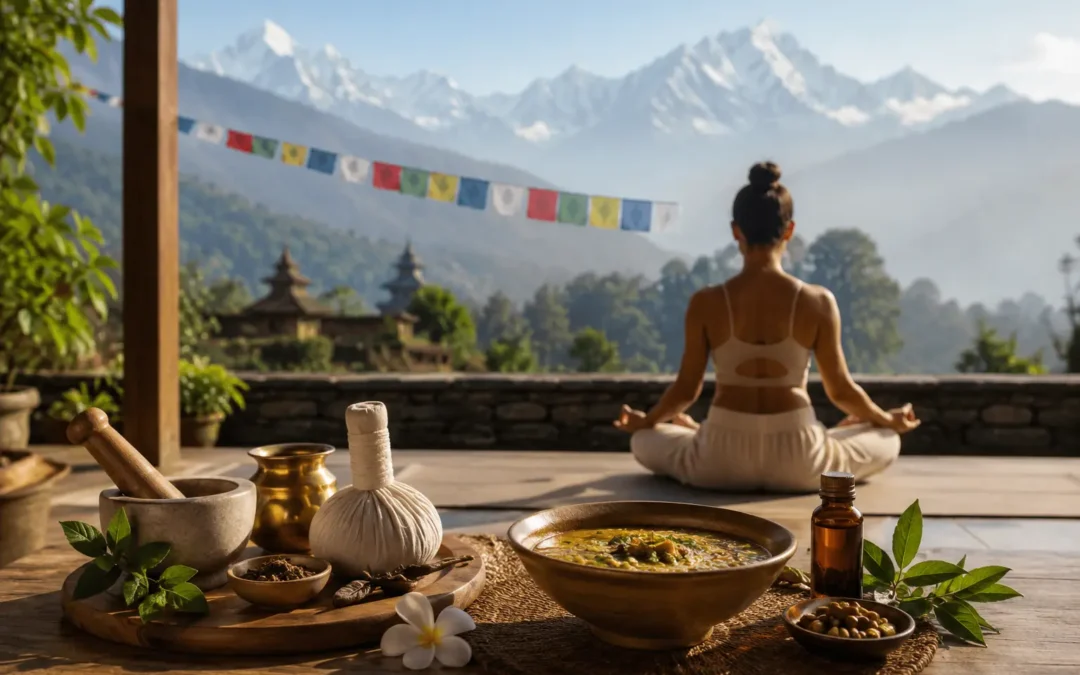
Yoga and Ayurveda in Nepal, most people treat these like two separate things but they’re not and never really were. They grew up side by side, centuries back, built as one thing from the start.
Yoga’s the part everyone knows: stretching, breathing and every other thing. Ayurveda’s the quieter half, the part that actually tells your body what to do with it.
Our comprehensive blog will help you understand yoga and Ayurveda in Nepal. Read until the end of our blog to understand everything in simple words.
Why Yoga and Ayurveda in Nepal Belong Together?
Yoga and Ayurveda have same root, not even similar but the same. However, a lot of people are unaware of this simple fact. Old Vedic knowledge, the Indian subcontinent, and one core belief running under both: your body and your mind were never separate to begin with.
Yoga works the mind, movement, breath and sitting still for once in your life. Ayurveda handles the rest: food, routine, herbs and hands-on work, all built around what your particular body actually needs.
Combine them and you get more than either one alone gives you. At Nepal Yoga Home, we are not saying this for the website copy. It’s just how they’ve run things, years now.
What is a Dosha and Why Should You Care?

Before you touch a mat, someone checks your dosha. It’s your body-mind type, basically, and it decides what you eat and how you move, whether you actually sleep at night or just lie there.
There are three types in Ayurveda:
- Vata, air and space, gives you movement and ideas but too much and your mind won’t shut off.
- Pitta, fire and water, runs digestion and focus, push it too hard and you’re irritable, overheated.
- Kapha, earth and water, that’s your strength, your steadiness, but leave it too long and things get sluggish.
Nobody’s just one of these. Most people are a mix, one usually louder than the rest.
The National Center for Complementary and Integrative Health says Ayurveda’s been used in India this way for thousands of years, keeping doshas balanced through diet and herbs and daily routine.
Nepal Yoga Home’s Ayurveda retreat program runs on that same idea.
How Your Dosha Shapes Your Yoga Practice?
Food’s not the only thing that shifts, your actual practice does too.
In high Vata, you’ll go slow and stay grounded. High Pitta allows you to cool down, do restorative work and skip anything that builds heat. However, in high Kapha, you’ll flip it, go faster and put in more energy to shake off the heaviness.
Which is why nobody gets handed the same weekly plan here. What works changes depending on where you’re at that week.
A Day of Yoga and Ayurveda at Nepal Yoga Home
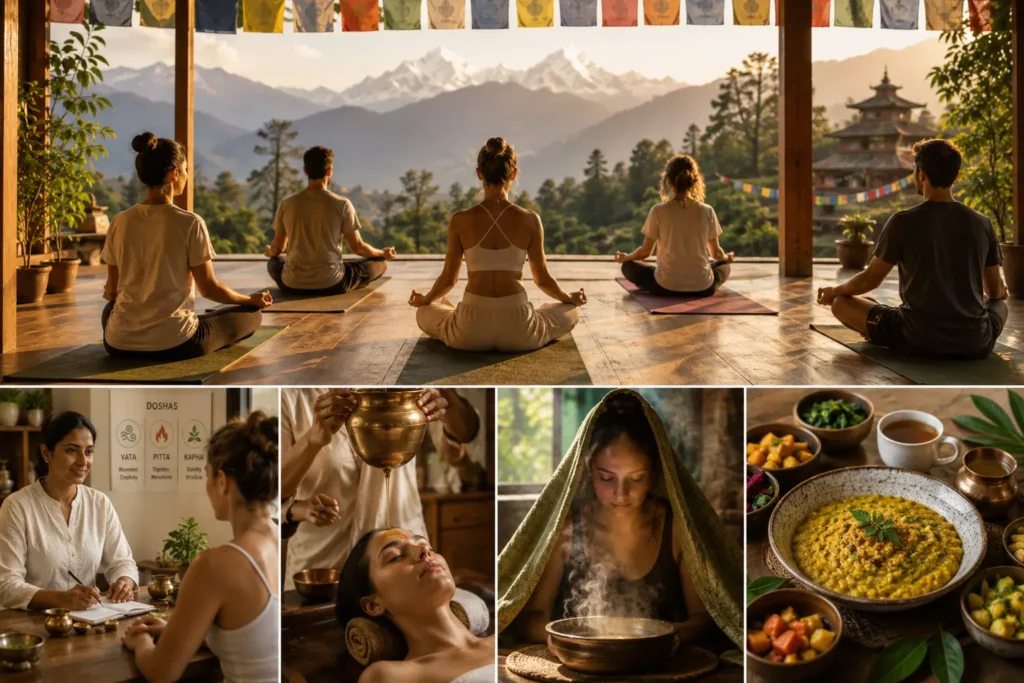
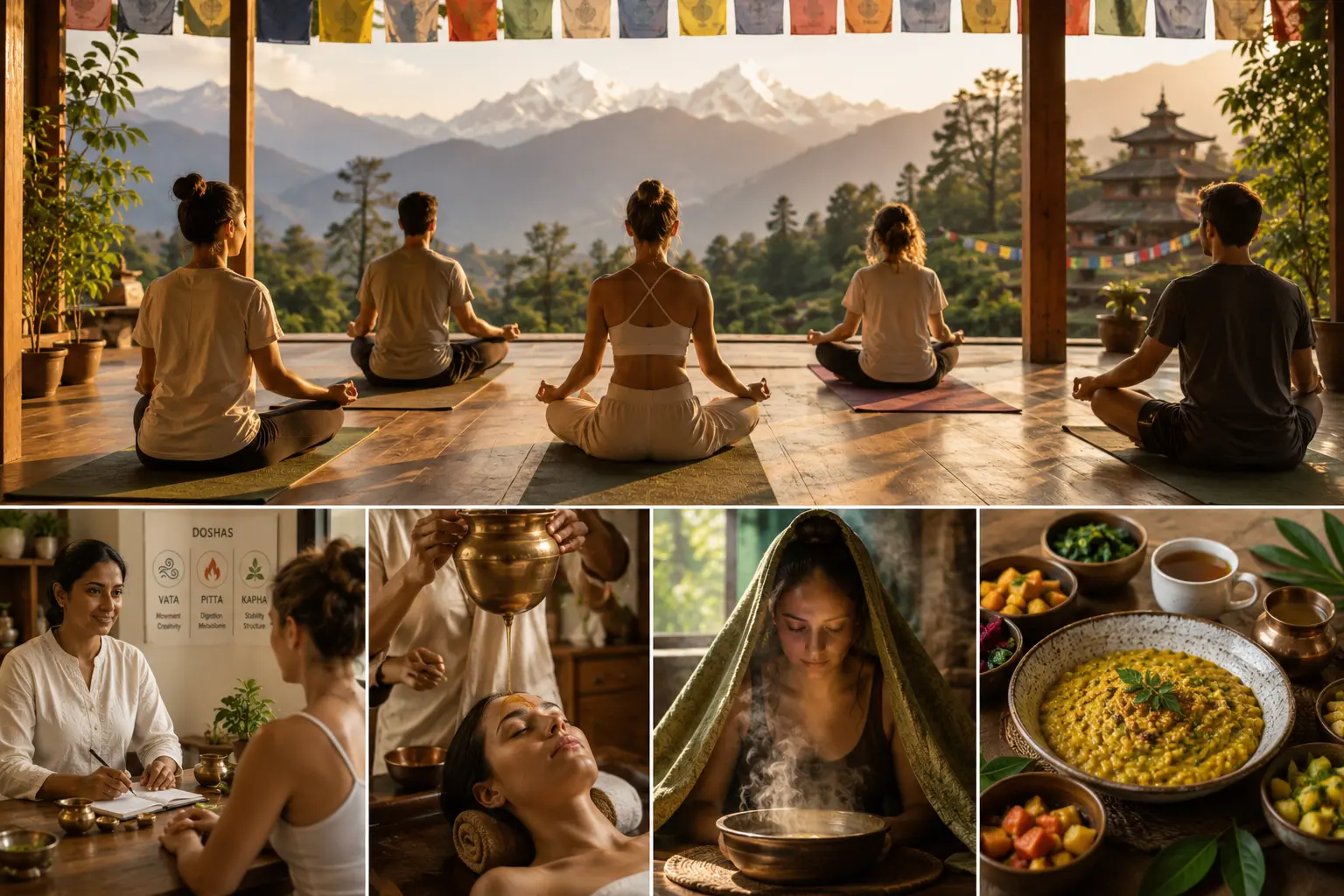
At Nepal Yoga Home, your mornings start early. You’ll complete yoga, pranayama and breathing work before anything else happens.
Then you’ll have a short meditation sit followed by a quick word with the Ayurvedic doctor somewhere in there, therapy, massage maybe or steam.
With us, you’ll have your meals built around your dosha. Evenings slow down, nothing intense, just movement or quiet.
As simple a it looks, it adds up fast though. Most people say the real change isn’t in the body, it’s how quiet their head gets by day three or four.
Common Ayurvedic Treatments You Might Try
Here are some of the common ones that you may want to try:
- Abhyanga, a warm oil massage, calms your nervous system and gets blood moving.
- Shirodhara, oil dripped slowly across your forehead. People call it the calmest part of the whole thing.
- Mini panchakarma, a smaller version of the classic detox, built around your dosha.
Look into Shirodhara sessions or the yogic detoxification process before deciding anything.
What You Can Actually Expect to Feel?
Nobody comes here expecting nothing. Digestion settles in a few days, sleep gets better by week’s end, fog lifts more than expected and your energy stays even, no crashing by 3 pm.
As beautiful and soothing as it seems, it actually works. This is what happens when you eat right, move daily and actually get quiet for once.
Is This Right for Beginners?
Yes. No background needed, none. That’s the whole reason for checking your dosha first, meets you where you are.
Burned out, disconnected, whatever brought you here, therapeutic Yoga is a softer start before the full retreat. However, if you can’t keep going, our yoga Teacher Training exists for that. Yoga Alliance registered schools follow global standards, in case that matters to you.
Choosing the Right Program Length
This is the subject that matters more than people think. Three to ten days for a first taste.
Two Weeks Ayurveda and Yoga Detox Course for something deeper. One Month Ayurveda and Yoga Detox Course for real, lasting change.
Final Thoughts
Yoga and Ayurveda in Nepal were never two separate things, as they were always one system. Your body already knows how to heal, it just needs the right setup.
Whether you want it for three days or thirty, it doesn’t matter. Come join us at Nepal Yoga Home and leave with something you’ll actually use, not just a photo.
Frequently Asked Questions
Can I do a yoga and Ayurveda retreat in Nepal if I only want the yoga, not the treatments?
Honestly, most places bundle both in by default, that’s just how the packages are built. But ask first, some schools will actually shift the mix around if treatments aren’t your thing.
Do I need to be vegetarian to join a yoga and Ayurveda program?
Not really, though you’ll be eating vegetarian or vegan food while you’re there either way. It’s not some rule, your food’s just picked to go easy on digestion during the program.
Is Nepal a good place for this compared to India, where Ayurveda actually comes from?
It holds up fine and a lot of the practitioners here are trained in the same lineages you’d find in India. Plus it’s quieter, with fewer crowds than the bigger Ayurveda spots across the border.
Are yoga and Ayurveda retreats suitable for older adults?
Yes, and the schedule gets tailored anyway once someone checks your dosha and general health. Just mention anything going on health-wise beforehand, so your progress is continuous.
How soon will I notice results from combining yoga and Ayurveda?
Sleep and digestion usually shift within the first few days, that part’s fairly quick. The bigger stuff, steady energy and real clarity- takes longer, closer to a week before it actually works.
by Nepal Yoga Home | Aug 31, 2026 | Mantra, Meditation, Yoga
Say “yoga” to most people and a picture pops up straight away: a mat, an hour, some stretching, maybe a bit of sweat by the end. A yoga ashram in Nepal barely resembles that picture.
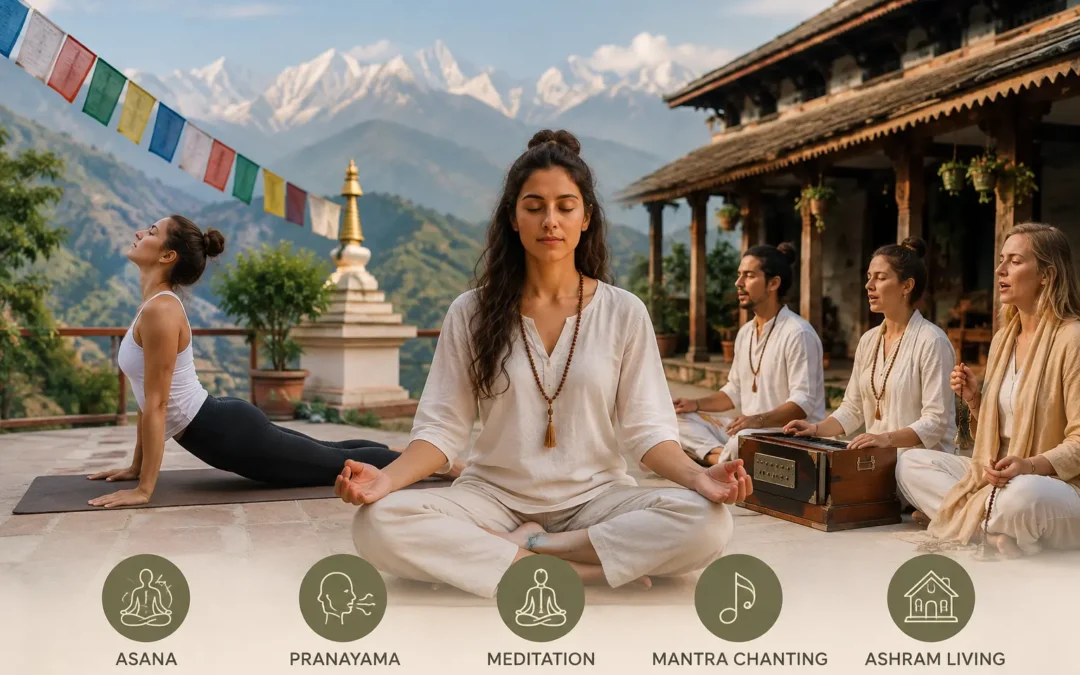
It takes up the whole day. Breath, posture, sitting still and chanting out loud, none of it gets treated as a separate class here. It’s all one thing, stitched together from sunrise onward.
The setting does a lot of the work too. That’s why Nepal Hoga Home is located on the hillside of the Nagarjun forest above the Kathmandu Valley, a forest that’s said to take its name from an enlightened monk who once meditated there.
This comprehensive blog is written for someone who’s never sat through a real meditation session, never chanted anything out loud, and feels a little unsure about the whole idea.
Why It Feels So Different From a Studio Class?
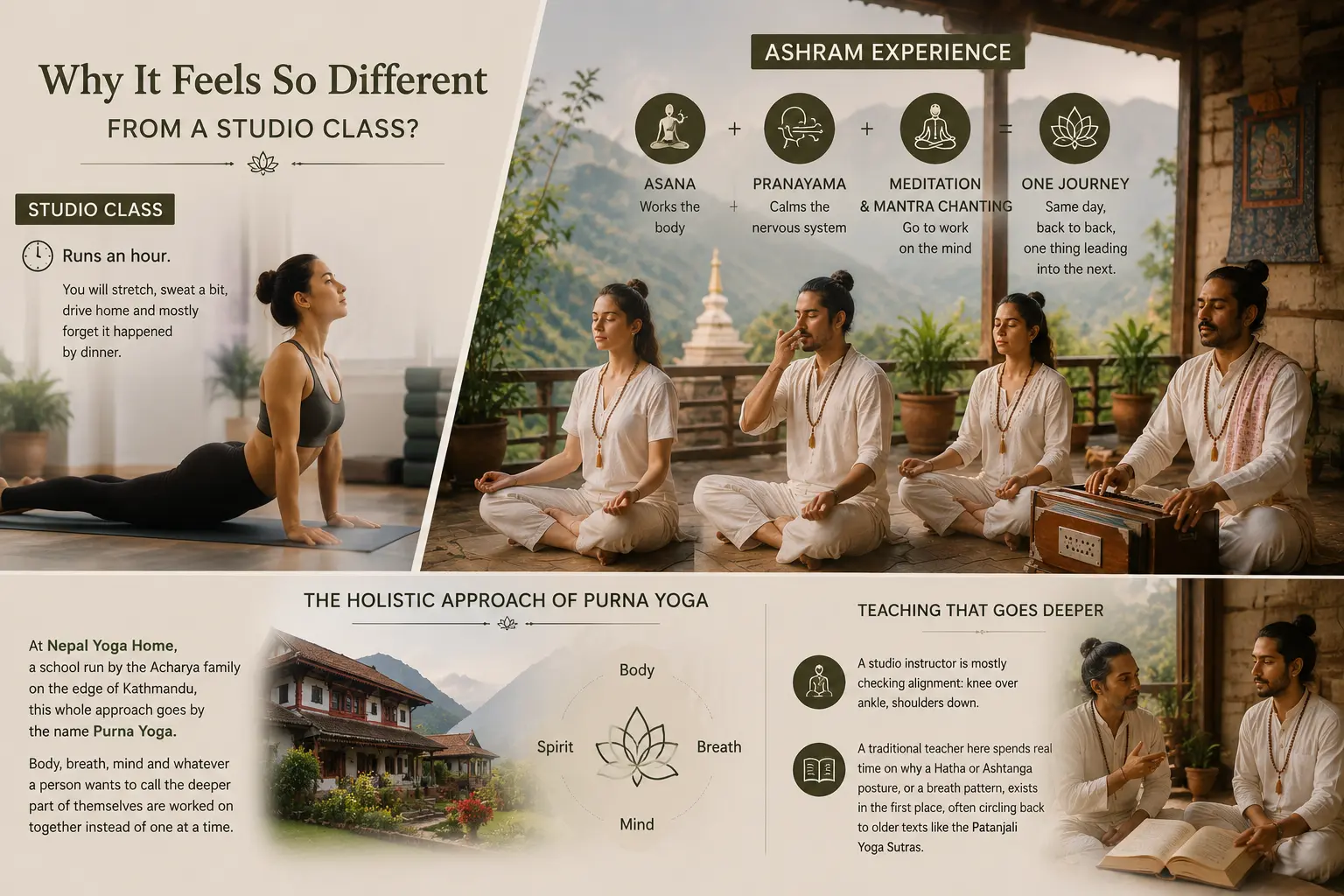
A studio class runs an hour. You will stretch, sweat a bit, drive home and mostly forget it happened by dinner.
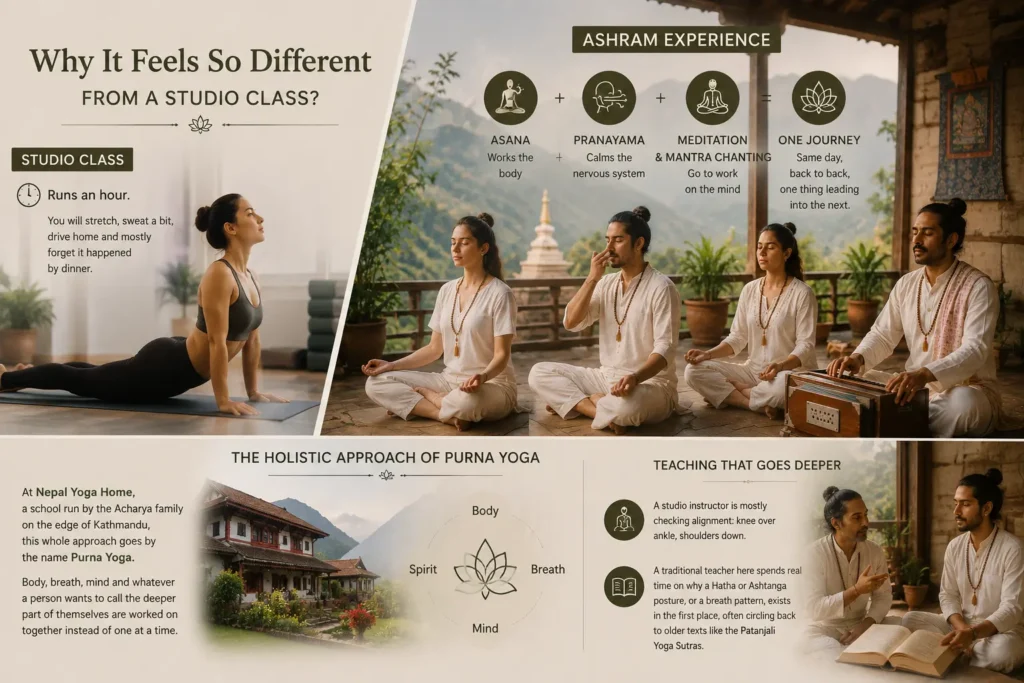
An ashram doesn’t run that way. Asana works the body, pranayama calms the nervous system down, meditation and mantra chanting go to work on the mind, and none of it is spread across separate sessions over separate weeks. Same day, back to back, one thing leading into the next.
At Nepal Yoga Home, a school run by the Acharya family on the edge of Kathmandu, this whole approach goes by the name Purna Yoga. Body, breath, mind and whatever a person wants to call the deeper part of themselves are worked on together instead of one at a time.
Even the teaching feels different. A studio instructor is mostly checking alignment: knee over ankle, shoulders down. A traditional teacher here spends real time on why a Hatha or Ashtanga posture, or a breath pattern, exists in the first place, often circling back to older texts like the Patanjali Yoga Sutras.
What Does Your Daily Rhythm Look Like?
Every ashram runs it a little differently, but the shape repeats itself almost everywhere.
| Time |
What’s Happening |
| Early morning |
Pranayama, then gentle asana as the sun comes up |
| Mid-morning |
Shared vegetarian breakfast, then philosophy or study |
| Afternoon |
Guided or silent meditation, often in the open garden set aside for individual practice |
| Evening |
Mantra chanting and a closing prayer, sometimes with singing on the rooftop afterward |
Sundays are usually off, free for a wander into Kathmandu or just sitting on the terrace with the valley spread out below.
What Happens During Meditation at a Yoga Ashram in Nepal?
A session usually opens with a few minutes of settling the breath, then moves into either guided focus or plain silence, depending on the day.
New arrivals sit for 20 to 40 minutes, and nobody’s expected to have a flawless, quiet mind on the first try. Most don’t, and that’s fine.
Longer stays, a 21-day yoga and meditation retreat for instance, build the sitting time up slowly across the days instead of dropping newcomers straight into an hour of silence.
The Sound Part: Mantra Chanting
This tends to be the part that makes first-timers nervous before they even land. It looks strange right up until someone actually opens their mouth and tries it, and then, it just stops feeling that way.
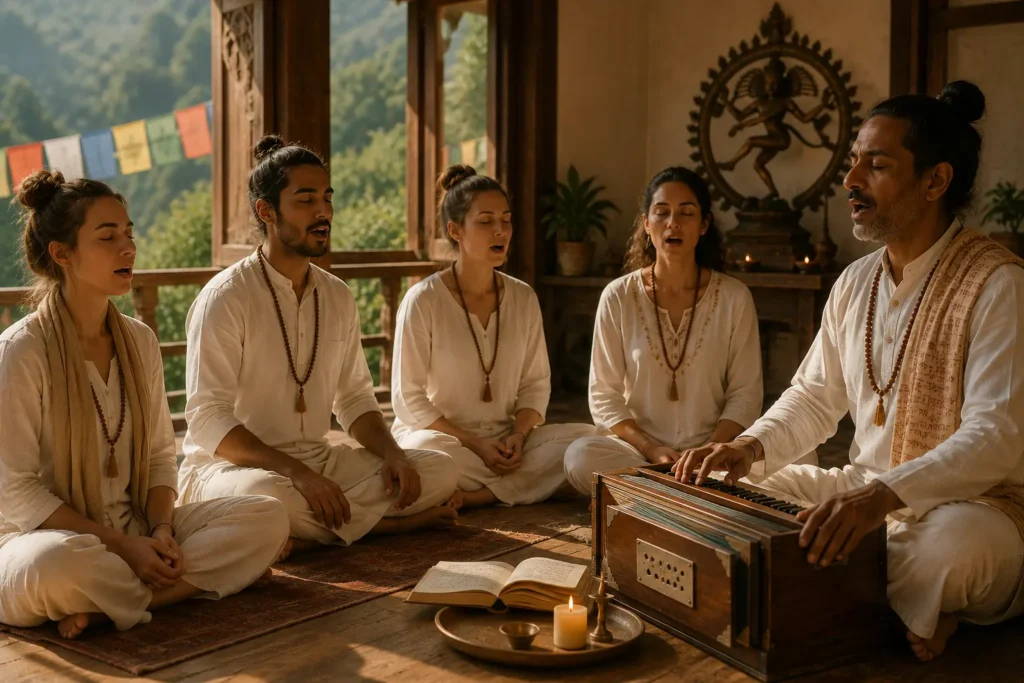
A mantra is a sound or phrase repeated with attention, nothing more complicated than that at its core. The word comes from Sanskrit, “man” for mind and “tra” for freeing, so a mantra is basically a tool for pulling the mind out of the loop it usually runs on all day.
A few that come up most often at a yoga ashram in Nepal:
- Om, the most basic sound there is
- Gayatri Mantra, chanted for clarity and wisdom
- Shanti Mantra, usually recited to close a session, asking for peace
There’s more behind this than tradition alone, as it turns out. A pilot fMRI study on PubMed/NCBI found that chanting Om out loud produced measurable deactivation in brain regions tied to stress and anxiety, an effect the researchers compared to vagus nerve stimulation therapy.
Who This Kind of Retreat Actually Suits?
People hear the word “ashram” and assume it’s only for lifelong yogis or the extremely spiritual. It really isn’t, not even close.
A few types it tends to suit well:
- Complete beginners with zero background in yoga or meditation
- Anyone genuinely burnt out and wanting real distance from a phone
- Travellers who’d rather have some structure than another loose sightseeing itinerary
- People more curious about the philosophy behind yoga than the postures themselves
- Anyone coming off a rough patch who wants a slower pace for a week or two
Anyone with a recent surgery, a serious heart condition, or an early pregnancy should mention it before booking, so the schedule can be adjusted.
There’s also an Ayurvedic doctor and massage on request, which some guests lean on to ease into the physical side of things if postures feel unfamiliar at first.
Nepal Yoga Home’s teacher training programmes and its founder, Dr. Prakash Acharya, can help work out what actually fits before anyone locks in dates.
Considering a Traditional Yoga Ashram in Nepal Retreat?
Reading about asana, meditation and mantra chanting only gets someone so far, honestly. The real shift happens the first morning it actually starts, sitting in a hall at sunrise, chanting next to a dozen strangers.
Nepal Yoga Home has been running programmes like this on the edge of the Nagarjun forest for years and holds Yoga Alliance registration for its teacher training standards.
Have a look at the retreat options, or head straight to booking if the dates are already decided.
Frequently Asked Questions
Is a Yoga Ashram Retreat Safe for Beginners?
Yes. Teachers adjust postures, breathing and meditation length based on where each person is actually starting from, so nobody’s stuck trying to keep pace with an advanced practitioner across the room. Built around meeting people where they are, not the other way round.
Anyone with a recent surgery, a serious heart condition or an early pregnancy should mention it before booking so the plan can be adjusted.
How Long Should a First Stay Be?
One to two weeks usually works best for a first visit, enough time to actually settle in rather than just get used to it and then leave. A shorter three or four day stay works as a taste test, while a 21-day retreat or a full month suits someone after a deeper reset, or planning to roll straight into teacher training afterward.
Is the Food Strictly Vegetarian?
Meals at most Nepal ashrams are simple and vegetarian. Dal, rice, seasonal vegetables and tea on tap through the day, all meant to keep energy steady through a full day of practice. Less about restriction, more about what actually works for the routine.
Can This Be Combined With Yoga Teacher Training?
Yes, plenty of people use a short ashram stay as a warm-up before a longer 200-hour teacher training course. Getting used to the rhythm, the meditation, and the chanting beforehand tends to soften the shock once the more intensive training actually begins.