100-Hour Beginner Yoga Teacher Training, Massage & Singing Bowl Training in Nepal
- 100 yoga hours
- Daily Ayurvedic massage
- 8 hours singing bowls
- Small groups
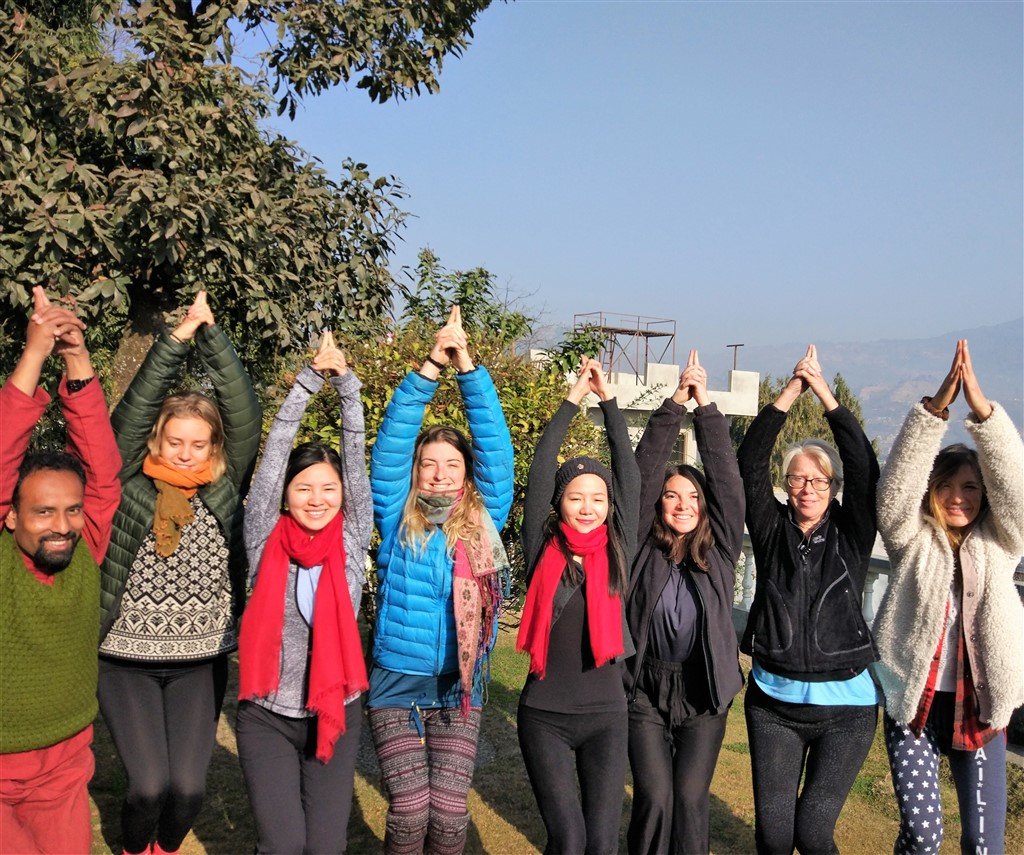
Have you tried a few yoga classes and now want to understand what you are really doing? Or maybe you have never stepped on a mat and just feel ready to start. Our 100-hour beginner yoga teacher training in Nepal is made for both of you.
We teach this course at Nepal Yoga Home in Kathmandu, only 5 km from Thamel. You learn Hatha yoga and Ashtanga Vinyasa, along with breathing, meditation, philosophy, chanting and anatomy. Our groups stay small, so your teacher always has time for you.
This program also brings two extras. You receive a one-hour relaxing Ayurvedic massage every day. On top of the 100 yoga hours, you complete 8 hours of singing bowl training in your free time.
Read on for the full breakdown, a sample daily schedule, details about the stay and food, our refund policy and answers to common questions.
Course at a Glance
| Detail | Information |
|---|---|
| Course | 100-hour beginner yoga teacher training with massage and singing bowl training |
| Yoga training | 100 hours |
| Teaching style | Hatha yoga and Ashtanga Vinyasa, plus other dimensions of yoga |
| Daily massage | One hour of relaxing Ayurvedic massage every day (you receive it, you do not learn it) |
| Singing bowl training | 8 hours, done in your free time and separate from the 100 hours |
| Location | Nepal Yoga Home, Kathmandu, beside Nagarjun forest |
| Meals | Breakfast, lunch and dinner, fresh, vegetarian and sattvic |
| Rooms | Standard or deluxe, shared or private |
| Group size | Small groups |
| Certificate | Course certificate included in the fee |
| Refund | Full refund if an emergency stops you from joining; reschedule if an emergency happens after the course starts |
| Dates | Please ask us for the next batch dates |
Benefits of Starting With Beginner Yoga Training
Starting at the base gives you more than strong poses. Here are a few things students often notice:
You learn to feel where your weight, breath and tension sit.
Daily breathing and meditation give your thoughts a place to rest.
Anatomy and alignment lessons help you avoid common mistakes.
Early mornings, set meals and quiet evenings build good habits fast.
You live and practice with people who share your interest.
Every body responds in its own way, so we never promise a fixed result. We promise honest teaching and a caring place to learn.
Why Choose Our Beginner Yoga Teacher Training in Nepal?
Here is what makes this course different:
Together, these points keep the course gentle for new students and still serious about learning. You leave with real skills and a rested body.
Who Can Join This Course?
This course suits many kinds of people:
- Complete beginners who have never taken a yoga class
- Casual practitioners who want better alignment and a stronger base
- Students who dream of teaching one day and want a first step
- Busy people who need rest, quiet and a simple daily routine
- Travellers who want more from Nepal than sightseeing
Please tell us about any injury, health problem or pregnancy before you arrive. Our teachers will guide you to practice safely.
If you feel nervous, you are in good company. Many students arrive worried about flexibility, fitness or age. These worries often fade after the first classes, because the teaching is gentle and the group is supportive.
How Hatha and Ashtanga Vinyasa Work Together
Many beginners ask why we teach two styles. The short answer is balance.
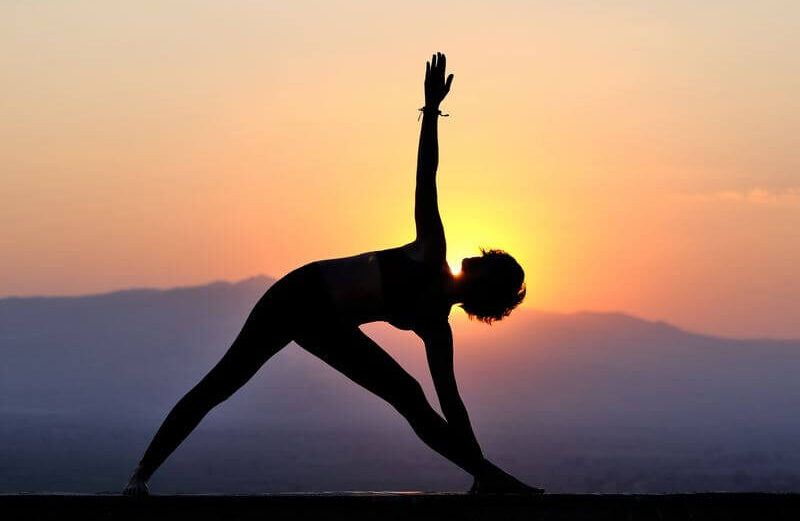
Hatha yoga
Hatha yoga is slow. It teaches you to stay in a pose, breathe and observe.
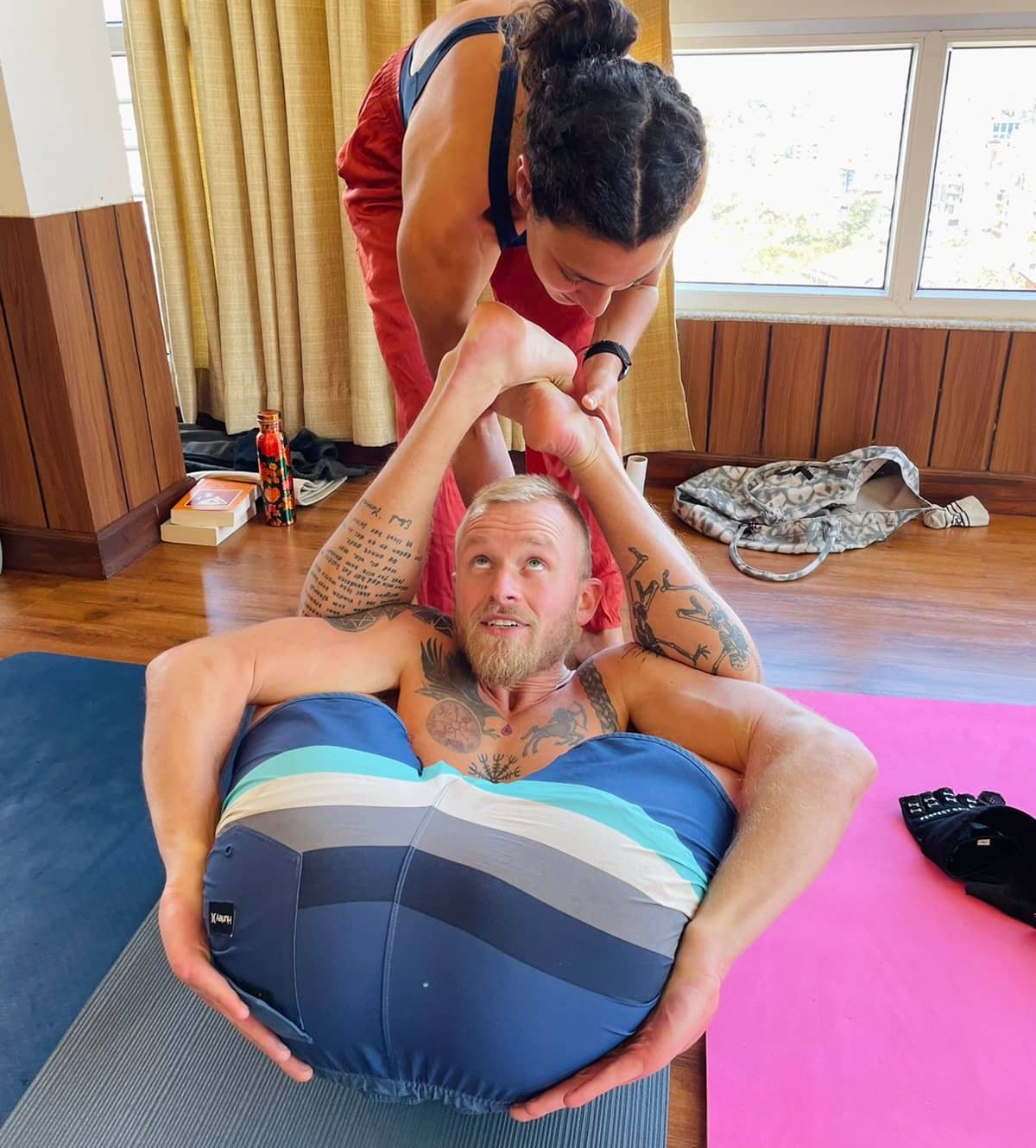
Ashtanga Vinyasa
Ashtanga Vinyasa is more active. It teaches you to move with the breath and build stamina.
Together they train both your patience and your energy. Hatha opens the day, and Ashtanga Vinyasa brings power at noon. Breathing, meditation and philosophy then bring everything back to calm.
Training Breakdown: What You Learn in the 100 Hours
Our teaching style is Hatha and Ashtanga Vinyasa. Around them, we add other dimensions of yoga, such as breathing, meditation, philosophy, chanting, relaxation and detox. Here is how each part works:
1. Hatha Yoga Flow
Each day begins at 7 am with a Hatha yoga flow. Hatha yoga is slow and steady. You hold poses, link them with your breath and learn to listen to your body.
There is no rush here. We teach each posture step by step and respect your limits. A pose that feels hard today may feel easier next week.
Your teacher will also show simple options. If you feel tired, you can stay longer in a resting pose. This habit of listening instead of forcing is something you can later pass on to your own students.
2. Textbook of Hatha Yoga, Detox and Teaching Practice
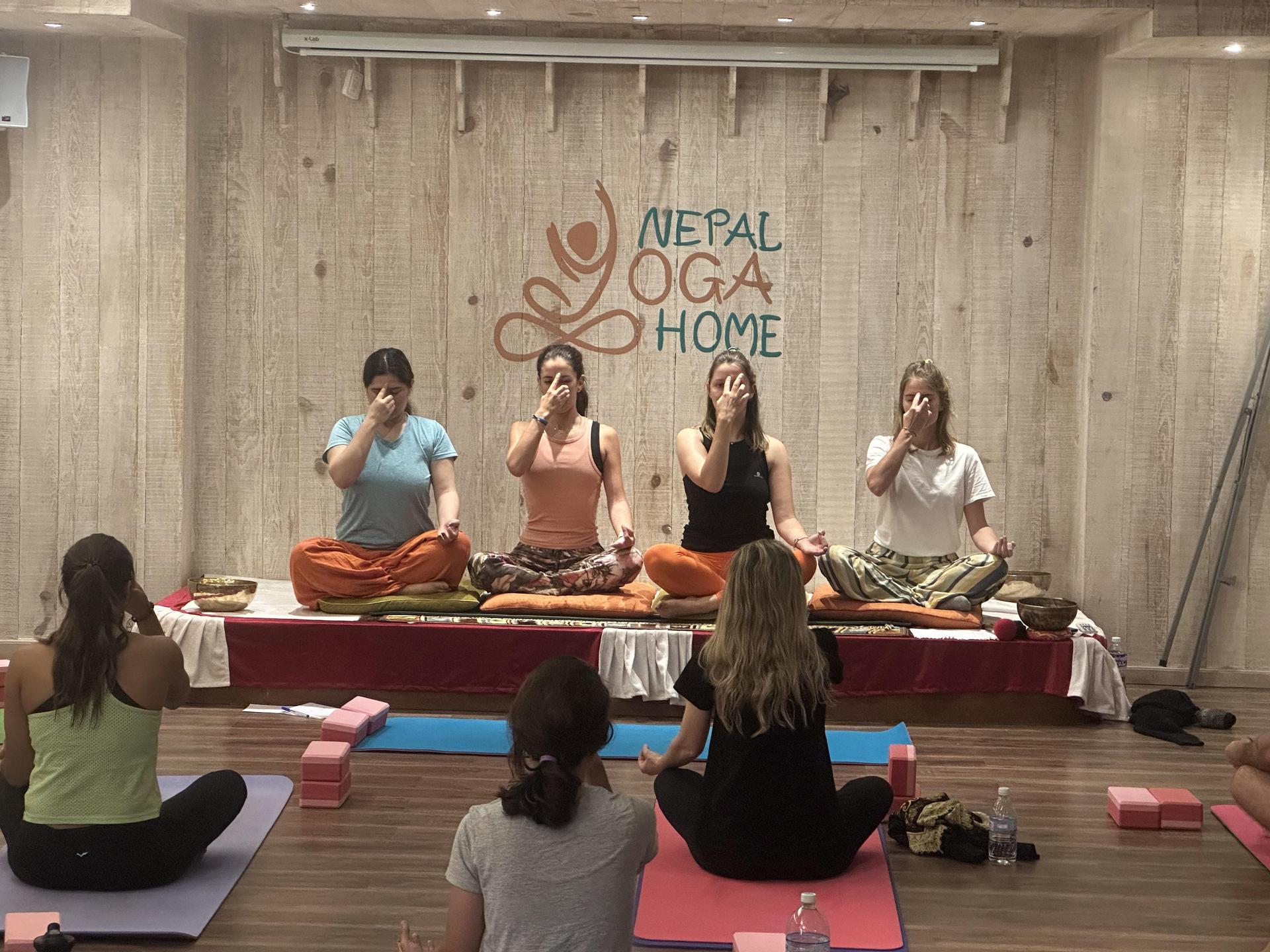
After the morning flow, you open the textbook of Hatha yoga. You read, discuss and learn what the classic teachings say about postures, breath and daily living. This is the theory behind what your body just did.
The same slot covers a basic introduction to yogic detox and short teaching practice. You may guide a simple pose for a classmate and slowly learn how to explain, show and correct. Everyone feels shy at first, so no one is judged.
Keep a notebook with you in this class. Many students write down Sanskrit names and key ideas, and they use these notes long after the course ends.
3. Relaxation, Chanting and Anatomy
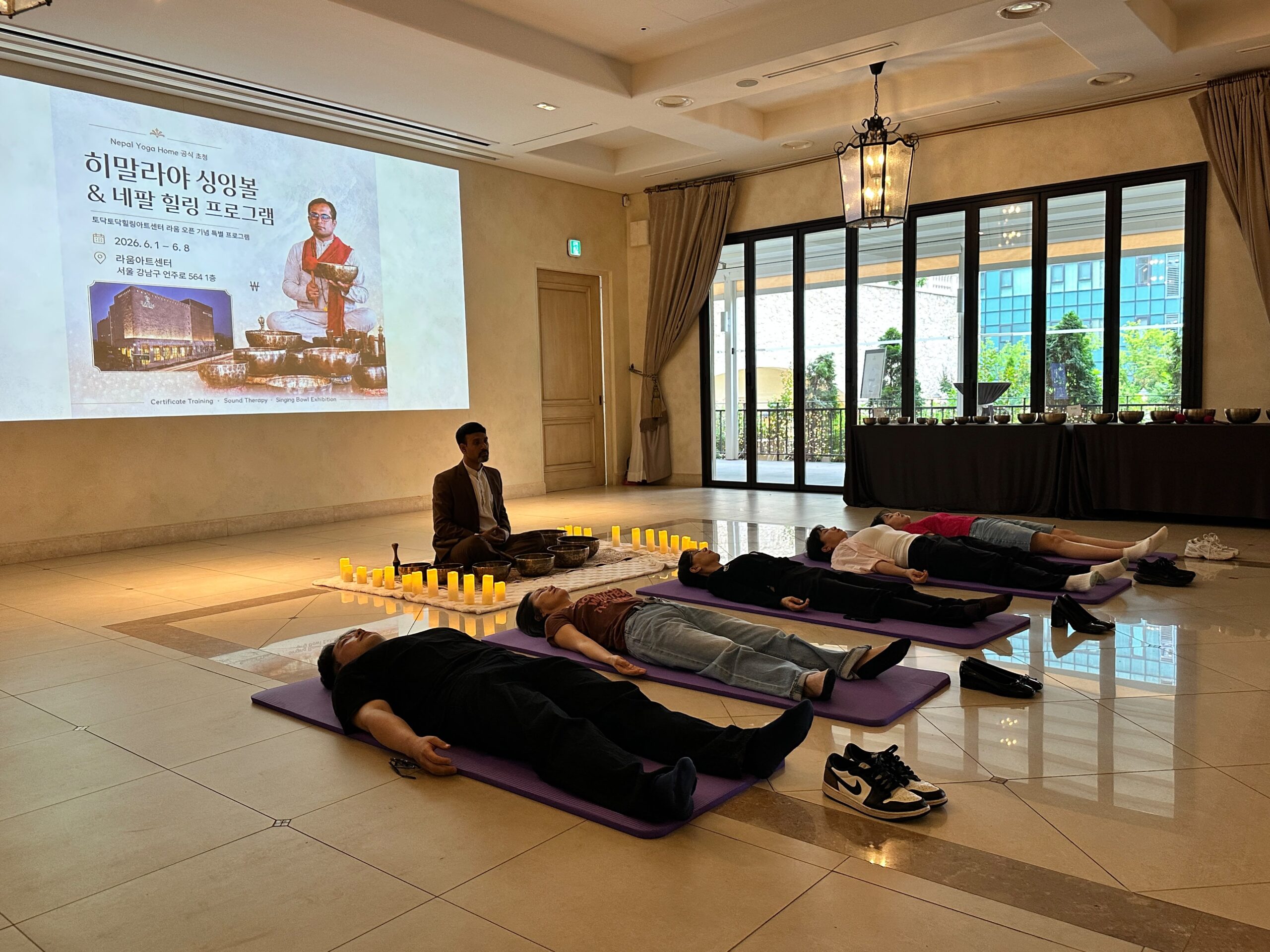
This late-morning class changes from day to day. Some days you rest in deep, guided relaxation. On other days you practice mantra chanting and feel the sound settle your mind.
On anatomy days, you learn how muscles, joints and the spine work in yoga poses. This knowledge helps you practice safely and, later, protect your own students.
4. Ashtanga Vinyasa Flow
At noon comes a stronger class. Ashtanga Vinyasa joins poses and breath in a steady, flowing order. It builds heat, strength and focus.
Beginners often fear this style, so we teach it slowly. You learn the basic poses and the flow at a pace you can handle, and you may rest whenever you need. The class ends with a short rest, so your breath slows down and your body can absorb the work. If you are curious, read about the Ashtanga Vinyasa primary series.
5. Meditation and Breathing
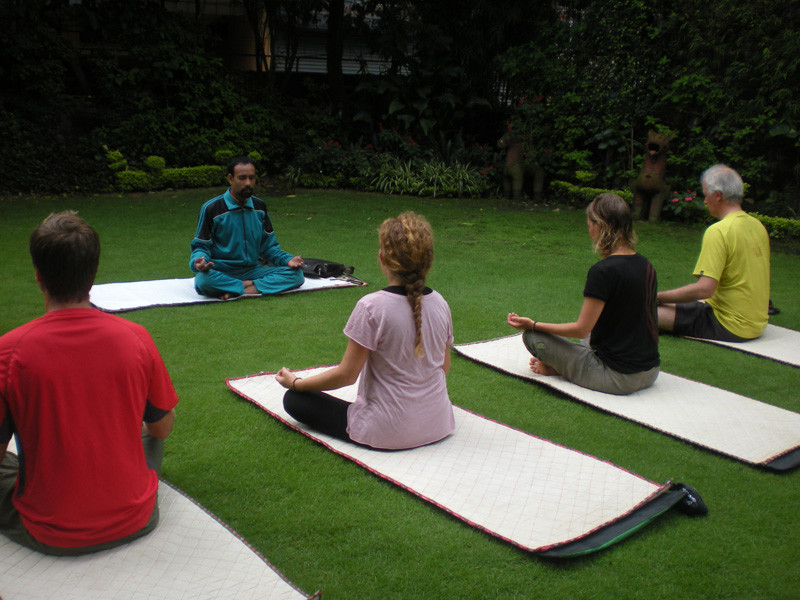
In the afternoon you practice pranayama, the science of breath, along with meditation. You learn basic breathing methods, such as alternate nostril breathing, and how to sit quietly and watch your thoughts.
These sessions are simple and gentle. By the end of the course, you will have a short routine that you can keep at home. A calm mind also understands ideas better, which helps in the evening philosophy class.
6. Alignment and Yoga Flow
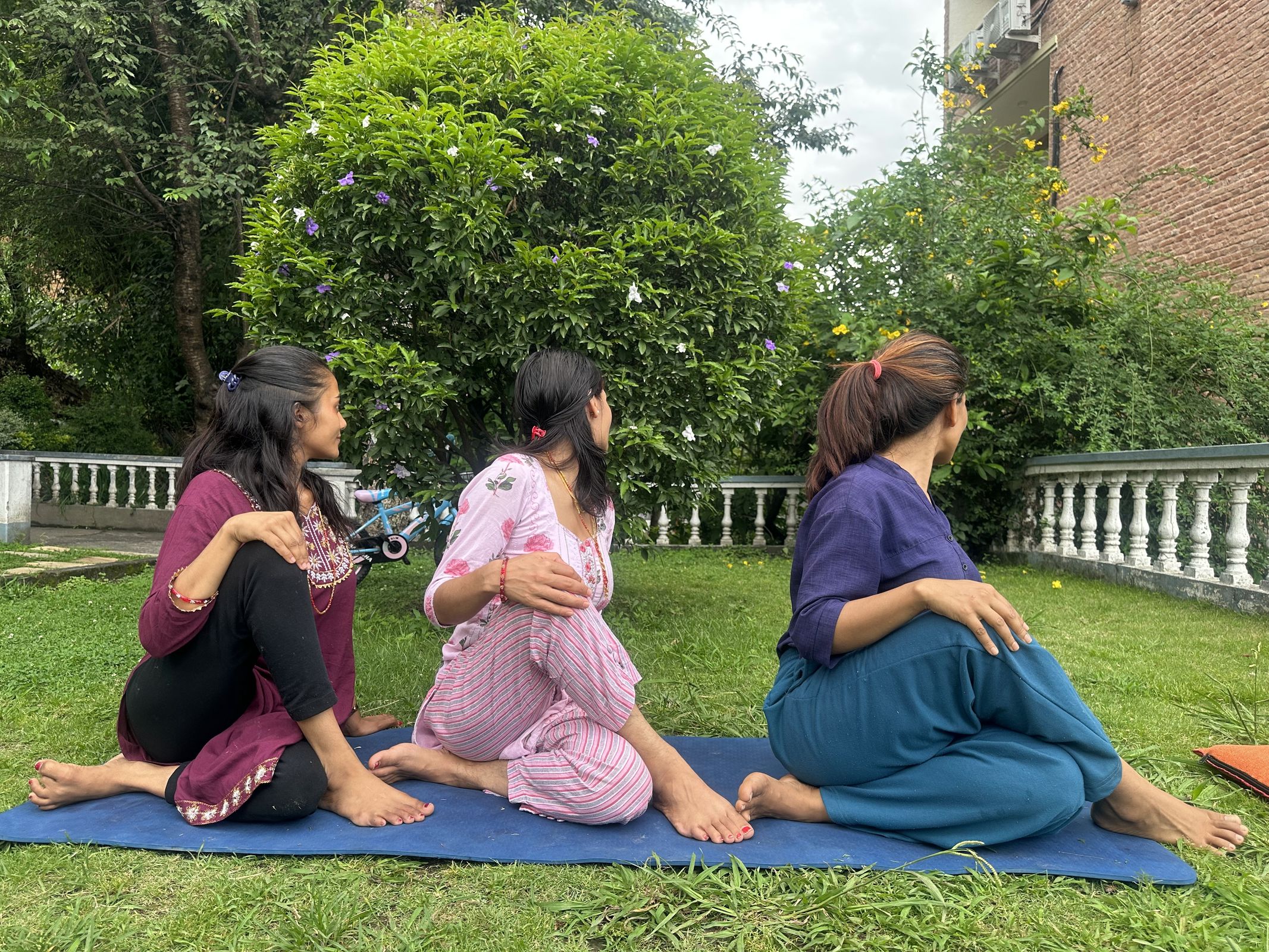
Alignment means how you place your body in each pose. Good alignment protects your joints and makes a pose work better. Your teacher shows small details, like where to set your feet or how to lengthen your spine.
You then link the poses into a flow. This class shows you how to build a safe sequence, which is a key skill for any future teacher. Do not worry if your pose looks different from the person next to you. Every body has its own shape, and good alignment fits the person, not a picture.
7. Meditation and Philosophy
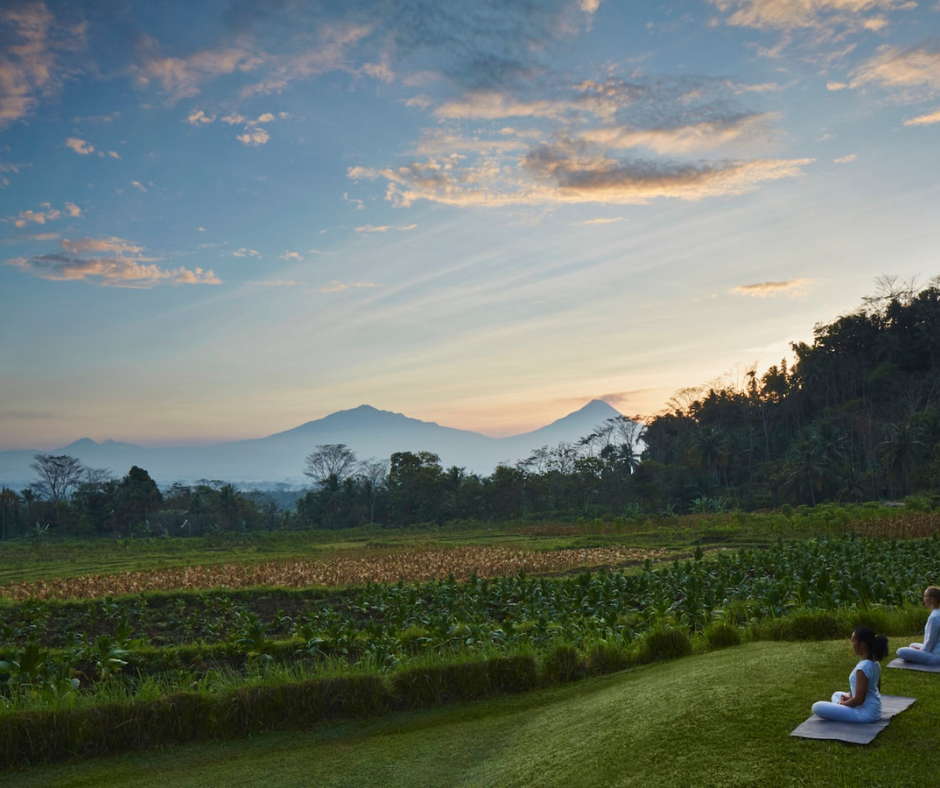
The last class of the day joins meditation with yoga philosophy. You explore ideas from the eight limbs of Ashtanga yoga and learn about the energy centers, called chakras, and the mantras linked with them.
Talking about these ideas ties your whole day together. You see how poses, breath and a calm mind connect with real life.
Teaching Practice: Your First Steps as a Guide
You are not expected to lead a full class in this course. Instead, you take small steps, and each one builds your confidence.
Give clear instructions
In the morning teaching slot, you practice giving clear instructions, showing a pose and watching how a classmate moves. You also learn to give kind, useful feedback. Speaking calmly while others listen is a skill, and it grows with repetition.
Even if you never plan to teach
Even if you never plan to teach, this practice helps. It forces you to understand each pose well enough to explain it in simple words.
Sample Daily Schedule
Below is a sample routine. It is only a rough guide, and we may change it according to climate, teacher, situation and the needs of the group.
| Time | Activity |
|---|---|
| 7:00 – 8:00 am | Hatha yoga flow |
| 8:15 – 9:00 am | Textbook of Hatha yoga, detox and teaching practice |
| 9:00 – 10:00 am | Breakfast |
| 10:00 am | Relaxing Ayurvedic massage |
| 11:00 – 11:45 am | Relaxation, chanting or anatomy |
| 12:00 – 1:00 pm | Ashtanga Vinyasa flow |
| 2:00 – 3:00 pm | Lunch |
| 3:30 – 4:30 pm | Meditation and breathing |
| 4:30 – 5:30 pm | Alignment and yoga flow |
| 6:00 – 7:00 pm | Meditation and philosophy |
| 7:00 pm | Dinner |
| 9:00 pm | Silence |
Notice how the day is shaped.
The gaps between meals and classes are your free time. Use them to rest, read, walk near the forest or join your singing bowl sessions.
One hour of Ayurvedic massage
One Hour of Relaxing Ayurvedic Massage Every Day
Every day at 10 am, right after breakfast, you receive a one-hour Ayurvedic massage. It is a calm, gentle bodywork from the Ayurvedic tradition.
Please note that this is not a massage class. You will not learn massage techniques here. It is a restful treatment for you.
How does it help your day?
After an early Hatha class and a full morning, your muscles will be glad of it. It helps your body relax so you can return fresh for the noon Ashtanga Vinyasa class. If you wish to learn massage as a skill, see our 50-hour massage teacher training.
How do students use this hour?
Many students plan their morning around this hour. It becomes a quiet pause between the early classes and the noon flow. Drink some water afterward and rest a little before class.
8 Hours of Singing Bowl Training
Besides your 100 yoga hours, you complete 8 hours of singing bowl training. We fit these sessions into your free time, so they never replace a yoga class.
What you learn
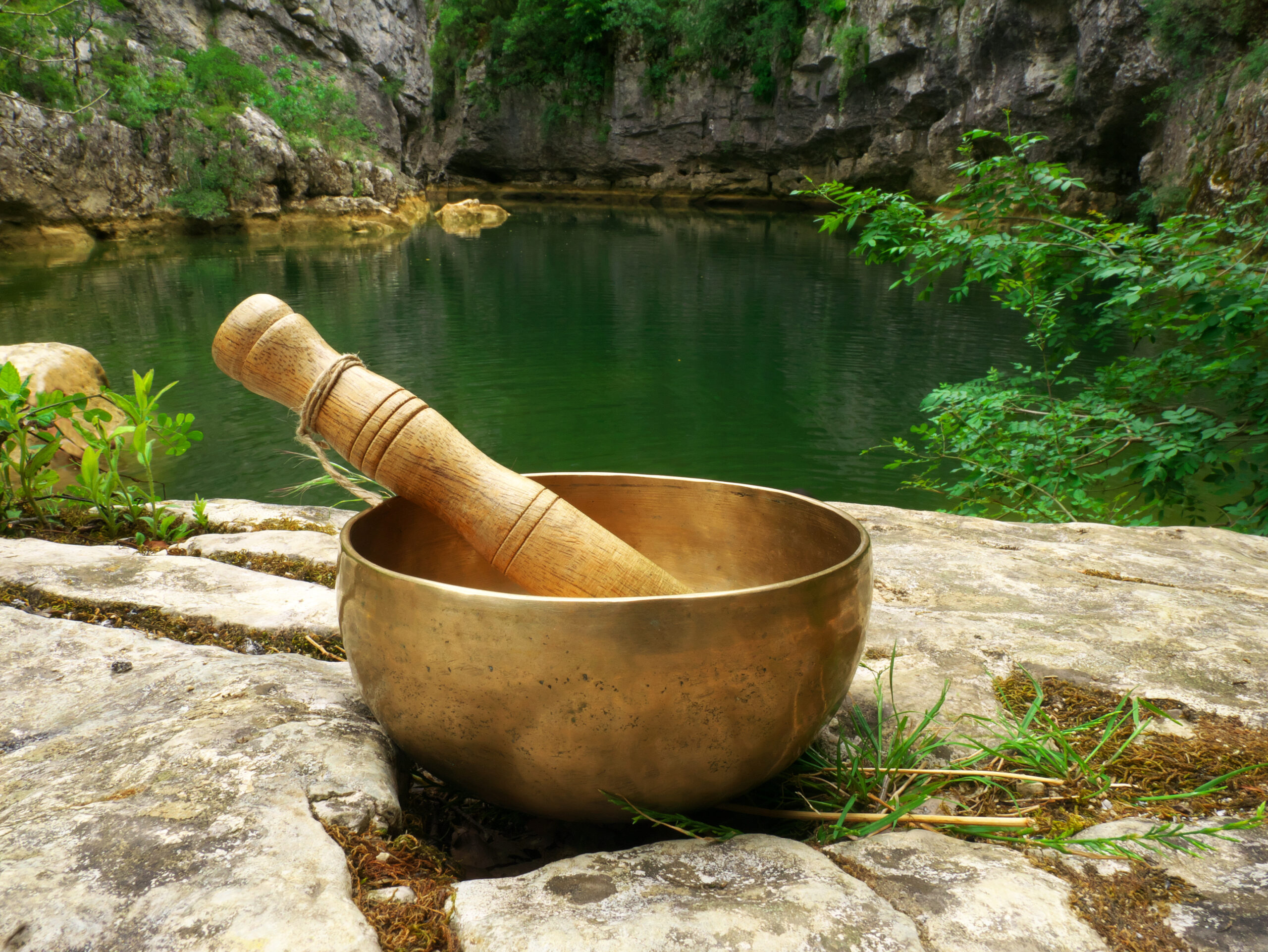
Himalayan singing bowls make deep, long tones when you strike or circle them. You learn how to hold a bowl, how to make its sound and how to use it in meditation and relaxation. No music background is needed.
How it feels
The sessions are hands-on, so you practice with the bowls yourself. You also sit and listen while the sound fills the room. Many people find that the long, steady tone helps the mind slow down.
Go further later
Want to go further later? We also teach a full singing bowl training, level 1 and more advanced levels.
What You Will Gain by the End
After your beginner yoga training, you will be able to:
- Practice yoga poses on your own with good alignment
- Name the main poses and breathing methods
- Follow a simple routine of pranayama and meditation by yourself
- Chant a few simple mantras
- Understand the basics of chakras and yoga philosophy
- Use an introductory idea of yogic detox in daily life
- Guide a simple pose or short sequence with more confidence
- Keep a healthy, happy lifestyle with more awareness of body and breath
A Week at the School: What to Expect
The first days are the hardest. Your body may feel sore, and the early start can feel strange if you are not used to it. This is normal, and our teachers will help you find your pace.
By the end of the first week, most students feel at home in the routine. Poses feel friendlier, the breath feels steadier, and the group begins to feel like a small family. Sleep usually improves too, since silence begins at 9 pm.
This simple rhythm is one reason a beginner yoga teacher training works so well in a quiet place. You have fewer distractions, so you can give your full attention to learning.
These skills belong to you, and they grow with practice. A few minutes of yoga each day after you go home will keep them alive.
Where You Will Learn: Nepal Yoga Home
Getting here
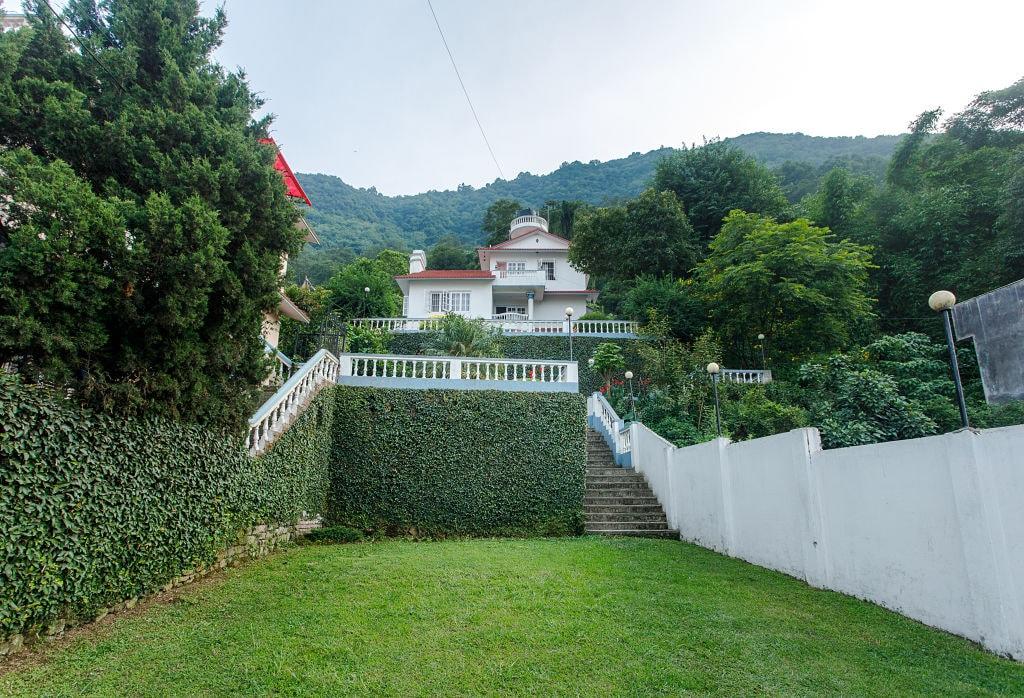
The school is in Kathmandu, beside the Nagarjun forest. It takes about 10 minutes by taxi from Thamel, which is 5 km away. From Tribhuvan International Airport, about 10 km away, it takes around 30 minutes when traffic is light.
Quiet mornings
Mornings are quiet. You wake to birdsong and, on clear days, see the Langtang range of the Himalaya. The open garden is there for your own practice or meditation.
A calm setting for first-timers
For a first-time student, a calm setting matters. There are no traffic horns in the classroom and no rush to be anywhere else. That makes it easier to hear your own breath and follow your teacher.
Pick-up and drop
Pick-up and drop service is available on request on extra cost. See our services and facilities page for more.
Life at the Ashram: A Simple Yogic Rhythm
Nepal Yoga Home feels like an ashram. The place is calm, natural and sattvic, and a yogic way of living always comes first.
One family
We follow the idea of Vasudhaiva Kutumbakam, which means the whole world is one family. Guests from every country and background learn side by side, share meals and look after each other.
Quiet evenings
Evenings are quiet. Dinner is at 7 pm and silence starts at 9 pm. This early rest helps your body recover for the next morning, and it makes the beginner yoga teacher training feel like a real retreat.
Exploring Kathmandu in Your Free Time
In your free time
Your free time is yours. Some students rest or read in the garden. Others walk toward the Nagarjun forest, which belongs to the Shivapuri Nagarjun area.
Thamel, temples and stupas
Thamel, the busy tourist hub, is close by. The valley also holds many temples, stupas and old squares, such as Swayambhunath and Boudhanath. Even a short walk between classes can clear your head. Keep in mind that singing bowl sessions use part of your free time, so plan longer outings for lighter days and be back before dinner at 7 pm.
Rooms and Food
Rooms
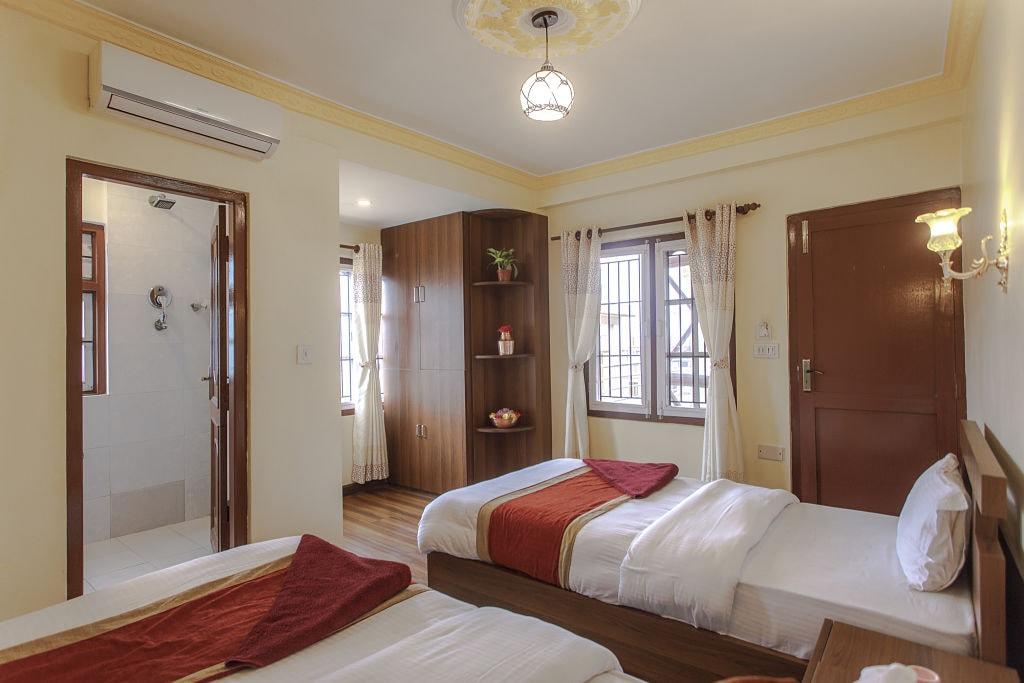
Rooms are simple and clean, with a bed, a table and a shelf. Bathrooms have hot and cold water, and free Wi-Fi is available. You can choose standard or deluxe rooms, shared or private. Check-in is at 2 pm and check-out is at 12 pm.
A private room gives you quiet space to rest after classes. A shared room lets you meet your classmates early and share the experience. Choose whichever feels right for you, and tell us your choice when you book.
Food
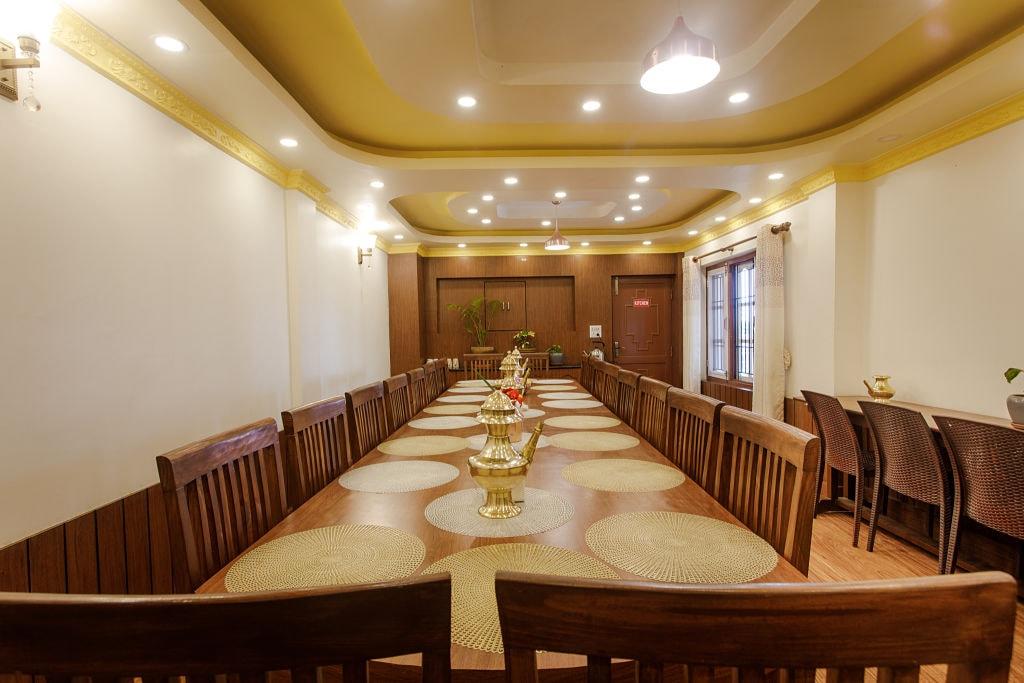
Meals are vegetarian, sattvic and fresh. Experienced women cook them in a family setting, using vegetables from our own garden and the local village. Ginger herbal tea and hot water are always ready when you ask.
Sattvic food is light, simple and freshly made. It avoids heavy, greasy dishes, so you feel awake in class instead of sleepy.
Simple Tips Before You Arrive and For Your Classes
Simple Tips Before You Arrive
- Check the visa rules for your country. Most visitors need a Nepal visa, so confirm the latest rules with the embassy or official immigration website.
- Plan your arrival around check-in at 2 pm, and send us your flight details so we can arrange pick-up.
- Tell us about injuries, health needs and food limits when you book.
- Pack warm layers in winter, since mornings and evenings in Kathmandu are cool.
- Come with an open mind. Nobody here expects perfect poses.
Simple Tips for Your Classes
- Wear loose, comfortable clothes that let you move freely.
- Keep a bottle of water near your mat.
- Tell your teacher right away if something hurts. Pain is a signal to stop, not to push.
- Arrive a few minutes early so your body and mind can settle.
- Use the free Wi-Fi when you need it, but keep screen time low so you can rest well.
Small habits like these make the 100 hours smoother. They also help you enjoy the course instead of just getting through it.
What Is Included and What to Bring
Your course fee includes:
- Accommodation
- Breakfast, lunch and dinner
- All yoga and meditation classes
- One hour of Ayurvedic massage every day
- 8 hours of singing bowl training
- Course certificate
Please bring a yoga mat, comfortable clothes, towels, a flashlight, a notebook and pen, soap and shampoo, and a photocopy of your passport. In winter, pack warm clothes too.
Flexible Refund Policy
Before the course
Plans can change, and we understand that. If you cannot join because of an emergency, your payment is fully refundable.
After it starts
If an emergency happens after the course has started, you can reschedule for the next batch. Write to us as soon as you can, and we will help you.
How to reschedule
To reschedule, contact us by WhatsApp or email and tell us what happened. We will move you to the next suitable batch. We keep this policy flexible so you can book your beginner yoga teacher training with a calm mind.
A Registered School You Can Trust
Nepal Yoga Home has been teaching for more than 15 years. More than 10,000 people have visited, and students have come from about 80 countries. You can read their words on our testimonials page.
The school is registered with Yoga Alliance International. Our 200-hour and 500-hour courses are certified by Yoga Alliance. This 100-hour course ends with a course certificate from Nepal Yoga Home.
Our founder, Dr. Prakash Acharya, is listed in the Yoga Alliance International registry. He and the teaching team keep classes warm, clear and honest.
Is This Course Right for You?
A good fit
It is a good fit if you want a gentle but complete start in yoga with rest built in. It also suits you if you like small groups and a quiet place to learn.
May not be the best fit
It may not be the best fit in a few cases. If you want to teach full time right away, a longer course gives you more. If you are over 50, our 200-hour seniors yoga training is made for your age group. If you only want a short holiday, a 10-day yoga retreat for beginners may suit you better.
Beginner Yoga Teacher Training or a Longer Course?
Not sure which course fits you? This quick comparison may help.
| Course | Best for | Styles | Certification |
|---|---|---|---|
| 100-hour beginner course | New students who want a strong base | Hatha and Ashtanga Vinyasa, plus other dimensions of yoga | Course certificate |
| 200-hour course | Students ready for a full teacher course; beginners are welcome | Hatha, Ashtanga and Kundalini | Yoga Alliance certified |
| 500-hour advanced course | Students with experience who want advanced study | Hatha, Ashtanga, Iyengar and Kundalini | Yoga Alliance certified |
After this course, the 200-hour yoga teacher training is the usual next step. The 500-hour advanced yoga teacher training follows after that.
How to Book Your Place
Send your request through our booking page. You can also message us on WhatsApp at +977-9849521819, write to nepalyogahome@gmail.com, or use the contact page. Our general FAQ page answers questions about travel and payments.
When you write, tell us your preferred dates, room type and any health notes. We will reply with the next course dates and the booking steps for the beginner yoga teacher training.
Frequently Asked Questions
Can I teach yoga after a 100-hour beginner yoga teacher training?
You will be able to guide simple poses and short sequences for friends, family or a small group. Most yoga studios ask for a 200-hour certificate, so this course works best as a strong first step. If you plan to teach as a career, you can continue with a longer course later.
Is Ashtanga Vinyasa too hard for a complete beginner?
It can feel strong at first, because the poses flow together with the breath. We teach it slowly and in small parts, and you may rest or use easier versions at any time. Most beginners find it friendlier than they feared after a few classes.
Can I join with an old back or knee injury?
Often yes, but please tell us about the injury when you book. Our teachers can offer gentler versions of poses and may ask you to skip certain movements. For serious conditions, check with your doctor before you travel.
What is the best time of year to join a yoga teacher training in Nepal?
Spring (March to May) and autumn (October to November) are the most pleasant seasons, with mild weather and clear mornings. Winter nights in Kathmandu are cold, and monsoon rain falls from June to September. This is also why we may adjust the daily schedule to the weather.
How do I reach Nepal Yoga Home from Tribhuvan International Airport?
Take a prepaid taxi towards Balaju Bypass and then Fulbari Gate, also called Nagarjun gate. Our big white house with the Nepal Yoga Home signboard is about 650 meters ahead on the left. You can also ask us to arrange pick-up, or simply hand our phone number to your driver.
Is this yoga training safe for solo female travellers?
Nepal Yoga Home runs like a family home, with small groups and friendly teachers. Experienced women cook the meals, and you can choose a private room for extra comfort. Ask us to arrange your airport pick-up so you arrive with ease.
Can I join with a friend or partner and share a room?
Yes, you can choose a shared or a private room when you book. Tell us who you are coming with, and we will arrange the rooms together. Both standard and deluxe options are available.
What if I have food allergies or follow a special diet?
All meals are vegetarian and sattvic, which means fresh and light. Please share any allergy or food limit when you book, so the kitchen can plan for you. Hot water and herbal tea are always available.
How can I keep my practice going after I go home?
Start small, with 20 minutes of yoga and a short breathing session each morning. Use your course notes and the Hatha yoga textbook to repeat the order you learned here. If you like guided classes, our online yoga classes are a good option.
Can I stay longer for a retreat after the training?
Yes, you can extend your stay and join a program such as our one-week yoga detox retreat or the one-month yoga retreat. Tell us your dates when you book. We will then check room availability for those days.