

You stand up after a long day at your desk, and your hips feel like rusty hinges. Yoga for hip mobility gives you a simple way to loosen them without a gym or special equipment.
This guide covers 20 beginner-friendly poses, grouped by how you sit, stand or lie down. Each pose comes with an easy option, so you can start today with yoga for hip mobility even if you have never touched a mat.
We teach these poses to beginners every week at our yoga retreat in Nepal. If you want to go deeper later, our 200-hour yoga teacher training teaches alignment and safe practice in detail.
What is Hip Mobility, and Why Do Hips Get Tight?
Hip mobility is how freely your hip joint moves through its range. The hip is a ball-and-socket joint, so it bends, extends, rotates and swings out to the side.
Hours of sitting shorten the hip flexors and switch off the glutes. Heavy packs, long stair descents and simple aging add more strain. If your team sits all day, our corporate yoga sessions bring relief to the office.
How Does Yoga for Hip Mobility Work Over Time?
Yoga for hip mobility works because it stretches tight muscles, strengthens weak ones and teaches you to move the joint in every direction. You hold each shape long enough for the muscle to soften, and you breathe slowly so your body stops guarding the joint.
Most beginners feel looser within a few weeks, though results vary from person to person. Steady practice beats one long session every month.
Ground Rules Before You Start
- Warm up with two minutes of easy walking or arm circles.
- Move slowly and never force a stretch.
- Hold each pose for five to eight breaths, about 30 to 60 seconds.
- Practise both sides.
- Talk to your doctor first if you have a hip replacement, an injury, ongoing pain or a pregnancy.
If tightness keeps coming back, our therapeutic yoga retreat offers gentle, guided work.
Part 1: Seven Seated and Kneeling Poses
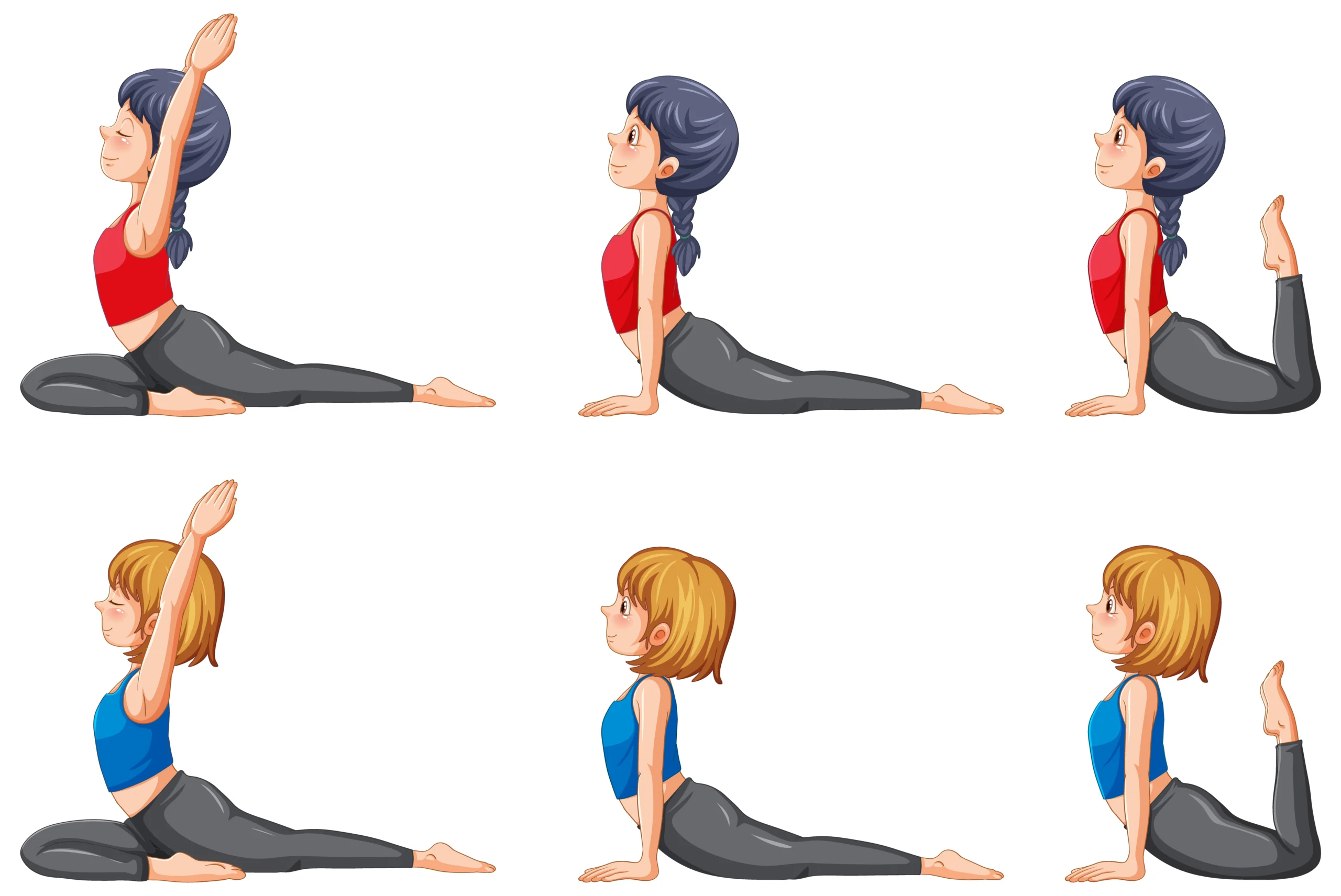
Seated poses make the best start to yoga for hip mobility because the floor supports your weight.
| Pose | What it opens | Beginner option |
| Easy Pose | Outer hips | Sit on a folded blanket |
| Butterfly | Inner thighs | Prop your knees with cushions |
| Fire Log | Outer hips and glutes | Sit higher on a block |
| Hero Pose | Quads and hip flexors | Place a block under your seat |
| Child’s Pose | Hips and lower back | Widen your knees |
| Cow Face Legs | Outer hips | Sit on a cushion and stack knees loosely |
| Wide-Angle Fold | Inner thighs and hamstrings | Bend your knees slightly |
Our yoga teachers show each of these shapes in class, so you can see the alignment before you try it.
Part 2: Seven Lunges and Standing Poses
Standing poses build strength around the joint, which helps your hips hold the new range.
| Pose | What it opens | Beginner option |
| Low Lunge | Hip flexors | Rest your back knee on a towel |
| Lizard | Deep hips and groin | Stay on your hands |
| Warrior II | Hip rotation | Shorten your stance |
| Goddess | Inner thighs and glutes | Bend your knees less |
| Garland | Ankles, hips and groin | Put a blanket under your heels |
| Tree | Hip rotation and balance | Use a wall for support |
| Standing Figure-Four | Glutes and outer hips | Hold a chair |
If you enjoy moving between lunges, try Ashtanga Vinyasa yoga in Nepal for a flowing style.
Part 3: Six Floor and Reclined Poses
Lying down lets your muscles let go, so stay longer in these shapes.
| Pose | What it opens | Beginner option |
| Resting Pigeon | Glutes and outer hips | Keep your front shin angled and sit on a cushion |
| Reclined Figure-Four | Glutes and deep hip muscles | Hold behind your thigh |
| Happy Baby | Inner hips and groin | Hold your shins |
| Reclined Butterfly | Inner thighs | Prop your knees with pillows |
| Bridge | Hip extension and glutes | Lift only halfway |
| Reclined Twist | Hips and lower back | Support your knees with a cushion |
Breathe and Rest Between Poses
Your breath sets the pace of yoga for hip mobility. Inhale to lengthen your spine, then exhale as you sink a little deeper. When you hold your breath, your muscles tense and the stretch stops working.
Finish every session with three to five minutes of rest on your back. To make that rest deeper, explore our yoga nidra training or the breathing practices in our pranayama and meditation retreat.
Which Poses Fit Your Life?
Pick the poses that match your daily habits.
| If you are | Start with | Learn more |
| A desk worker | Low Lunge, Figure-Four, Bridge | Try our 5-hour online yoga class |
| A trekker | Lizard, Resting Pigeon, Warrior II | Join the Everest Base Camp yoga trek or the Annapurna yoga trek |
| Stiff in the morning | Easy Pose, Child’s Pose, Wide-Angle Fold | Add five minutes after waking |
| A senior | Standing Figure-Four, Reclined Butterfly, Easy Pose | Visit our seniors yoga retreat or chair yoga course |
A 10-Minute Hip Mobility Routine
Short sessions beat long ones you skip. Follow this order for a quick round of yoga for hip mobility:
- Easy Pose, 1 minute
- Butterfly, 1 minute
- Low Lunge, 1 minute per side
- Garland, 1 minute
- Reclined Figure-Four, 1 minute per side
- Bridge, 1 minute
- Reclined Twist, 1 minute per side
A Four-Week Plan
Build slowly. This plan for yoga for hip mobility keeps the load light at first.
| Week | Days | Focus |
| 1 | 3 | Part 1 poses, one round each |
| 2 | 3 to 4 | Add Part 3 poses |
| 3 | 4 | Add lunges and standing poses |
| 4 | 5 | Full 10-minute routine |
Mistakes to Avoid
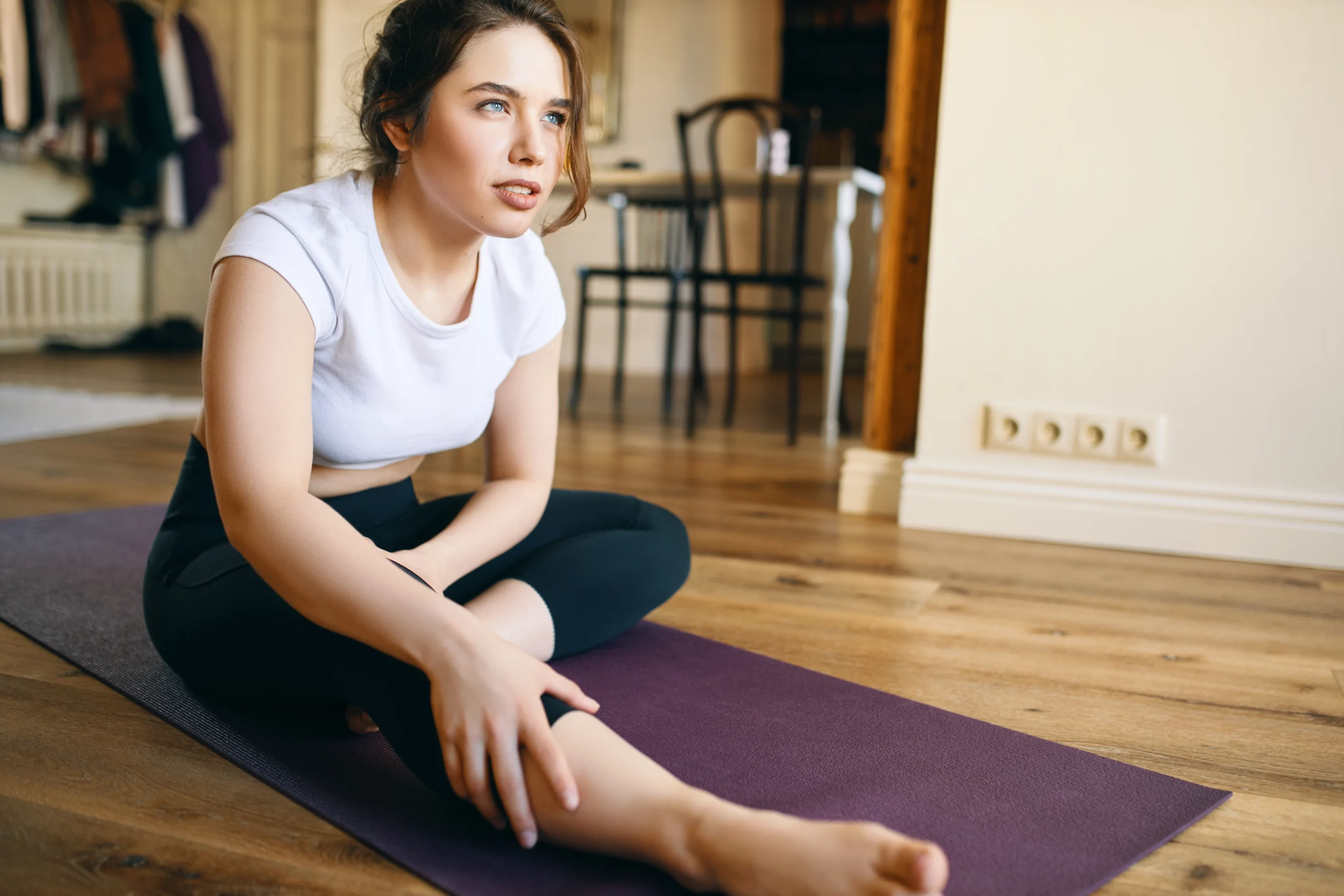
- Forcing your knee down in a rotation pose. Let the hip do the work.
- Bouncing in a stretch. Stay still and let the muscle soften.
- Ignoring pain. Sharp pain, pinching or numbness means you stop and see a professional.
Practise With Guidance at Nepal Yoga Home
Reading helps, but a teacher in the room helps more. You can join a one-week yoga class in Nepal or settle in for a one-month yoga retreat in Kathmandu and make yoga for hip mobility a daily habit. Check our services and facilities for details on rooms and meals, then book your stay when you are ready.
Frequently Asked Questions
What is the best yoga for hip mobility for beginners?
Low Lunge, Butterfly, Reclined Figure-Four and Child’s Pose make a gentle start. They ask for little balance and let you control how deep you go. Begin with the 10-minute routine above and add poses as your hips loosen.
How often should I practise?
Three to five short sessions a week work well at the start. Once your hips feel comfortable, move to ten minutes every day. Short, regular practice helps more than one long class on the weekend.
Can yoga help tight hips from sitting all day?
Yes, lunges and reclined poses ease the stiffness that long sitting creates. Stand up and walk every hour as well, because movement breaks matter as much as stretching. Regular practice counts for more than how deep you go.
Is discomfort normal in hip-opening poses?
A mild stretch is normal, but sharp pain, pinching or numbness is not. Ease out of the pose slowly and rest for a minute. If the feeling returns, check with a doctor or physiotherapist before you continue.
Do I need a mat or props?
A mat helps, but you can practise on a carpet or a towel. A folded blanket or cushion works in place of a block. A sturdy chair or a wall also gives you support in standing poses.
Are these poses safe for seniors or people with hip pain?
Many poses suit seniors when you use a chair, a wall and shorter holds. If you have a hip replacement or ongoing pain, get your doctor’s approval first. Go slowly, and skip any pose that feels wrong in your joint.