
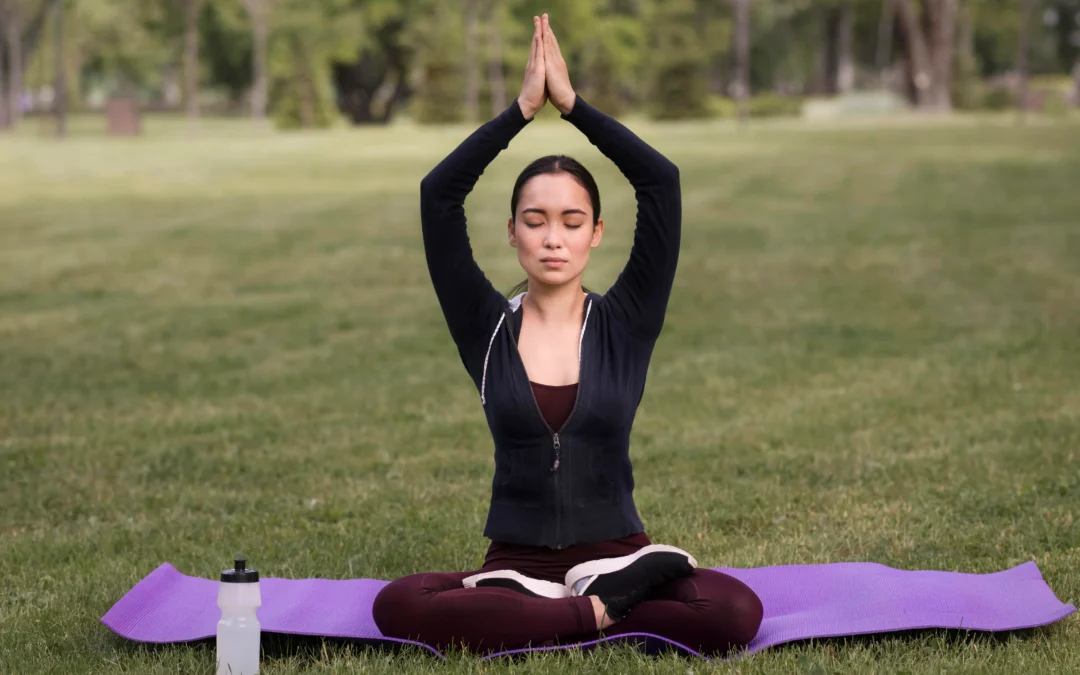
Yoga for balance and body awareness helps you stand steadier and notice what your body is doing from moment to moment. You don’t need years of practice to feel the difference.
Many people search for yoga poses for balance after a wobbly moment on one leg. A steady routine of yoga for balance and body awareness works better than random poses, because it trains your feet, core and attention together.
This guide shares seven poses, a short sequence and a few safety tips for yoga for balance and body awareness. If you’re new to yoga, our 100-hour beginner course gives you a solid base to build on.
Quick Answer
- What it builds: leg and core strength, focus and proprioception
- How long: 10 to 15 minutes a day, or three to four times a week
- Who it suits: beginners, runners, desk workers and older adults with support
- When to modify: use a wall or chair if you feel unsteady or dizzy
Why Balance and Body Awareness Matter?
Balance comes from strength, flexibility, attention and your senses working as a team. Body awareness, which teachers also call proprioception, is your sense of where your limbs are without looking at them.
Together they make walking, lifting and climbing stairs easier. They also support good posture and sharper focus. Our teachers often see these changes in students within a few weeks.
How Yoga Builds Balance and Body Awareness?
Yoga for balance and body awareness works because it trains your senses as well as your muscles.
- Slow movement gives your brain time to read every small shift.
- Long holds strengthen the tiny stabilising muscles in your ankles, hips and core.
- Steady breathing keeps your attention inside your body, much like meditation does.
- Pressing through your feet improves the feedback you get from the floor.
The 7 Poses
1. Mountain Pose (Tadasana)
Stand with your feet hip-width apart and spread your toes wide. Share your weight evenly between both feet, then scan your body from ankles to crown.
Every yoga for balance and body awareness practice starts here. Beginners can stand with their back against a wall, and everyone should keep their knees soft instead of locked.
2. Tree Pose (Vrikshasana)
Wondering how to stop wobbling in tree pose? Try these steps:
- Fix your eyes on a still point at eye level.
- Press your standing foot evenly into the floor.
- Place the other foot on your calf or ankle, never on the knee.
- Draw your belly in gently and bring your hands to your chest.
Rest a hand on a wall if you need support. We teach this pose step by step in our 200-hour yoga teacher training, and beginners can start in the 100-hour course.
3. Eagle Pose (Garudasana)
Eagle brings yoga for balance and body awareness together, because wrapping your arms and legs forces you to feel where each limb sits. Sink your hips as if you’re sitting in a chair.
If the full wrap feels too much, keep the toe of your top foot on the floor or practise seated. Our Ashtanga and Vinyasa classes are a good place to get your alignment checked.
4. Boat Pose (Navasana)
Sit tall, lean back a little and lift your feet while you balance on your sit bones. Your core does most of the work here. Bend your knees if your back rounds, and hold for three to five breaths. A power yoga workshop can help if you want to build more core strength.
5. Warrior III (Virabhadrasana III)
Hinge forward from your standing leg and lift the back leg until your body forms a T shape. Keep both hip points facing the floor. Rest your hands on a wall or blocks if you tip forward. The most common mistake is letting the lifted hip open to the side.
6. Half Moon Pose (Ardha Chandrasana)
Half Moon adds a fresh challenge to your yoga for balance and body awareness routine. Place a block under your lower hand and stack your top hip over the bottom one. Keep the standing knee soft and look at the floor first. Practise near a wall until you feel steady.
7. Dancer Pose (Natarajasana)
Treat this as a progression pose. Loop a strap around your lifted foot if you can’t reach it, and kick gently into your hand. Stay close to a wall at first. Once you hold it with ease, you’re ready for deeper study in our 300-hour advanced training.
A 15-Minute Balance Sequence
Use this order for yoga for balance and body awareness on busy days. The whole flow takes about 15 minutes with transitions.
| Pose | Hold | Breathing cue |
| Mountain | 1 minute | Slow breaths through the nose |
| Tree | 1 minute each side | Inhale to grow tall, exhale to settle |
| Eagle | 30 seconds each side | Keep the breath smooth |
| Boat | 3 to 5 breaths | Exhale as you lift |
| Warrior III | 30 seconds each side | Breathe into the standing leg |
| Half Moon | 30 seconds each side | Long exhales |
| Dancer | 30 seconds each side | Breathe evenly |
Our services and facilities page shows what we offer if you’d like guided practice. You can also follow along from home with our online yoga classes.
Tips for Practising Safely
Keep your yoga for balance and body awareness practice safe with these habits:
- Pick one fixed gaze point, called a drishti.
- Practise near a wall or chair.
- Go barefoot for better foot feedback.
- Choose steady practice over hard effort.
- Stop if you feel pain or dizziness.
Check with your doctor first if you have an injury, dizziness, a balance disorder or you’re pregnant. Our therapeutic yoga retreat offers gentler options, and expectant mothers can look at our prenatal yoga training.
Start Today
Yoga for balance and body awareness doesn’t need fancy equipment. Pick two or three poses from this list, practise them daily and add more as you grow steadier. Whether you try one pose now or join a full yoga retreat in Nepal, yoga for balance and body awareness rewards patience.
Read what our students say, learn about our founder, contact us with questions or book a class today.
Frequently Asked Questions
Is yoga good for balance?
Yes, slow holds and focused attention train your stability over time. Results vary from person to person, so practise regularly and stay patient.
How long does it take to improve balance with yoga?
Many people notice small gains within a few weeks of regular practice. Short daily sessions of 10 to 15 minutes work well.
Is yoga for balance and body awareness suitable for seniors?
Often yes, especially with a chair or wall for support. Check with your doctor first and try our chair yoga for seniors.
Do I need to be flexible to practise balance poses?
No, balance depends more on strength and attention than on flexibility. Props and modifications make every pose reachable.
Should I practise balance poses barefoot?
Usually yes, because bare feet give you better feedback from the floor. Wear grip socks if you have a health or safety concern.
You can find more answers on our FAQ page.