
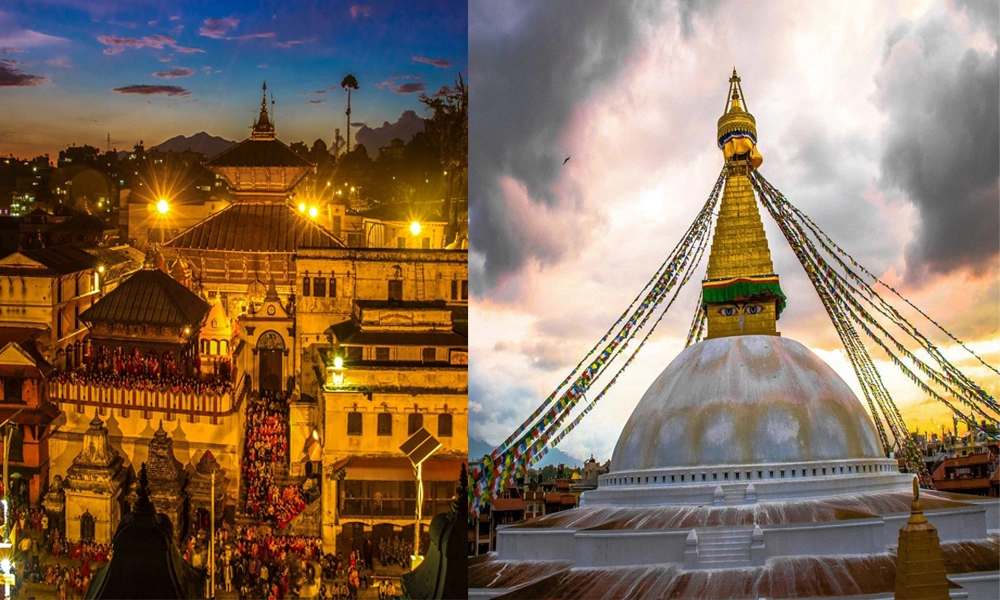
Why does almost every yoga retreat in Kathmandu send guests to the Pashupatinath temple at some point? That’s something a lot of people wonder. When you stand on the Bagmati riverbank one time, you stop asking.
A short drive away from Pashupatination temple you’ll get to see Boudhanath stupa. Between the two you’ve got the emotional center of the whole valley.
This blog shows what each site actually means, how not to be that tourist once you’re there and how we fit both into retreats at Nepal Yoga Home.
Pashupatinath Temple: Nepal’s Most Sacred Hindu Site
Pashupatinath temple is on the Bagmati River on Kathmandu’s eastern edge. It’s dedicated to Shiva in his form as Pashupati, protector of all living beings and it’s been the country’s most important Hindu pilgrimage site for longer than anyone can really pin down.
Parts of the complex go back over a thousand years. What’s actually standing now is only a few centuries old, since fires and earthquakes have both taken their toll more than once, and the whole place has been rebuilt piece by piece over generations.
Down by the water are the cremation ghats. Families carry out funeral rites right out in the open, no curtains, no privacy, nothing hidden from view. It’s a lot to take in the first time. When you’re there, you’ll experience how quiet everyone in the group is, nobody says much for the rest of that walk.
Non-Hindus can’t get into the main shrine. Everything around it though, the courtyards, the forested hill behind, all of that is open to anyone who wants to wander through. If you only do one thing here, make it the evening aarti. Bells, lamplight bouncing off the river and the smell of incense drifting everywhere.
Boudhanath Stupa: A Center of Tibetan Buddhist Practice
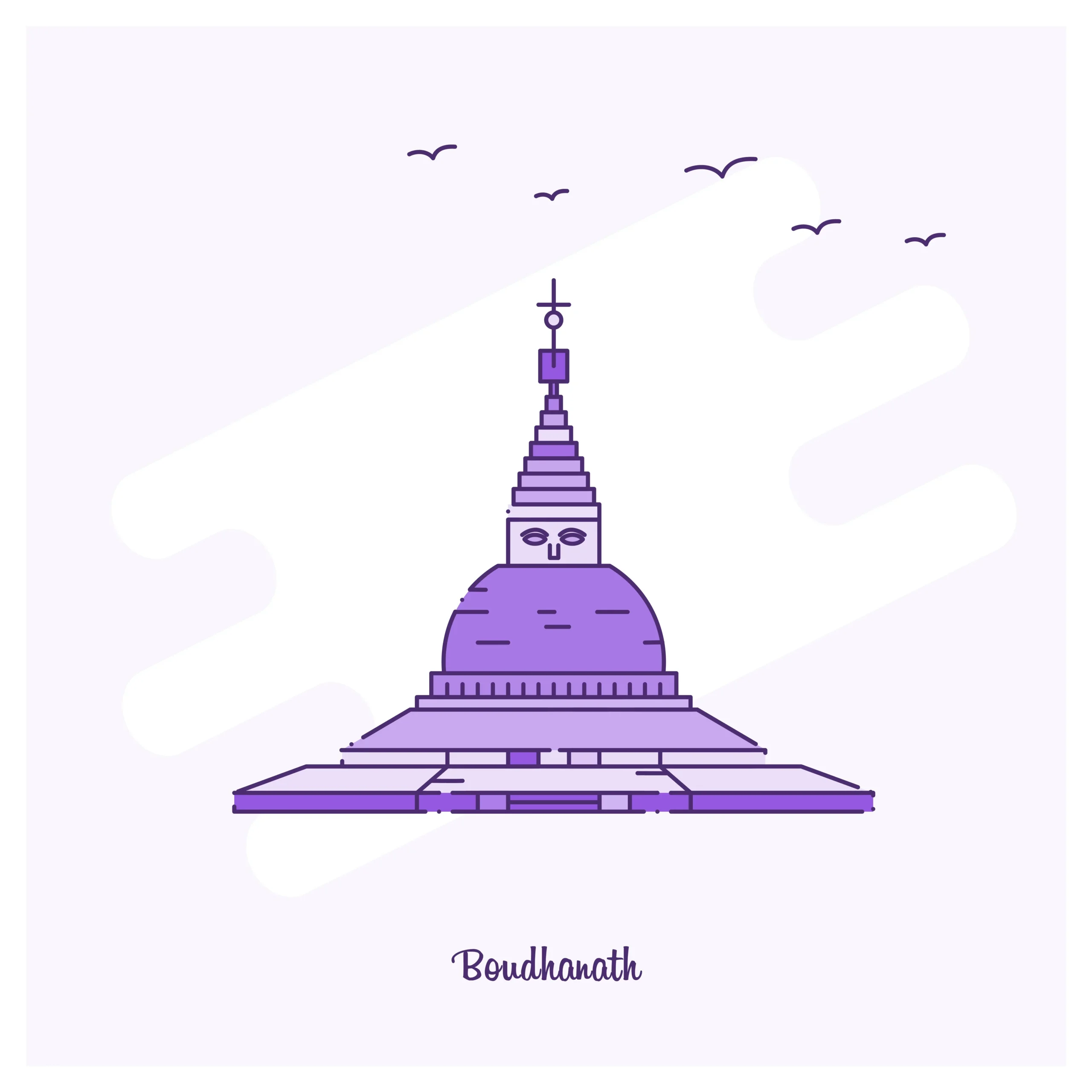
Short taxi ride from Pashupatinath temple and you’re at Boudhanath. The stupa rises above its own little neighborhood of shops and cafes, prayer flags strung between rooftops in every direction you look. Thousands of Tibetan refugees settled here after 1959 and the area has felt like a center of Buddhist life in exile ever since.
You notice it the moment you turn onto the main road. Something about the pace of things just slows down. More than fifty monasteries surround the stupa now, plus the cafes, thangka workshops, a shop or two pushing singing bowls on tourists who don’t know any better (some bowls are the real thing, plenty aren’t).
The painted eyes on the tower look out in all four directions at once. Ask a local and most will tell you it’s the Buddha keeping watch over everyone, everywhere, at the same time, which is a nice thought whether or not you buy into it literally.
Both sites, plus five others, make up the Kathmandu Valley’s UNESCO World Heritage listing. Worth knowing, mostly because it says something about how much sacred ground got packed into one small valley. The official listing has the full rundown if you want it straight from the source.
Visiting Etiquette: What to Know Before You Go?
A little prep goes further than most people assume.
Here are some things to know before going to Pashupatinath temple and Boudhanath stupa:
- Try to cover shoulders and knees.
- Shoes off before entering any shrine or monastery, that one is not negotiable.
- Don’t photograph cremation ceremonies at Pashupatinath temple, it just isn’t the moment for that.
- Walk clockwise around the Boudhanath stupa the way everyone else doing kora does.
- Try to keep your voice down near active prayer areas as sound carries further than people expect.
Foreign visitors need entry tickets at both spots. The Pashupati Area Development Trust sets the current rules for the temple grounds, worth a quick check since things shift now and then without much notice.
Mornings run calmer at Pashupatinath temple before the tour buses roll in. Late afternoon at Boudhanath, once the light turns gold and the butter lamps start getting lit, beats every other hour there, at least in my opinion.
How These Sites Fit Into a Yoga Retreat Schedule?
Most guests treat both sites as one relaxed half-day, not something squeezed between other stops on a bigger city tour. Nepal Yoga Home sits about five kilometers out, in the quiet slopes of Nagarjuna Hill, close enough that the Pashupatinath temple and Boudhanath stupa make for an easy morning trip.
We build the excursion into the schedule between practice sessions. That way people come back to a forested campus instead of a hotel stuck in downtown traffic.
A lot of guests on our one month yoga retreat or monastery yoga retreat tell us afterward it ended up being the part they remember most. After fifteen years of hearing that, it stopped surprising us a while ago.
Every once in a while, someone on our one month meditation retreat heads back to Pashupatinath temple a second time near the end of their stay. It hits completely differently once you’ve settled into a few weeks of daily practice, in a way that’s hard to explain until it happens to you personally.
Meditating at Boudhanath: A Living Practice
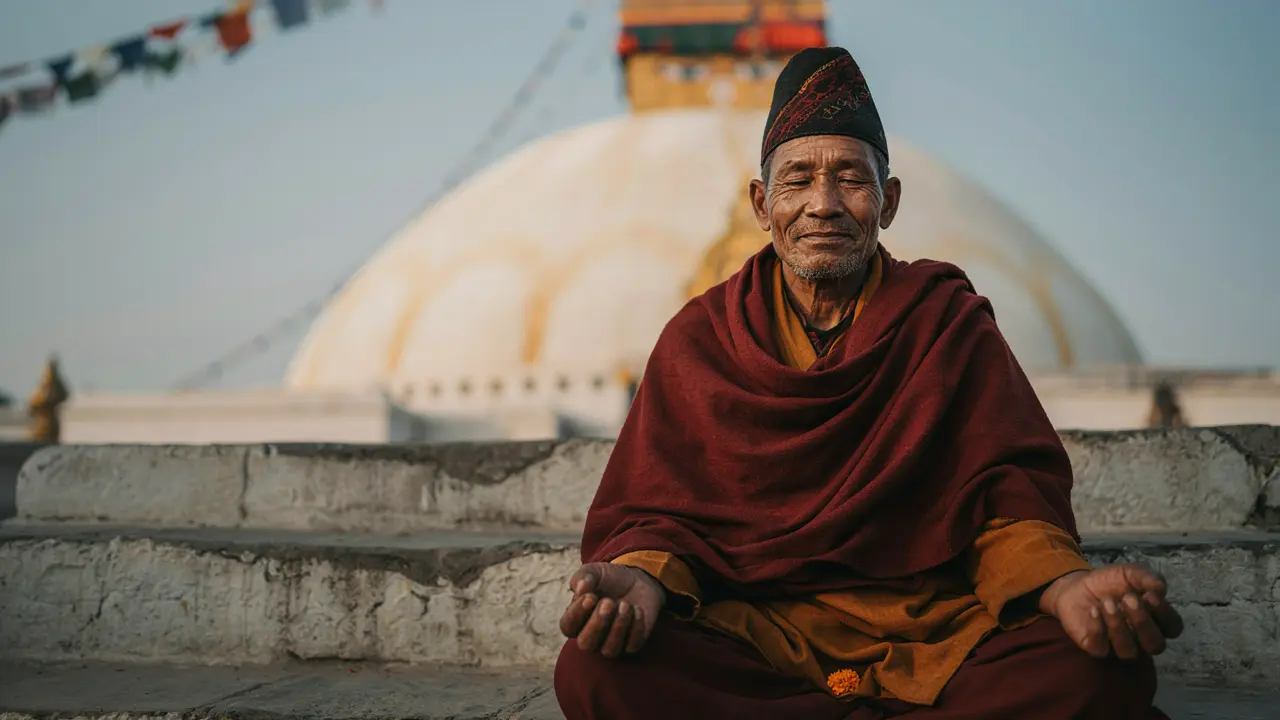
The kora, that circling walk around the Boudhanath stupa, is basically meditation while walking. Thousands of people do it daily without thinking twice about it, prayer wheels spinning, mala beads clicking through fingers, mantras murmured under people’s breath, sometimes for an hour, sometimes much longer than that.
Find a seat at one of the rooftop cafes overlooking the dome afterward. Just sit there a while with what you saw. Quite a few of our students describe it as an extension of the meditation training they’re already doing back at the school, just with a much better view attached.
If you’ve already got a breathing practice, bringing it here adds something a studio session simply can’t reach on its own. This is lived, ongoing devotion. Not something staged for a photo, whatever it might look like scrolling through someone’s feed later that night.
Plan a Retreat That Includes Sacred Site Visits
If reading this has you wanting to see the Pashupatinath temple and Boudhanath stupa yourself, a retreat takes most of the guesswork off your hands.
We’ve arranged trips like this for guests from more than eighty countries over the past fifteen-plus years, on top of daily yoga, home-cooked vegetarian meals, and a place that genuinely starts to feel like family the longer you stick around.
Take a look at our yoga retreats in Nepal or the 500-hour advanced yoga teacher training if sightseeing alone isn’t quite enough. Our gallery has real guest photos and the booking page is right there whenever you’re ready.
Still weighing it? Our FAQ page covers most of what people ask about schedules, food, and daily life on retreat. Anything it misses, just message us directly.
Frequently Asked Questions
Is the Pashupatinath temple open to non-Hindu visitors?
Only the main shrine is closed off. Everything else including the surrounding grounds, the riverside ghats, the forested hill, is open to anyone holding a valid ticket.
What should I wear?
Shoulders and knees covered at both the Pashupatinath temple and the Boudhanath stupa is preferred more by native peopl. We suggest you to wear shoes you can slip off easily since you’ll be doing it a lot on uneven stone.
Are temple visits included in Nepal Yoga Home’s retreats?
Depends on the package. Message our team directly and we’ll work a sacred sites excursion into your dates.
How much time should I set aside for both sites?
A half day, comfortably. Pashupatinath and Boudhanath sit close enough together within the Kathmandu Valley that you won’t lose half your trip getting between them.