Best Time to Visit Nepal for Yoga: 5 Best Months for Teacher Training and Retreats
When’s the best time to visit Nepal for yoga? Honestly, it depends on what you’re after, because this country somehow has five different seasons into one year, and each one is different.
We’ve been running Nepal Yoga Home out of the same corner of the Kathmandu Valley for a good time now. Even we still get surprised by how much a single month can change the whole feel of the place.
Some months you get mountain views and trails. Other months it just pours, classes move indoors and prices quietly drop, which is honestly why a lot of students end up joining our 200 Hour Yoga Teacher Training.
By the end you should have a decent idea of which month actually fits how you want to spend your time.
Nepal’s Five Seasons Explained: Best Time to Visit Nepal for Yoga
Forget the four seasons you grew up with. Nepal runs on five, and that fifth one changes more than you’d think.
- Spring (March to May): Warm, flowers everywhere where trails are wide open.
- Summer (early June): Short, hot and kind of a warning sign for what’s coming.
- Monsoon (June to August): Rain most afternoons and hills go green.
- Autumn (September to November): The clearest skies you’ll get all year, and easily the busiest.
- Winter (December to February): Cold, dry and quiet.
Spring (March–May): Best for Outdoor Practice and Trekking
Ask ten students what they imagined before booking, and most of them describe spring without even realizing it. Daytime temperature in Kathmandu sit somewhere around 15 to 25 degrees Celsius.
The hills turn red and pink once the rhododendrons open up in March and it’s genuinely one of the prettiest things you’ll see here. Quite a few students tack on a trek too, like our Everest Base Camp Yoga Trekking program, since the trails are basically at their best. Book for two months out if you can.
Monsoon (June–August): Budget-Friendly Indoor Immersion
Monsoon scares off a lot of travelers but some of the sharpest, most locked-in students we’ve ever had came through in July.
Here’s the thing about monsoon rain, it usually falls hard and fast, mostly at night, so mornings actually come out cool and fresh.
Trails turn to mud pretty quickly, so most people during this lean into asana, breathwork and philosophy instead, which is basically the whole point of our 500 Hours Advanced Yoga Teacher Training.
Autumn (September–November): Peak Season, Clearest Skies
Any local will tell you the same thing without hesitating that autumn is the best time to visit Nepal for yoga if clear skies are what you care about most.
The clouds burn off by mid-September and you’re left with crisp air, blue skies, and highs sitting comfortably around 20 to 24 degrees Celsius.
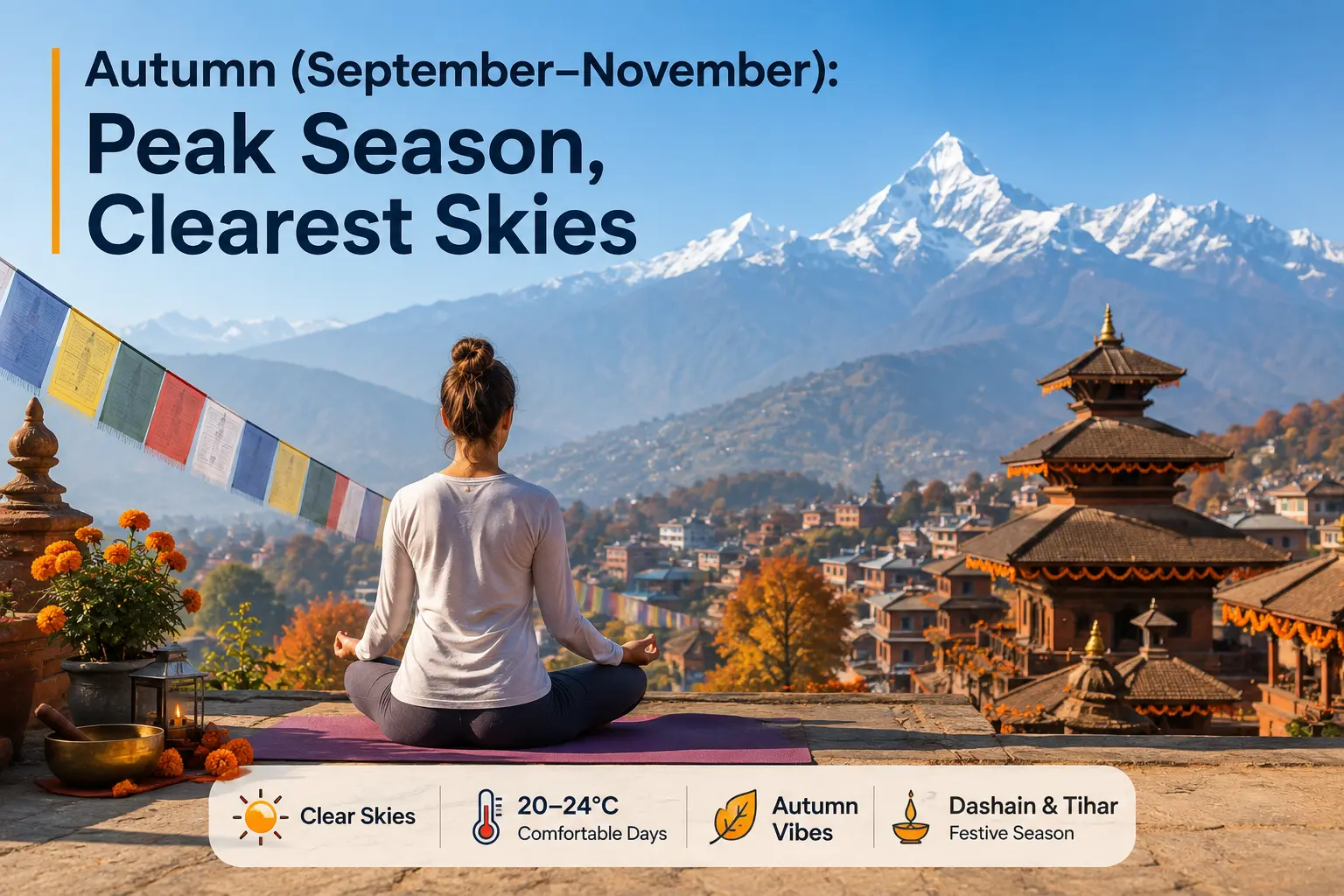
Dashain and Tihar land right in this season and it’s a whole thing. We’ve had students tell us the festival lights outside their window ended up being the highlight of their entire trip, not the yoga.
Good weather comes with a catch, though. Autumn is our busiest and most expensive stretch by a wide margin, so if a spot in our 1 Month Yoga Retreat in Kathmandu is on your mind for October, don’t sit on it too long.
Winter (December–February): Quiet, Cold and Deeply Meditative
Winter gets overlooked by a lot of first-timers, which always surprises us a bit, because it’s exactly what our returning students keep coming back for. Highs sit around 10 to 18 degrees Celsius and nights get cold enough that a shawl just won’t be enough for you anymore.
Skies stay clear for weeks at a stretch, and by this point the autumn crowds have long gone home. It’s a suitable match for our year-round 200 Hour Yoga Teacher Training, especially if you’re the type who actually wants fewer people around.
Choosing Your Month Based on Your Goals
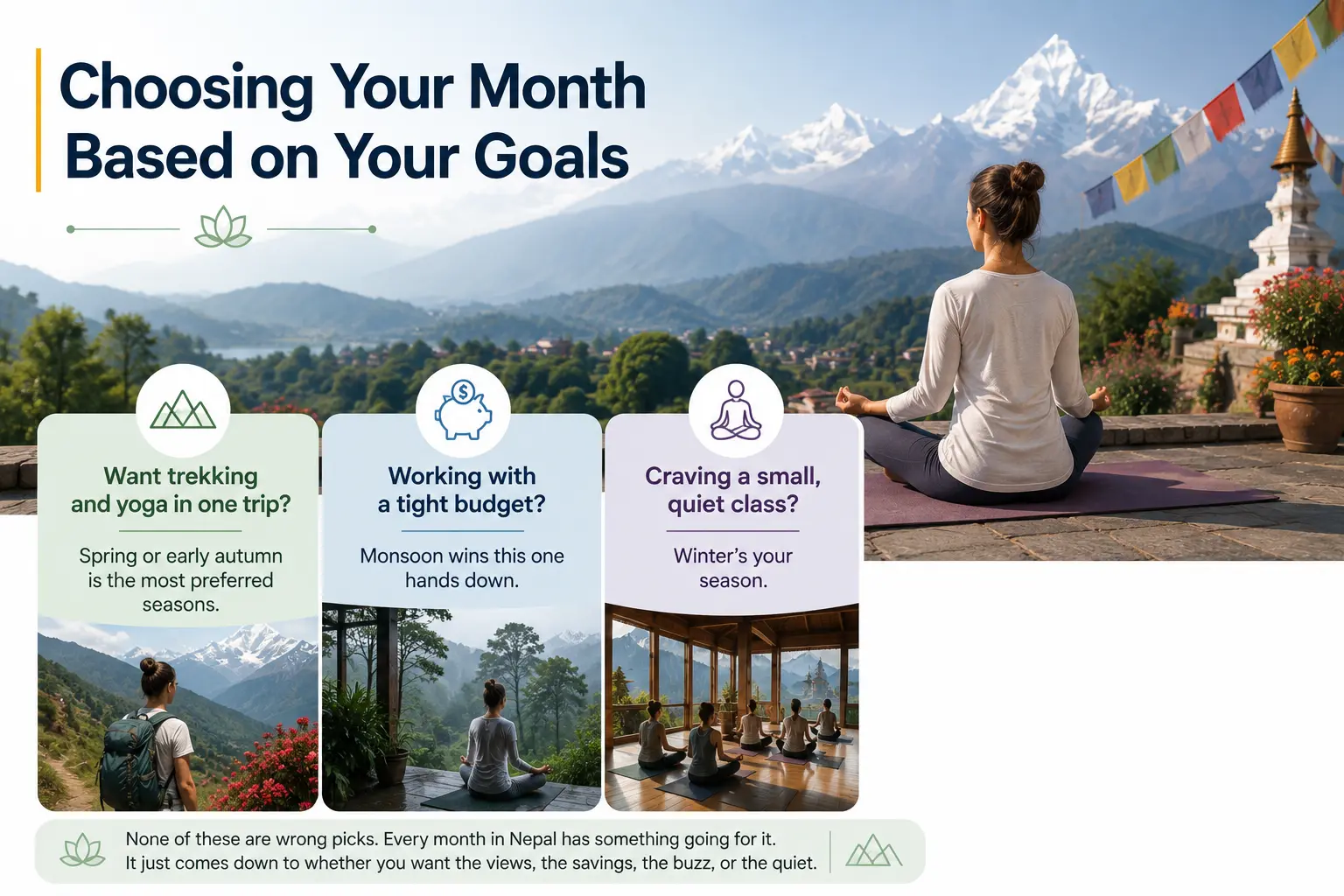
Figuring out the best time to visit Nepal for yoga gets a lot simpler once you’re actually honest with yourself about what you want. So sit with these three questions for a second before locking in any dates.
- Want trekking and yoga in one trip? Spring or early autumn is the most preferred seasons.
- Working with a tight budget? Monsoon wins this one hands down.
- Craving a small, quiet class? Winter’s your season.
None of these are wrong picks, to be clear. Every single month here has something going for it, it really just comes down to whether you want the views, the savings, the buzz or the quiet.
Why Nepal Yoga Home Runs Programs Year-Round?
A lot of schools slow way down once monsoon hits, or they cram everything into one short busy window and call it a day. We’ve never worked that way! We open our doors to new students on the first of every single month, rain or shine, no exceptions.
Our teachers show up the same regardless of what the sky’s doing that morning. A steady practice, in our experience, matters a whole lot more than whether the weather outside happens to be picture-perfect.
Come for our 500 Hours Advanced Yoga Teacher Training in the middle of a rainy July, or grab a shorter retreat in October instead. Every student trains directly with our experienced Nepali teachers, no matter which month they land in.
Conclusion
There’s no single best time to visit Nepal for yoga that works for every traveler out there, and that’s kind of the point.
Spring and autumn bring the views and the energy, monsoon and winter bring the quiet and the lower prices. Nepal Yoga Home just stays open through all of it, ready whenever you decide to show up.
Frequently Asked Questions
What is the coldest month to avoid for YTT in Nepal?
January is the coldest month we see across Kathmandu and the valley around it. It still works just fine if you’re leaning toward indoor study instead of outdoor trekking anyway. Warm layers plus our heated rooms keep the cold from ever turning into a real problem.
Can I still practice yoga in Nepal during monsoon?
Yes. Monsoon never really interferes with indoor asana, breathwork or philosophy classes. A good number of students actually tell us the quieter campus during these months helps them focus even more than usual.
Is Kathmandu or Pokhara better in winter?
Both hold up fine for winter training, if you’re wondering. Pokhara sits a bit lower in elevation, so its winters end up feeling slightly milder than Kathmandu’s do. Either city still gives you cold, clear days that work great for focused study.