
Do you wake up tired, eat at random times, and stay on your phone until midnight? Many guests at Nepal Yoga Home tell us the same thing during their first week with us.
Ayurveda gives a gentle answer to this problem, and it is called dinacharya. In this guide, we explain a simple Ayurvedic daily routine that you can start tomorrow, even if you have never tried Ayurveda before.
What Is an Ayurvedic Daily Routine?
Dinacharya comes from two Sanskrit words. Dina means day, and charya means routine. So, an Ayurvedic daily routine is a set of small habits that match the natural rhythm of the sun, your body, and your mind.
If you are new to this science, you can first read our Ayurveda introduction to understand the basics of doshas.
A steady routine can help you:
- Support healthy digestion and regular bowel habits
- Feel calmer and more focused during the day
- Sleep deeper and wake up fresher
- Keep your three doshas (vata, pitta, and kapha) in better balance
Please note that Ayurveda supports your wellbeing, but it does not replace medical care. If you have a health condition, speak with a doctor before you change your routine.
Follow the Dosha Clock
Ayurveda divides the day into six parts of four hours each, and every part is linked with one dosha. When you plan your day around this clock, your Ayurvedic daily routine feels natural instead of forced.
| Time | Dominant Dosha | Best Use of This Time |
| 2–6 AM | Vata | Wake up, meditate, and breathe |
| 6–10 AM | Kapha | Exercise and eat a light breakfast |
| 10 AM–2 PM | Pitta | Eat your main meal and do focused work |
| 2–6 PM | Vata | Do creative work and take a walk |
| 6–10 PM | Kapha | Eat a light dinner and slow down |
| 10 PM–2 AM | Pitta | Sleep while the body repairs itself |
You do not need to follow every hour exactly. Use this table as a guide and adjust it to your season and your body.
8 Steps of a Beginner-Friendly Ayurvedic Daily Routine
Here are the eight steps we teach our guests. You can add one new step every week instead of changing everything at once.
1. Wake Up in Brahma Muhurta
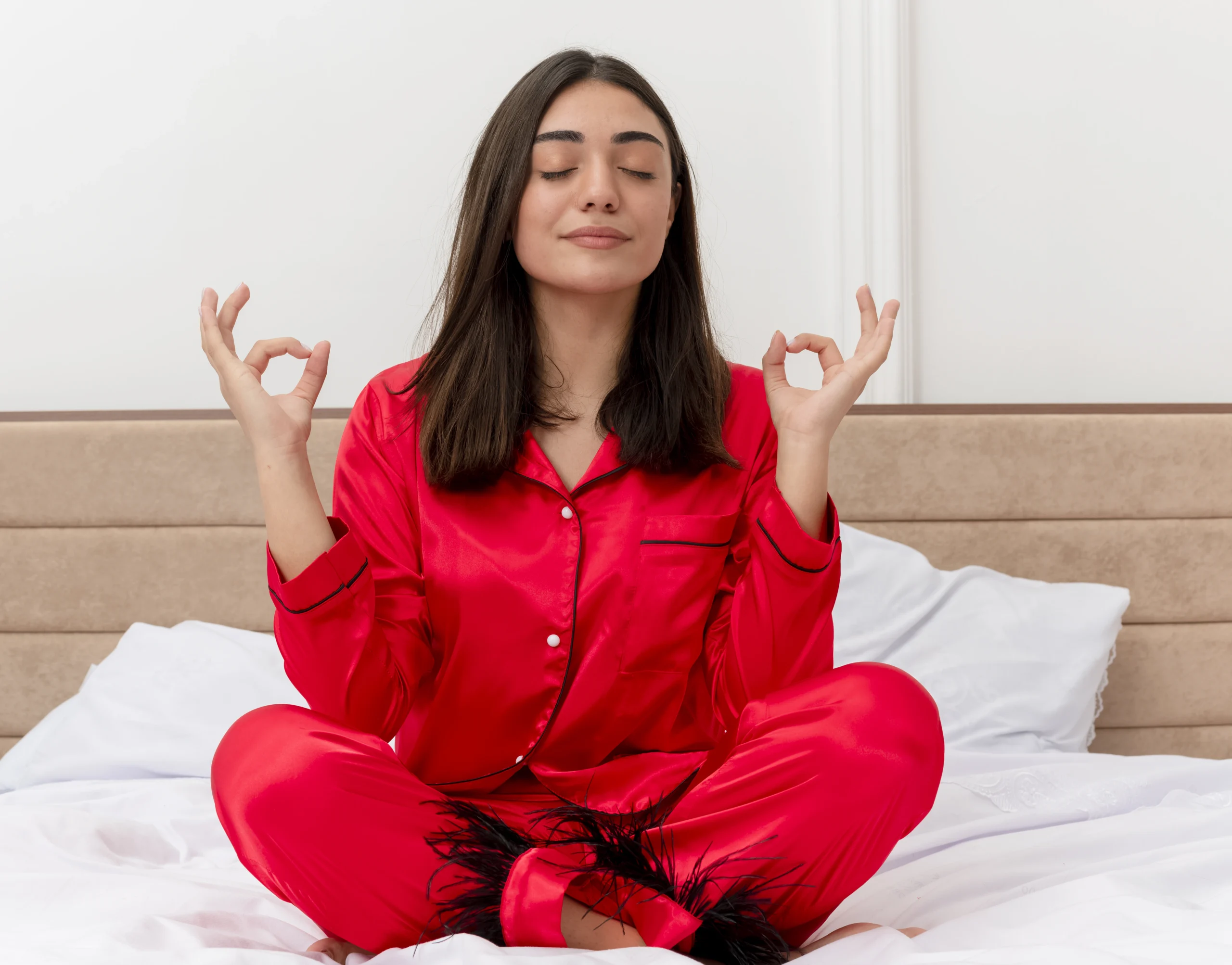
Brahma Muhurta is the quiet time about 90 minutes before sunrise. In Kathmandu, this is usually between 4:30 and 5:30 AM, depending on the season.
The air is calm and the mind feels clear, so it is a lovely time for meditation. If this feels too early, wake up just 15 minutes earlier each week.
2. Drink Warm Water and Clear Your Bowels
After you wake up, sip a glass of warm water. Many people find that it wakes up digestion and helps the bowels move at the same time each morning. Try to keep this timing fixed every day.
3. Clean Your Mouth and Scrape Your Tongue
During the night, a thin coating called ama can collect on your tongue. Brush your teeth, then gently scrape your tongue from back to front, 7 to 14 times, with a copper or steel scraper. This habit may improve your breath, your sense of taste, and your appetite for breakfast.
4. Care for Your Eyes and Nose
Splash cool water on your eyes and face. Some people also use a few drops of nasya oil in the nose, as advised by an Ayurveda doctor. If you want to try jal neti (a nasal rinse), learn it first from a trained teacher. Our team guides you step by step during our Ayurveda retreat in Nepal.
5. Try Abhyanga (Self-Massage With Warm Oil)
Abhyanga means massaging your body with warm oil for 5 to 10 minutes before a bath. Sesame oil usually suits vata and kapha types, while coconut oil often suits pitta types. Ayurveda texts say this practice calms vata and nourishes the skin. If you want a deeper version, you can book a one-hour Shirodhara session with us.
6. Practice Yoga, Pranayama and Meditation
Next comes movement and breathwork. Start with 15 minutes of gentle yoga, add 5 minutes of alternate nostril breathing, and sit quietly for 10 minutes.
You can learn the correct method in our 100-hour beginner yoga teacher training or our pranayama and meditation training. If you cannot travel yet, join our online yoga class or online meditation course from home.
7. Eat Your Biggest Meal at Noon
Ayurveda says that agni, your digestive fire, is strongest when the sun is highest. So we suggest this simple pattern:
- Breakfast: Light and warm, such as porridge or stewed fruit
- Lunch (12 to 1 PM): Your biggest meal, with rice or roti, dal, vegetables, and a little ghee
- Eating habits: Sit down, eat slowly, and keep screens away
Our kitchen serves fresh sattvic vegetarian food every day, so you can see how this works in real life.
8. Keep Dinner Light and Sleep Early

Eat dinner before 7:30 PM and keep it light, like soup or khichdi. Switch off screens one hour before bed. A few minutes of Yoga Nidra can help your body relax deeply. Try to sleep by 10 PM so that your body can repair itself during the night.
A Sample Ayurvedic Daily Routine for Beginners
Here is a simple Ayurvedic daily routine you can copy. Please change the timings to fit your own life.
| Time | Practice |
| 4:45 AM | Wake up and drink warm water |
| 5:00 AM | Brush teeth and scrape your tongue |
| 5:20 AM | Abhyanga and warm bath |
| 6:15 AM | Yoga, pranayama, and meditation |
| 8:00 AM | Light breakfast |
| 12:30 PM | Main meal of the day |
| 7:00 PM | Light dinner |
| 9:30 PM | Screen-free time and Yoga Nidra |
| 10:00 PM | Sleep |
5 Tips to Stay Consistent With Your Ayurvedic Daily Routine
- Start small: Pick only two habits, such as warm water and tongue scraping, for the first week.
- Keep fixed timings: Your body loves repetition.
- Change with the seasons: Eat lighter food in summer and warmer food in winter.
- Forgive missed days: Return to your routine the next morning without guilt.
- Know your dosha: Our Ayurveda doctor, Dr. Sushmita Ghimire, offers consultations, and you can meet her and our other yoga teachers on our website.
Learn Dinacharya With Us in Nepal
Reading about dinacharya is a good start, but living it for a few days makes it stay. At Nepal Yoga Home, our guests follow a real Ayurvedic daily routine in the quiet hills near Kathmandu, with yoga, meditation, and Ayurvedic food.
Choose the program that fits your time:
- 2-Night Ayurveda and Yoga Retreat
- 4-Night Ayurveda Detox Retreat
- 1-Week Yoga and Ayurveda Retreat
- 10-Day Ayurveda Retreat
- 2-Week Ayurveda and Yoga Retreat
- 29-Day Panchakarma and Yoga Retreat
You can also explore all our programs on our yoga retreat in Nepal page. Have questions? Visit our FAQ page or book your stay with us.
Final Thoughts
An Ayurvedic daily routine does not need to be perfect to work. Choose two habits, practice them for a week, and then add more when you feel ready. We would love to guide you in person at our school in Kathmandu, where you can feel dinacharya instead of only reading about it.
FAQs About the Ayurvedic Daily Routine
How long does it take to see results?
Many people notice better digestion and sleep within two to three weeks of steady practice. Results differ from person to person.
Can I follow dinacharya with a busy job?
Yes, you can. Start with warm water, tongue scraping, a 10-minute breathing practice, and an early light dinner.
Do I need to know my dosha first?
No. Beginners can start with the basic steps above and learn about their dosha later.