There’s a reason so many people search around before committing to a yoga teacher training course in Nepal: the fee itself doesn’t tell you much.
Two programs priced within a hundred dollars of each other can be worlds apart once you factor in what’s actually included. That’s why this blog covers everything from classes, the room you’ll sleep in, food, certificate to the handful of costs that tend to catch people off guard.
Nepal Yoga Home has run these courses for over 15 years and trained more than 10,000 students, so this comes from patterns we’ve noticed.
What Does a Yoga Teacher Training Course in Nepal Actually Cover?
A yoga teacher training in Nepal has to line up with Yoga Alliance requirements, so the teaching content is fairly consistent from one reputable school to the next.
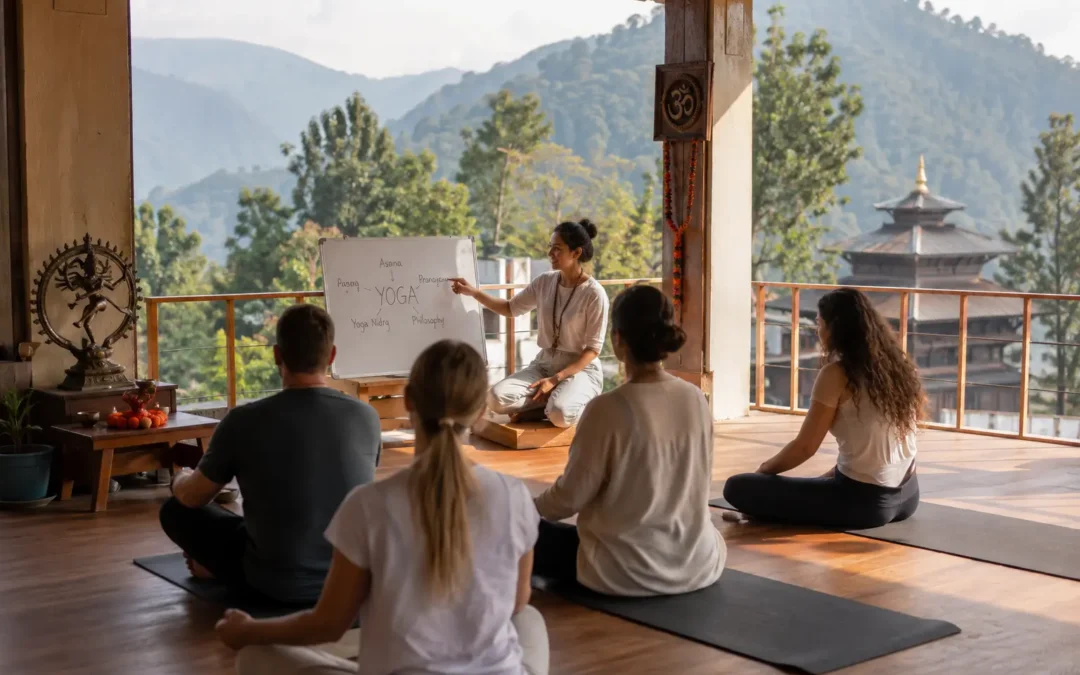
Here’s what that usually means for your daily routine:
- Asana practice: Spent on alignment, adjustments and understanding how postures connect.
- Pranayama, mudra, and bandha: It is taught to you alongside the physical practice from the early days rather than crammed in at the end.
- Meditation: Here the focus is on building your own sitting practice before anyone expects you to teach it.
- Philosophy and anatomy: Going through the Yoga Sutras, subtle body concepts and the practical side of how the body moves.
- Teaching practicum: The point where you actually get in front of the group and run a class.
Expect two practice sessions daily with lecture blocks worked in between. For the exact hour-by-hour structure, the 200 hours yoga teacher training page has it mapped out.
Accommodation Options During Your YTTC in Nepal
Your room is almost always folded into the course price, and Nepal follows the same pattern most destinations do.
That leaves you deciding between:
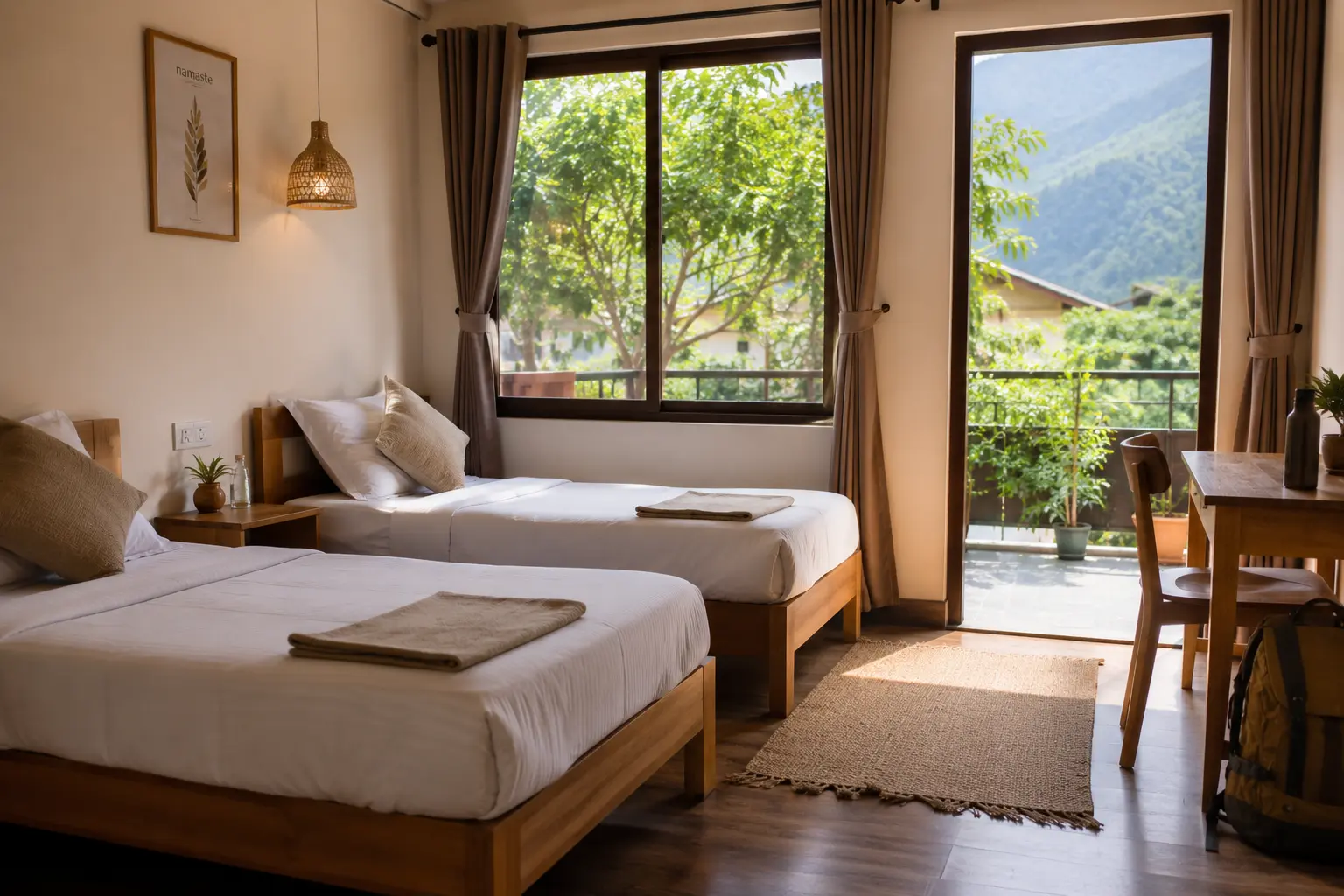
- Shared rooms: The more common setup, generally with one other student, and the more affordable option.
- Private rooms: Most schools will let you add for a fee if you’d rather have your own space after a full day of practice.
Standard rooms come with a bed, some storage, hot water and Wi-Fi, enough to be comfortable without anything extravagant.
Several schools, including this one, are positioned a little outside the main city area, which means a quieter, greener setting than you’d find closer to downtown Kathmandu.
That doesn’t sound like a big deal until you’re several days into an intense schedule and actually value the quiet. The Services & Facilities page has more on room specifics if you’re comparing options.
Meals and Food During Yoga Teacher Training in Nepal
Food is one of the more dependable inclusions in a yoga teacher training course in Nepal, though the eating style itself often takes people by surprise the first time.
Most schools follow a sattvic, lacto-vegetarian diet, keeping meals lighter than what students are used to at home.
A regular day of meals generally includes:
- Breakfast, lunch and dinner, all prepared fresh
- A tea break in the afternoon, most days
- Room for dietary needs like gluten or dairy sensitivities, provided you mention them ahead of time
Three meals and tea come standard, without an extra line item. Anyone with more specific requirements should reach out to the school before booking.
Study Materials, Certification and Extras
Finishing the program earns you a certificate that lets you register with Yoga Alliance as an RYT 200, the qualification most international studios look for before bringing on a new teacher.
Along with the certificate, schools provide:
- A manual covering the philosophy, anatomy and sequencing taught during the course
- A mat and a small set of props to use throughout your stay
- Time with instructors outside of class if something needs more explanation
A handful of schools do charge separately for mats or printed manuals, so confirm rather than assume it’s all bundled together.
What is Usually Not Included in the Course Fee?
Even a well-packaged course has its limits.
These are the costs students almost always cover on their own:
- Flights into and out of Kathmandu
- Visa fees, arranged either beforehand or once you land
- Travel insurance, which most schools will ask you to sort out yourself
- Extra nights if your arrival or departure doesn’t match the official course dates
- Optional excursions, such as sightseeing or day hikes on free time
Knowing this in advance keeps the total cost from feeling misleading once you’re already there. When you’re weighing a few schools against each other, ask each one for the exclusions in writing, not just what’s advertised.
200 Hour vs 500 Hour YTTC: What Changes in Inclusions
Room, food and study materials don’t really change no matter which course length you go with.
What shifts is how much you cover and how long the stay is:
- The 200 hours yoga teacher training runs about three weeks and builds the fundamentals needed to teach.
- The 500 hours advanced yoga teacher training covers advanced asana, deeper philosophy, and specialized teaching modules over a much longer period.
- For anyone unsure about committing to 200 hours right away, the 100 hours beginner yoga teacher training offers a smaller starting point.
The total price goes up with a longer course, naturally, but the daily rate tends to land in a similar bracket once you calculate it out.
Sample Daily Schedule During a Nepal YTTC
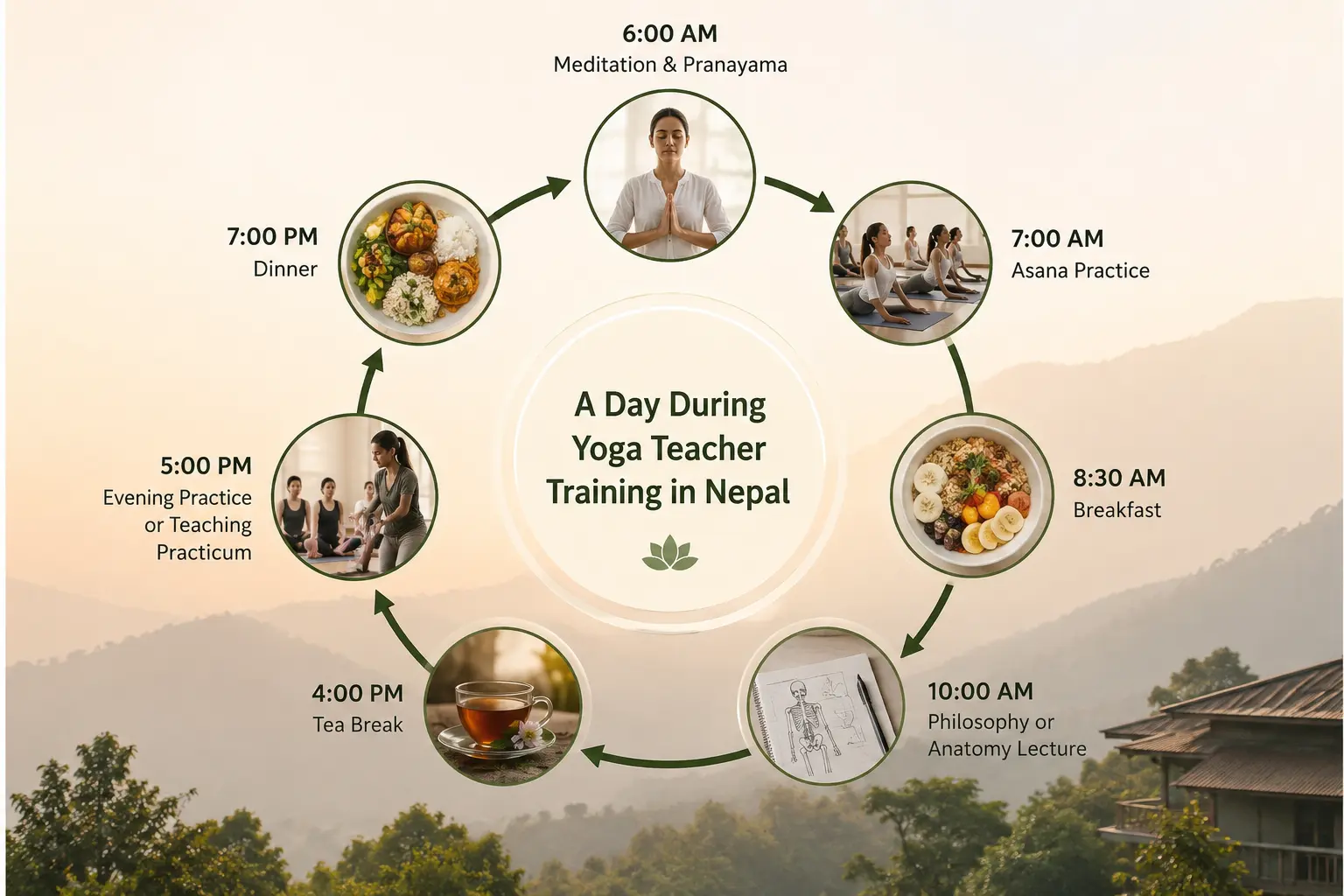
A day during a yoga teacher training in Nepal usually plays out something like this:
- 6:00 AM: Meditation and pranayama
- 7:00 AM: Asana practice
- 8:30 AM: Breakfast
- 10:00 AM: Philosophy or anatomy lecture
- 4:00 PM: Tea break
- 5:00 PM: Evening practice or teaching practicum
- 7:00 PM: Dinner
For a better sense of what those mornings actually feel like, not just what’s written on a timetable, the first-week experience blog covers it in detail.
How to Choose a School Based on Inclusions?
The lowest price you find isn’t automatically the best value once you factor in what’s actually included. A few steps worth taking before you book anywhere:
- Ask for a written list of inclusions and exclusions instead of trusting a landing page summary.
- Compare the daily cost, not the total, across schools running for a similar length of time.
- Ask about class size. Smaller batches usually mean more direct feedback from teachers.
- Check reviews from recent graduates, rather than relying only on quotes a school has selected for its own marketing.
The testimonials page has honest accounts from former students, and the teachers page shows who would actually be leading your training.
Conclusion
Understanding what a yoga teacher training course in Nepal actually includes makes choosing a school far less complicated.
Classes, your room, meals and certification are almost always part of the fee. Flights, visas, insurance and any extra nights typically aren’t included, so those need to be planned for separately.
Want to see the full details for yourself? The 200 hours yoga teacher training page lays it all out, or head to the booking page if you’re ready to reserve a spot. Anything not covered here is likely answered on the FAQ page.
Frequently Asked Questions
Is accommodation included in the course fee?
Yes, this is standard across most schools. A shared room comes as the default, with a private upgrade usually available for an added cost.
Can I upgrade to a private room?
In most cases, yes. Contact the school ahead of your dates to check availability and confirm the price difference.
Is the certificate recognised internationally?
Yes, as long as the school holds Yoga Alliance certification. Graduates can register as an RYT 200 and teach at studios worldwide that accept it.
Can I arrive early or stay after the course ends?
Most schools will accommodate this for an extra nightly charge. It’s best to arrange this early, particularly during busier booking seasons.