
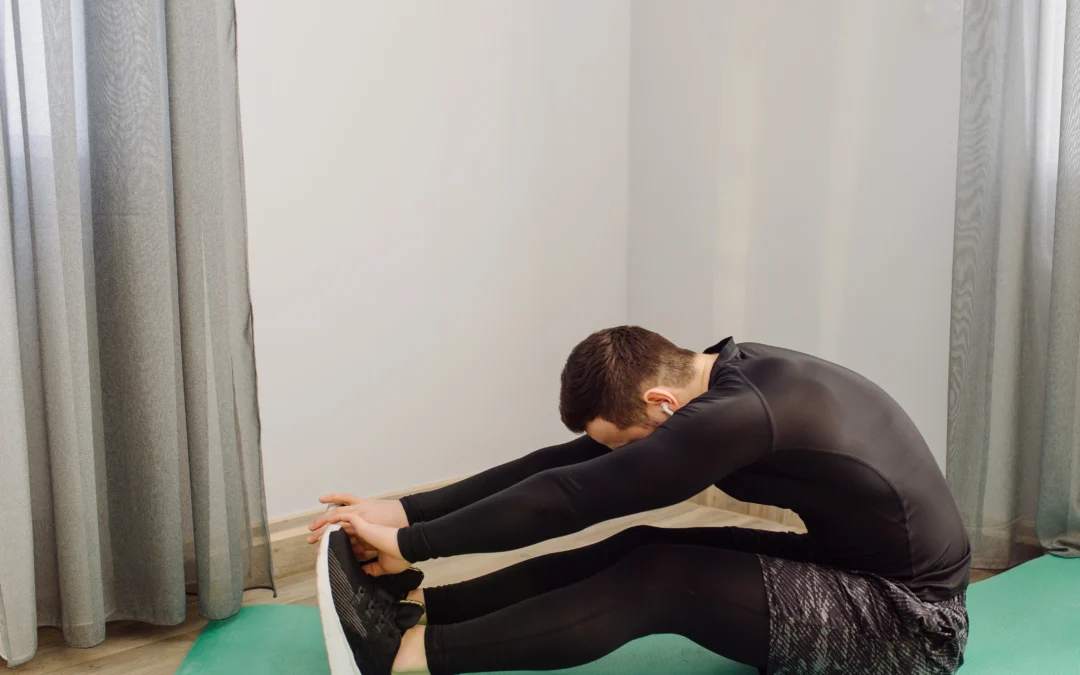
You bend forward to pick something up, and the back of your legs feels like tight rope. That stiffness is very common, and it is easier to ease than most people think.
This guide shows you how to use yoga for tight hamstrings, one gentle step at a time. You will climb a three-rung ladder from lying poses to standing poses.
We teach beginners every week at Nepal Yoga Home. Let us start at your starting line.
Your Starting Line: A 1-Minute Self-Check
Lie on your back with your knees bent. Lift one leg toward the ceiling and hold behind the thigh or the calf. Straighten the leg as far as feels comfortable without pain.
Notice where it stops and whether the knee bends. Then check the other leg. This is your starting line, not a score. Check again in four weeks.
Why You May Need Yoga for Tight Hamstrings
Your hamstrings run along the back of your thighs. They cross both the hip and the knee, so sitting keeps them in a shortened, quiet position for hours. Running and cycling can also leave them tight, and so can skipping stretching altogether.
One honest note: research linking sitting time directly to short hamstrings is mixed. Still, many people with desk jobs feel the stiffness. Our corporate yoga sessions help teams who sit all day.
The Hamstring Ladder: 9 Poses of Yoga for Tight Hamstrings
Hold each pose for 30 to 60 seconds and breathe slowly. Never bounce, and never push into pain. Use a belt or a towel in place of a strap.
Rung 1: Lying Down (Kindest to Your Back)
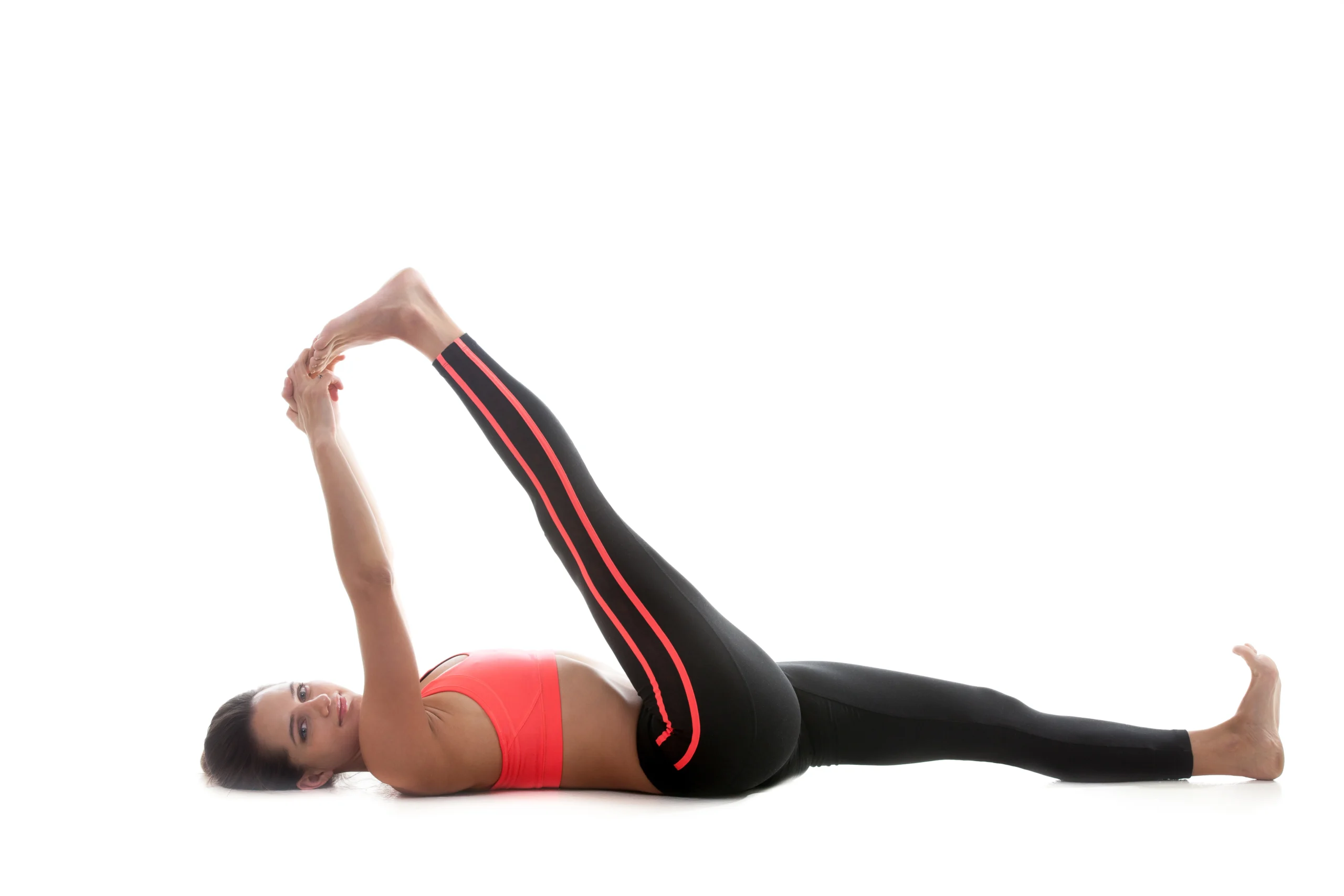
- Reclined Strap Stretch: Lie on your back and loop a strap around one foot. Lift that leg toward the ceiling, with the other knee bent or the foot on the floor. Keep your tailbone down.
Easier: Bend the lifted knee slightly.
- Legs Up the Wall: Lie with your hips near a wall and rest your legs against it. Stay for 3 to 5 minutes and let the wall do the work.
Easier: Move your hips farther from the wall.
- Bridge Pose: Press your feet down and lift your hips for 5 breaths, three times. A little strength work balances all the stretching.
Easier: Lift only halfway.
Rung 2: Seated (Add Length)
- Seated Forward Fold with Bent Knees: Sit on a folded blanket and bend your knees. Hinge forward from your hips with a long spine, and rest your hands on your shins. Straighten your legs slowly over the weeks.
Easier: Sit higher on the blanket.
- Half Seated Fold: Extend one leg and place the other foot against your inner thigh. Loop a strap around the straight foot and lean forward with a long back. Switch sides.
Easier: Place a blanket under the bent knee.
- Wide-Angle Seated Fold: Sit with your legs wide and walk your hands forward. Keep your chest lifted and your kneecaps pointing up.
Easier: Bend your knees and sit higher.
Rung 3: Standing (Bring It Together)
- Ragdoll Forward Fold: Stand with your feet hip-width apart and bend your knees. Fold forward, hold your elbows and let your head hang for 30 to 60 seconds.
Easier: Rest your hands on your thighs or on blocks.
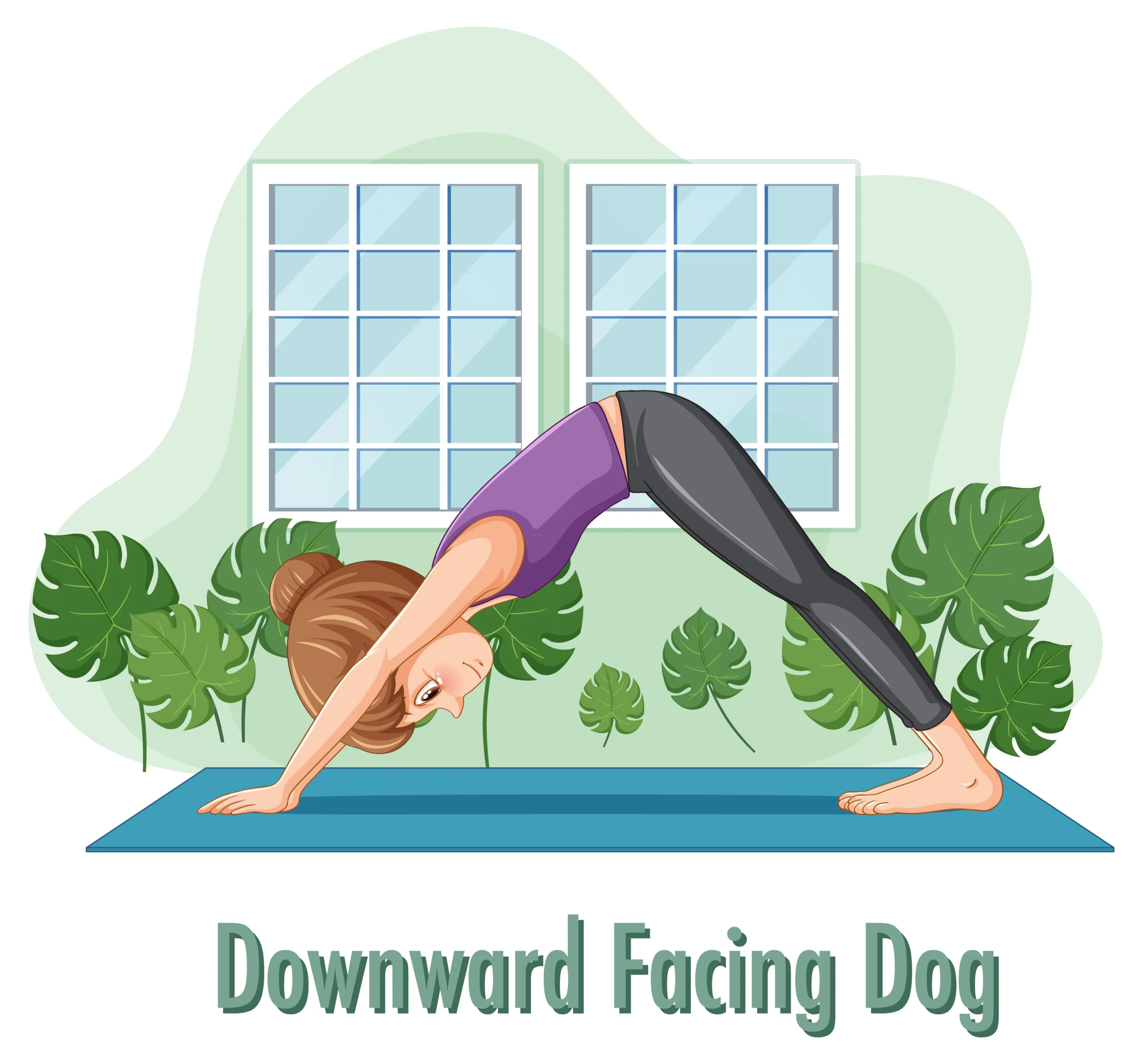
- Downward Dog with Bent Knees: Lift your hips and keep your knees soft. Press your heels toward the floor and lengthen your spine.
Easier: Place your hands on a wall in a half dog.
- Half Splits: From a low lunge, shift your hips back and straighten the front leg. Rest your hands on blocks on either side.
Easier: Keep the front knee bent.
You can learn the basics of each style on our Hatha yoga page.
Troubleshooting: If You Feel This, Try That
| If you feel | Try this |
| A pull behind the knee | Bend your knees slightly |
| Your lower back rounding | Sit on a blanket and hinge from the hips |
| A pinch at the front of the hip | Bend your knees more |
| Sharp or burning pain | Stop and see a professional |
| Tingling down the leg | Stop and ask a doctor |
| Nothing at all | Hold a little longer, or lean a little further |
Your 4-Week Hamstring Calendar
| Week | Days | Plan |
| 1 | 3 | Rung 1, 30 seconds each |
| 2 | 3 to 4 | Rung 1 and Rung 2 |
| 3 | 4 | Add Rung 3 |
| 4 | 5 | The full ladder, up to 60 seconds |
After week four, three sessions a week help you keep the gains. That is how yoga for tight hamstrings becomes a habit.
What Does the Research Say?
A randomised study found that 30-second static hamstring stretches, five days a week for six weeks, improved flexibility more than 15-second stretches. Stretching for a full minute did no better than 30 seconds. Another study found that three times a week was enough to keep the gains.
Some yoga teachers prefer longer, gentler holds. So choose what feels comfortable, and be consistent. Flexibility from stretching can fade after a few weeks without practice.
Yoga for Tight Hamstrings at Nepal Yoga Home
A teacher can fix your alignment in seconds.
You have several ways to learn with us:
- One-week yoga retreat class for a daily routine
- 3 nights, 4 days yoga retreat or 1 night, 2 days for a short break
- Therapeutic yoga retreat for gentle, guided care
- 5-day chair yoga course and seniors yoga retreat for a softer pace
- 5-hour basic online yoga class and 10-hour online yoga training from home
- Yoga at home service for one-to-one help
Going trekking? Our Everest Base Camp yoga trek and Annapurna yoga trek build gentle stretching into long walking days.
Want to teach? Our 100-hour beginner training and 200-hour yoga teacher training teach safe alignment in detail.
5 Mistakes to Avoid
- Locking your knees: Keep a soft bend at first.
- Rounding your back to reach your toes: Hinge from the hips instead.
- Bouncing: Stay still and let the muscle soften.
- Comparing yourself: Your starting line is your own.
- Stretching cold: Walk for a few minutes first.
Stay Safe With Yoga for Tight Hamstrings
Move gently and stop at sharp pain, burning or tingling. If you have an injury, back pain or a medical condition, ask your doctor or physiotherapist first. Tightness that does not change after several weeks is worth a professional check.
Start Today With Us
Read what past guests say on our testimonials page, meet our yoga teachers and check our services and facilities. Browse our FAQ, contact us with any question and book your stay when you are ready to make yoga for tight hamstrings part of your week.
Frequently Asked Questions
Why can’t I touch my toes after weeks of practice?
Toe touching depends on your body proportions as well as flexibility. Focus on how your hamstrings feel, not on reaching the floor.
Should I stretch before or after a walk?
A short walk first warms the muscles. Gentle stretching after exercise also feels good.
Is it normal to feel sore the next day?
Mild stiffness can happen when you start. Sharp pain is not normal, so ease off and rest.
Do I need a strap or block?
A belt or a long towel works as a strap, and a stack of firm books can replace a block. Props let you keep your spine long.
Can this help my lower back?
Some people feel less strain in the lower back when the hamstrings loosen. Back pain has many causes, so please see a professional if it continues.