Why Combine Ayurveda and Yoga in Nepal? 7 Reasons This Pairing Is the Heart of Holistic Wellness
You’ve probably had this experience: you get out of a yoga class, calm and loose and by Thursday it’s gone. Late dinners, bad sleep and a full inbox wear it down faster than any class can build it up.
That’s the reason so many centres pair Ayurveda and yoga in Nepal under one roof. Ayurveda handles the food, sleep and routine side and yoga covers movement, breath and focus.
Below you’ll find how the two fit together, what a normal day looks like and what to check before booking. We’ve also added a short safety section, since not every treatment suits every person.
1. Ayurveda and Yoga in Nepal: A Simple Introduction
| Ayurveda | Yoga | |
| Focus | Health, food and daily habits | Movement, breath and attention |
| Tools | Consultation, oil massage, herbal steam and diet advice | Postures, breathing, meditation and chanting |
| What you take home | Advice matched to your body type | A practice you can repeat anywhere |
Both come out of the same Indian tradition, which is why they share words like prana (life energy) and dosha (body type).
The U.S. National Institutes of Health describes Ayurveda as an ancient medical system that mixes diet, exercise, lifestyle and mostly plant-based products.
2. Ayurveda and Yoga in Nepal: Know Your Body Type
You start with a doctor. They ask about your health, your habits and whatever brought you here, then work out your dosha, and your yoga gets adjusted to fit.
- Vata types run light and restless, so they get slow, grounding poses.
- Pitta types run warm and driven. Cooler practice, and no racing anyone.
- Kapha types are steady and heavy, and do better with livelier flows.
Take doshas as a traditional guide. They aren’t a lab result.
3. Ayurveda and Yoga in Nepal: How Therapies and Practice Work Together
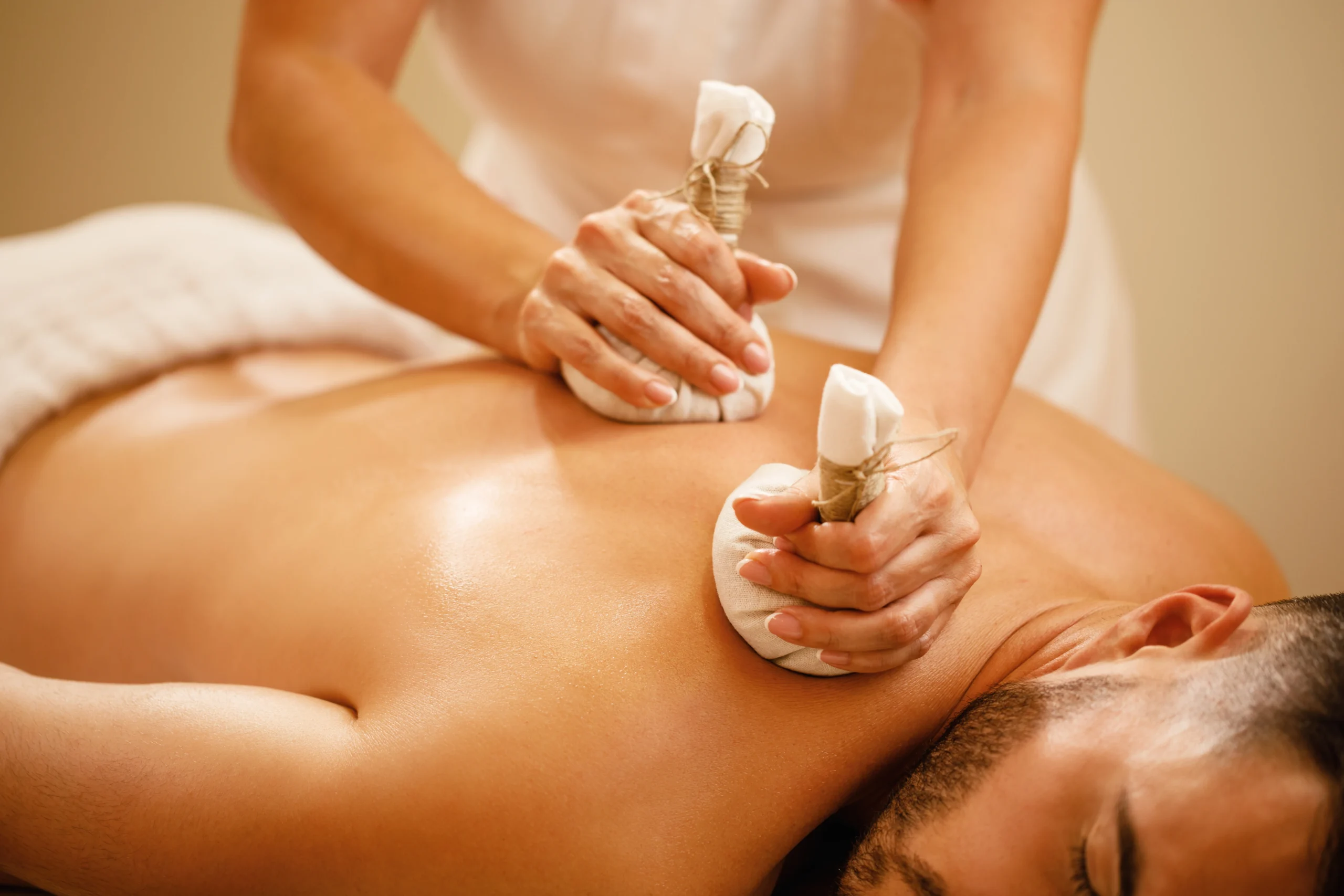
Think of it as two halves. The therapies soften the body, and the yoga helps that softness last.
- Abhyanga is a warm oil massage. It loosens tight muscles.
- Shirodhara sends a slow stream of warm oil across the forehead, and it’s meant to quiet a busy mind.
- Herbal steam baths often come after.
- Pranayama, the breathing side of yoga, carries the calm into the afternoon. The pranayama and meditation retreat goes deeper.
- Yoga nidra is a guided deep rest that many people use for sleep. Our yoga nidra training teaches it.
Longer stays can include panchakarma, a traditional cleansing programme run under a doctor’s supervision.
4. Ayurveda and Yoga in Nepal: A Sample Day
Timings move with the teacher and the season, but a day roughly runs like this:
- Morning yoga, breathing and meditation
- Breakfast, then a doctor’s check-in or your first therapy
- Lunch and free time
- Afternoon therapy, relaxation or chanting
- Evening talk on yoga and Ayurveda, dinner, quiet time
Don’t overbook the free hours. A nap or a slow walk is plenty.
5. Ayurveda and Yoga in Nepal: Food and Daily Routine
- Plain vegetarian food, cooked fresh
- Herbal tea all day
- Set times for meals, bed and waking up
- Short talks on lifestyle, the kind you can steal for home
- Simple diet advice to follow once you leave
Coming mainly for stress? Try the two-week stress management yoga retreat or the emotion management training.
6. Ayurveda and Yoga in Nepal: Why the Setting Helps
Quiet forest-edge spots, like the Nagarjun foothills, make it easier to switch off. Doctors and yoga teachers often work at the same centre, so your plan doesn’t get lost between two places.
One catch: Kathmandu’s air can be rough in the dry season. Ask about timing and location before booking, and skim the guest testimonials to see what stays are really like.
7. Ayurveda and Yoga in Nepal: Choosing Your Length
| Length | Best for |
| 3 to 4 days | A short reset in the middle of a trip |
| 1 week | A first taste of both |
| 2 weeks | A routine with regular therapy |
| 3 weeks | Deeper work, daily doctor input |
| 1 month | A full panchakarma-style programme |
March to May and September to November are the busiest months, though indoor programmes run all year. Want a yoga-only start? The one week breathing and meditation retreat fits. Prices depend on the room and programme, so the booking page has the current numbers.
Ayurveda and Yoga in Nepal: Safety First
- Check with your doctor first if you’re pregnant, on regular medication, living with a chronic condition or recovering from surgery
- Serious mental health condition? Get professional advice before any deep practice
- Panchakarma-style treatments need a qualified doctor
- Ask which herbs and products will be used, and mention allergies
The NIH’s Ayurveda page notes that few well-designed trials support Ayurvedic treatments, and that some products can contain toxic metals like lead. Its yoga guide says yoga may help some conditions more than others. A retreat supports your wellbeing. It doesn’t replace medical care.
Ayurveda and Yoga in Nepal: Taking It Home
- Practise 10 to 20 minutes a day, ideally at the same hour
- Start mornings with warm water, a few minutes of breathing and light stretching
- Keep going with guided sessions in the 3-hour online meditation retreat
Final Thoughts on Ayurveda and Yoga in Nepal
Ayurveda tells you what your body needs, and yoga gives you something to do about it every day. Put the two together and a short break can leave you with habits that outlast the trip. Pick a length that suits your schedule, get your health checked first, and book your stay when you’re ready.
FAQs
Do I need yoga experience?
Not at all. Classes are guided from the basics, so beginners and regular practitioners sit in the same room. Tell your teacher about any injuries on the first day.
What is panchakarma?
It’s a set of traditional cleansing treatments done under a doctor’s guidance. Not every programme includes it, so confirm before you book.
How long should my first stay be?
A week works well for a first try. If you can manage two weeks or more, there’s time for deeper therapy and a routine that sticks.
When is the best time to go?
Spring and autumn are the most popular. Indoor programmes run all year, so the monsoon is fine if you can put up with some rain.
Is it suitable if I have a medical condition?
Sometimes, but not always. Talk to your healthcare provider and our team first, because some treatments don’t suit everyone. Let them know about any medication you take.
More questions? Our FAQ page covers the rest.