by Tirtha Acharya | Apr 5, 2023 | Yoga
Does kundalini yoga help to enlighten?
Kundalini yoga for enlightenment (also known as Kundalini meditation) is one of those activities that may pave the way to health and happiness on all levels of being. The awakening of Kundalini is a profoundly transformative spiritual event. Within the context of yoga, it refers to a state of enlightenment.
Devoted yogis and practitioners put forth a lot of time and effort to get there. It is also regarded as one of the most potent forms of meditation. Even more convincingly, the idea of kundalini energy has been around for over a thousand years, so maybe we should all give Kundalini yoga for enlightenment a go sometime!
Kundalini Yoga For Enlightenment – Kundalini awakening: what is it?
An essential tenet of Kundalini yoga which helps in enlightenment is the belief that one’s vital energy, or chi, is located at the base of one’s spine or the root chakra. In fact, the name “Kundalini” means “coiled” in the ancient Indian language of Sanskrit because your spine and tailbone form a kind of coil at your hips.
Kundalini yoga for enlightenment refers to a dormant vital power in the human body. It is possible for Kundalini energy to become active during a near-death experience in an effort to keep the person alive.
Tracing the origins
The Upanishads, a collection of sacred scriptures in Hinduism, are the first known written source on Kundalini yoga. The first drafts of these holy texts were likely written between 800 and 500 B.C. Kundalini meditation is used to cleanse the seven energy centres (chakras) throughout the spine, beginning with the base chakra and ending with the crown chakra. This energy shift is said to lead to greater harmony inside as well as greater awareness and insight.
As Kundalini is activated, it travels up and down the spinal column through the primary channel known as sushmuna. The convergence of the three nadis (ida, pingala, and sushmna) near the base of the spine is the source of this coiled energy. It ascends to the crown chakra (the body’s highest point) and merges with the divine male energy there (consciousness). Our divine feminine energy is synonymous with creation, and our divine male energy is with enlightenment.
What does this form of spiritual practice entail?
Together, they bring a new perspective and heightened awareness to the table. The seventh chakra is the location of spiritual enlightenment. Kundalini yoga for enlightenment involves:
-Mudras (hand motions) (hand movements)
-Taking a few deep breaths
-Mantras (in the form of sentences or chanting) (in the form of phrases or chanting)
-Actions in the Real World
As the Kundalini rises through the chakras, one experiences a state of spiritual well-being. Kundalini yoga to promote enlightenment are complementary practices. Both physical activity and meditation serve to clear the energy centres of the body, known as chakras.
Can you begin practicing?
Years of practice in Kundalini yoga for enlightenment is required to activate Kundalini. The kundalini rises on its own; awakening occurs without your doing anything to induce it or even mentally preparing for it. While we may do the necessary actions to stimulate the awakening of Kundalini, there is no set time or method by which this energy will really be released.
Indeed, our spiritual development starts long before we are born into a human body. More progress along the spiritual road is possible via regular kundalini yoga and regular practice of kundalini. Some things that may, intentionally or unintentionally, serve as a wake-up call are. One of the best ways to be ready to experience the awakening of Kundalini is via the practice of meditation.
In particular, intensive periods of Kundalini yoga for enlightenment within a very short time frame (such as those seen at retreats) might serve as a catalyst for awakening. Kundalini Yoga and Hatha Yoga share the ability to stimulate enlightenment by opening and balancing the chakras, or energy centres. Similarly, Qigong and other spiritual postural practises may operate as a trigger.
Prana and Kundalini yoga for enlightenment
By directing the passage of prana (life force) up and down the energy line inside, pranayama practice may serve as a catalyst for awakening. The power of purpose is a major factor in the process of waking.
Thus, a shift in consciousness may be precipitated by fervent prayer and a sincere commitment to union with the divine. Clearing blockages in the subtle body with practices like chakra work, Reiki, hypnosis, trauma treatment, and so on may be a powerful catalyst for engaging in Kundalini yoga and meditation practice
Working to repair physical damage and injury, particularly in the lower back or spinal region where she rests, may be an awakening trigger. An awakening, despair, or intense sorrow may be precipitated by the loss of a loved one, whether by death, a breakup, or physical separation.
Process and benefits of Kundalini Yoga
Kundalini yoga for enlightenment, unlike other types of yoga, focuses on a sequence of chanting, singing, dancing, and breathing—a cyclical sequence with more precision than typical yoga postures.
Kundalini yoga for enlightenment has spiritual advantages, including:
-Reduction of Anxiety and Stress
-Enhancement of one’s ability to think and concentrate
-Increased confidence and acceptance of one’s physical appearance
-More compassion
-Enhanced vitality
-Calm inside
Researchers have shown that Kundalini yoga is very effective in the process of enlightenment and treating binge eating problems too. They say that consistent practice of Kundalini yoga may lead to spiritual enlightenment, which is less about religion and faith and more about being totally self-aware.
In order to be enlightened, you must be in touch with both your inner self and the world around you. The capacity to remain distinct and interconnected like ocean waves. It’s been said that Kundalini yoga for enlightenment is the most spiritual of all the yoga practises.
You can also engage in Kundalini yoga which helps in your pathway to enlightenment. Ultimately, it’s meant to help people grow spiritually. Several studies have confirmed Kundalini yoga’s positive effects. Research suggests it has the potential to reduce stress and anxiety, enhance cognitive performance, and foster positive feelings about oneself.
For more blogs visit on our Nepal Yoga Home blog section.
by Tirtha Acharya | Apr 5, 2023 | Yoga
Where to learn Advanced YTT in Nepal?
The Advanced yoga teacher training in nepal is an effective yoga curriculum if you are currently a yoga instructor or have been practising yoga for at least a year. The purpose of this course is to hone your yoga expertise. This course aims to help yoga students and instructors become more proficient in their craft. This yoga curriculum is ideal if you have been practising or teaching yoga for at least a year. The purpose of this course is to hone yoga expertise. This course is designed to help yoga students and instructors improve their abilities.
Our 500 hours advancedd yoga teacher training might be the best option for you if you want to be a high level advancedd instructor in all levels like Asana, meditation, breathing all aspects.
Learn our certified Advanced yoga training amid the tropical beauty of Nepal and feel the bliss that comes from it. This intensive course, designed specifically for certified yoga instructors, will lead you to a new and deep level of spiritual understanding. It’s a great way to learn the skills you’ll need to develop your spiritual practice and progress along your path.
Basis of Yoga
Yoga is a set of techniques for developing one’s body, mind, and soul that have been handed down from teacher to student for thousands of years. Some examples of yogic activities include deep breathing exercises, postures designed to promote relaxation and chanting as a kind of meditation. Several diverse schools of yoga exist, each with its own emphasis and method for reaching a unified consciousness. Understanding this is integral to understanding how to teach yoga to your students.
Why should you partake in our advanced yoga teacher training in nepal?
Expanding your pedagogical horizons is a logical next step with this Advanced TTC if you are a practising educator. You might feel more at ease and secure in yourself after dedicating yourself to regular yoga practice and learning about various forms of yoga, such as raja yoga and Vedanta. The Course strongly emphasises individual instruction and the practice of yogic self-discipline.
Ancient philosophy from the Yoga Sutras, the Bhagavad Gita, the Upanishads, and other yoga books form the basis of our curriculum, together with the more modern practices of Ashtanga yoga, Hatha yoga, Karma yoga, and Bhakti yoga. Learn and use more complex forms of cleaning, such as dhouti, neti, and master cleansing. The Advanced yoga training curriculum also includes meditation and the use of mantras.
What do you need to participate in our Advanced YTTC?
Participants in this Advanced teacher training program in Nepal, will have previously completed Intermediate Yoga Teacher Training with an approved institution. To further one’s knowledge of advancedd asanas, pranayamas, kriyas, yoga nidras, etc., our ashram offers intermediate as well as beginners yoga teacher training. Your personal practice and ability to teach more advancedd yoga postures and sequences will benefit from these trainings that go beyond the scope of the standard yoga teacher certification programme.
If you have already completed yoga teacher training but with a different school or style, please email us your yoga teacher training certificate and syllabus to ensure that you are ready for the rigorous demands of our Advanced practice of yoga in your professional teaching.
Suppose you haven’t had the physical and spiritual groundwork we provide in our Advanced yoga teacher training in nepal. In that case, we may need you to attend a short intensive yoga course before enrolling in our Advanced yoga in Nepal.
Why should you learn with us?
Yoga’s purpose is a disciplined approach to inside reflection and outer freedom. It’s an eclectic set of techniques for mastering one’s thoughts, developing the ability to observe objectively, and breaking free of reincarnation. It teaches us to take a good, hard look at ourselves, to recognise the things that are true about ourselves, and to let go of the things that aren’t helpful. It aids in the process of self-awareness, which in turn facilitates the modification of patterns of thought, emotion, and belief that no longer benefit us.
As Advanced yoga teacher training in nepal proponents, we believe in this mindset and teach the same. Yoga is a discipline that facilitates inner and outer renewal via physical, mental, and spiritual discipline. Traditional yoga may be broken down into six distinct practices. In all of them, oneness is the ultimate objective, and various yoga techniques are used to get there.
Such examples might be:
-Raja, often known as “the royal way,” is preoccupied with meditative techniques.
-Karma (the path of action) emphasises doing good and helping others in practical ways.
Jnana (the path of knowledge) emphasises analytical discernment and introspection.
-Bhakti, or “the path of devotion,” emphasises a devoted relationship with God.
-Tantra, sometimes known as “the path of ecstasy,” is heavily ritualised and indoctrinated.
-Hatha yoga, sometimes known as “the vigorous way,” emphasises physical movement and the application of internal energy.
Our Advanced yoga teacher training in nepal aligns with our highest truth: to live consciously and make decisions that align with our greatest good; this provides a complete framework. Through practising yoga, we are able to shed layers of habit and conditioning and again rediscover our authentic selves. Every time we roll out our yoga mat or settle onto our meditation cushion, we have a chance to learn more about ourselves and the cosmos.
Join us today!
Participating in yoga classes with our Advanced YTT and meditating with other yogis is a great way to deepen your practice and make new friends. The mind is cleared of uncertainty and renewed with inspiration; a solid foundation is laid for one’s practice, and one’s ability to impart knowledge is honed.
The Advanced yoga teacher training in nepal is among the best courses currently accessible anywhere. Daily routines that are counterproductive to a yogic way of life may be reset with the aid of discipline, and a renewed sense of purpose can be found in reestablishing a connection to the pure lineage of our Gurus.
The Ashrams, located amid the breathtaking scenery of Nepal, provide a loving environment in which students are encouraged to push themselves to their utmost under the watchful eye of experienced professors.
For more blogs visit on our Nepal Yoga Home blog section.
by Tirtha Acharya | Mar 25, 2023 | Yoga
If you are an ardent enthusiast for meditation, has it ever occurred to you that children may also benefit from the same? In this article we will be exploring this concept. You may want to introduce meditation for children, whether you’re a parent, teacher, aunt, grandparent, babysitter, or someone else who spends time with children. And this is a beautiful idea to ensure the well-being of children!
Mindfulness techniques, including meditation, yoga, and others, are more widely practiced now than ever before. Teaching meditation for children, have been demonstrated to improve a wide range of mental health outcomes, including decreased anxiety, hyperactivity, and attention deficit hyperactivity disorder (ADHD) symptoms and increased focus, respect, self-control, and empathy in the classroom.
Why should you engage in meditation for children?
Meditation for children is akin to “mindful movement.” Talk about what makes your little one smile and encourage her to touch the areas of her body that experience that joy. And then, you should ask her what makes her sad and where she experiences that sadness. Engaging her in the sights and sounds of taking a deep breath may help her overcome her negative emotions.
By engaging in these techniques for meditation for children, you’re teaching the brain to identify signs of stress and react with behaviours that bring the body back into equilibrium. Children are weaned from diapers when they are taught to recognise and respond appropriately to their bodily signals of a need to use the toilet.
What are the benefits of meditation for children?
Even in young children, meditation has been shown to have positive scientific effects. Research has linked meditation for children, to improved attention, memory, and concentration. A West Baltimore school has begun using its new “Mindful Moment Room” as a daily student detention alternative. This space is inviting and comfortable with its warm lighting, purple accents, yoga mats and essential oils. This isn’t something you’d see in a regular elementary school. Still, with the support of the school and some enthusiastic educators, this space has become a bright and cheery alternative to one that may have left a youngster feeling discouraged.
How to begin teaching meditation to children?
Based on my own experiences, I have arranged these unofficial teachings into a sequence to guide you in meditation for children. Below are a set of activities I created based on what I learned about practising mindfulness as well as teaching meditation to children.
While teaching breathwork or meditation for children, in my opinion, advising a young child to watch your breath is too vague a suggestion to make. As a result, your curriculum should progress from the more apparent senses (hearing, touching, and tasting) to the more delicate ones (breath, for example). This lays the groundwork for expanding one’s mindfulness beyond breathing into more fleeting mental and emotional states. The following tasks are carried out as a group (of any size). Since this edition is intended for young children, I have avoided using complex terminology and specific references to Buddhist meditative traditions from which these exercises are derived.
- One of the first techniques in meditation for children is to begin by asking everyone to shut their eyes and listen intently for the next minute. Awaken your senses. Silently record all you have learned. Anyone here has more than 10 syllables? Twenty or more? The most extensive list is read aloud by the person who made it. Repeat that, will we? Just shut your eyes and listen intently for a full minute.
Awaken your senses. Don’t forget to record your conversations. A majority of you must have lengthier second lists than the first. Indeed, [everyone will.] Is there anybody interested in reading their list?
- Strengthening one’s capacity for mindfulness is similar to training one’s muscles. With just a single minute, you were able to enhance your hearing greatly. That’s incredible, right? This is basis of the second technique while teaching meditation for children.
Studying, solving arithmetic problems, writing an English paper, and so on all need the use of the same underlying muscle—attention. Hence, if you meditate on a daily basis, you will discover that you can maintain your focus throughout the study for more extended periods of time and with greater quality. When we allow ourselves to feel pain or discomfort without reacting to it, we get perspective on the transience of emotions and bodily experiences.
Not every suggestion has to be implemented. We have an opportunity to stop and make a conscious decision about how to react. Younger children may have difficulty adjusting to the many new and exciting things that happen daily at school and childcare. They may act out, becoming hostile or bullying others until they receive what they want. Many children are rescued from high-stress settings and are then subjected to the exhausting daily struggle of balancing learning with just living.
Yet, even in the most trying circumstances, teaching meditation for children to regulate their emotions may help them find peace. Provide a quiet space where they can go to cool down when they start to feel anxious. Put the room to good use by teaching your kids how to meditate and letting them decorate it to their liking.
- Even the most basic practice of deep breathing may become a profoundly meditative experience while teaching meditation for children. Take them through the following instructions:
It doesn’t matter whether you’re standing or sitting. Take several deep, slow breaths in through your nose, then let out your breaths just as slowly. Now, pretend you’re attempting to fill a giant balloon with air by taking deep, calm breaths into your abdomen. You might make the activity more interesting and interactive to keep a younger student interested. While learning to focus on breathing, young children, particularly those under the age of six, enjoy the opportunity to get moving about more.
Thus, beginning with these approaches and mindsets will enable you to effectively teach meditation for children. More importantly, they will learn how to enhance their well-being through meditation at a young age.
For more blogs visit on our Nepal Yoga Home blog section.
by Tirtha Acharya | Mar 20, 2023 | Yoga
A large percentage of the population experiences the discomfort of acid reflux. After a big meal, acid reflux may cause pain, heartburn, and irritation, which no one appreciates. As stomach acids rise through the lower oesophagal sphincter, a person experiences this unpleasant feeling. This is why asana for acidity is an important concept we will discuss today.
Your symptoms may become more severe when you lie down or bend over too soon after eating. Several changes to your food and asana for acidity will help alleviate acid reflux symptoms. Researchers have discovered promising results suggesting asana for acidity may help those suffering from gastroesophageal reflux disease and even peptic ulcers. In this research, asana for acidity was not analysed as a single therapy but rather as an adjunct to conventional therapies.
In addition to modifying your diet, you may also try out specific yoga postures to help with acid reflux. Further investigation into the link between yoga and stress led researchers to the conclusion that asana for acidity may mitigate the physiological stress response. The efficacy of asana for acidity as a therapy on its own has not yet been determined; thus, further research is needed.
Can Acid Reflux Be Cured With Asana?
Hydrochloric acid is produced in the stomach and helps break down food. As food enters the stomach, it is met with acid that helps break it down and digest it while also killing any bacteria or viruses that may have been carried there. A rise in this acid’s concentration is what we call acidity.
To remedy this, yoga is the ideal kind of physical activity. What follows are some of the ways in which asana for acidity is effective:
-It enhances digestion by increasing blood flow to the digestive organs.
-Increased bowel activity and less gas production are two of the many benefits of practising yoga.
– Stress, a significant contributor to acidity, is mitigated as a result.
What are the asanas for acidity?
Asana 1: Paschimottanasana
Paschimottanasana is the first yoga posture for GERD alleviation. The Forward Bend Pose is another name for this exercise. You should begin this asana by sitting on your yoga mat. You will sit with your legs apart and your hands at your sides. Ensure your core is firm, and your mind is clear before going any farther into this asana for acidity.
Make sure your back is completely straight before continuing. Now that you’re in the right posture to begin, you should attempt reaching for your toes with your hands.
Only proceed with this asana if you are able to bring your hands to rest on your feet. Feel free to give touching your head to your legs a shot now. Stretching your muscles this way might help with digestion and indigestion. If it’s comfortable, try to maintain this posture for three minutes.
Asana 2: Supta Baddha Konasana
The Reclining Butterfly asana for acidity is the second yoga posture on the list for relieving acid reflux. You’ll want to start this yoga pose by laying your face on your mat. Spread your feet wide apart. While you’re in this posture, you should bend your knees until your feet are touching.
To tighten and engage your abdominal muscles, bring your heels near your pelvic region as you comfortably can. Place your palms flat on the floor and keep your hands at your sides. Keep this posture for 2 minutes if you can.
Asana 3: Marjaryasana
The Cat/Cow posture is the next in line for yoga practitioners looking for another asana for acidity. Then, go on your hands and knees on the floor or a yoga mat. Make sure that your hands and knees are aligned with your shoulders and hips. When you’re settled here, close your eyes and take a deep breath.
Next, while pressing your belly button into the ground, lift your chin and tailbone. Finally, round your spine by lowering your head and tailbone to the floor as you exhale. Now, you may return to square one and do the asana five more times.
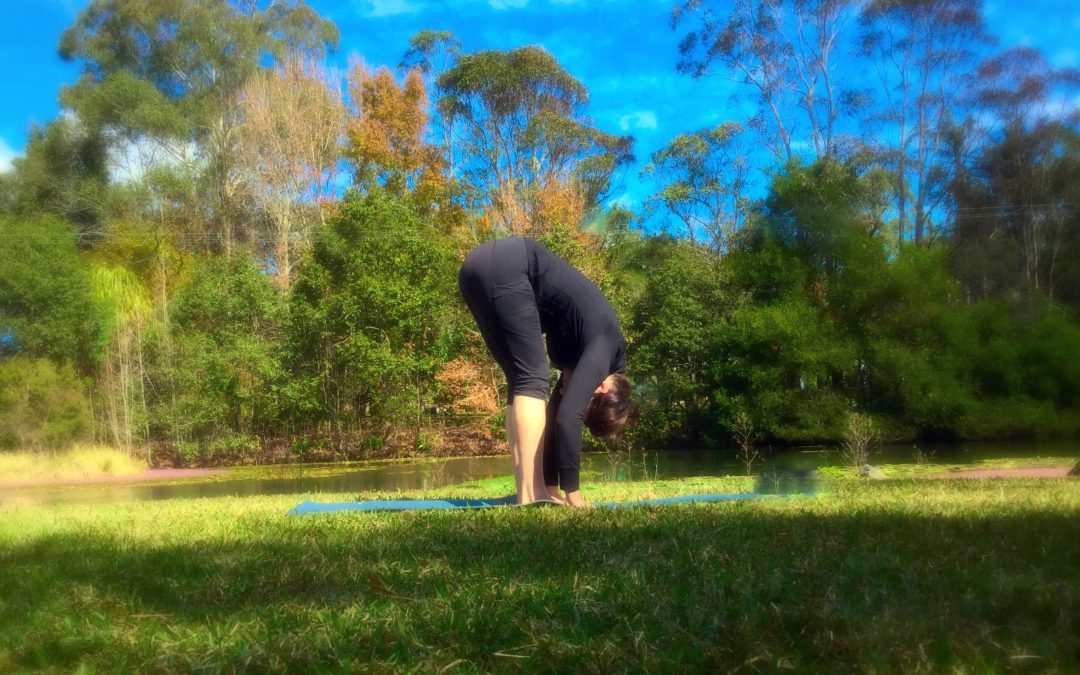
Afterwards, go to the Thunderbolt posture, another of your yoga sequences. This asana for acidity calls for you to go down on your knees on your yoga mat. You should recline on your heels and sit up straight. Position your hands so that they are flat on your knees. Just sit in this yoga position for 10 minutes while clearing your mind of all other concerns.
Asana 4: Kapalabhati
Several digestive and stomach-related problems, including obesity, may be alleviated using this asana for acidity. Go down on the floor and fold your legs up. Keep your head down and your back straight. Rest your left hand on your left knee and your right hand on your right knee.
Stop and take a few deep breaths. Force your stomach in by exhaling deeply.
Exhale with a hissing sound as if your problems were escaping through your nose.
Do your best to relax your breathing. It shouldn’t take much effort to take a deep breath. You now have 30 minutes instead of 15 minutes. Do not rush through this. The ideal tempo is somewhere in the middle.
The lung’s ability to take in and expel air will be enhanced, and the pancreas’ ability to make insulin on its own will be enhanced as a result. This asana for acidity does an excellent job of flushing out harmful substances and cleaning the body’s internals. It stabilises your thoughts, reduces stress, and helps you shed pounds quickly and easily.
Asana 5: Ustrasana (Camel pose)
This asana for acidity is excellent for those who suffer from heartburn or acid reflux. This requires resting the whole weight on the knees while the legs are stretched out behind you. Next, lean back, keeping your head in the sky, and grab your heels. Please maintain this position.
Thus, if you are facing acidity problems and related health issues, these asana for acidity will work for you effectively!
For more blogs visit on our Nepal Yoga Home blog section.
by Tirtha Acharya | Mar 17, 2023 | Yoga
A Yoga Retreat for stress is a terrific way to unwind and unburden your mind and body at the same time. Reduces tension and anxiety while increasing range of motion and muscle strength and alleviating soreness. Physical obstacles, including muscular knots, may be overcome with the use of certain yoga positions. As a bonus, it boosts your mood and helps you let go of pent-up feelings and stress by increasing your body’s production of endorphins. There will be less anxiety and be calmer as a result of all these factors.
Yoga for Stress
The practice of yoga heightens one’s awareness of the impermanence of physiological sensations, emotions, and ideas. Your attachment to your views will decrease, and your emotional intelligence will increase as a consequence. This is why Yoga Retreat for stress is perfect.
Suppose you believe that you might benefit from learning stress reduction strategies. In that case, with coping mechanisms and strong emotional control that empowers and repairs your DNA while lowering harmful stress hormones, then a health & yoga retreat is for you. You may get back in touch with yourself, refresh your body and mind, and maybe even rethink your life’s direction on a yoga retreat.
In today’s world, stress saps your joy, brings you down, and has far-reaching consequences. Do you need to take a break because you’re emotionally and physically drained, or do you feel restless and overburdened? Need a break from your busy schedule so you may unwind in the comfort of Mother Nature? You must head to Yoga Retreat for stress today.
The rejuvenation of your body, mind, and spirit that you may get via yoga retreats is unparalleled. A Yoga Retreat for stress is a place where qualified instructors and Yoga masters lead classes in idyllic settings, such as the foothills of luscious Nepal.
Benefits of going to a Yoga Retreat for Stress
Relax and take a break from your stressful routine.
In order to experience greater freedom in your life, practising yoga may help you locate and cultivate more empty space inside your physical being, mental processes, and routines. It’s interesting to note that the perception of having less time makes self-care habits all the more critical. During a Yoga Retreat for stress, you’ll have plenty of time to focus on your own well-being via the discipline of asana.
And maybe by the time you get home from your weekend Yoga Retreat for stress, you’ll be feeling very inspired to reevaluate your regular schedule and find a way to fit in yoga sessions whenever you really need them. Having a clear, renewed mind makes it easier to deal with the stresses of everyday life and has a soothing effect on others around you.
Cut links with electronic devices
On a retreat, it is recommended that you either leave your electronic devices at home or limit their use as much as possible. It’s not uncommon for mobile phone reception to be patchy in retreat centers, since many of them are located in hilly or coastal settings. During the Yoga Retreat for stress, we may connect with one another and with ourselves on a deeper level by putting down our phones. In addition, it gives us a chance to get away from the electromagnetic radiation (EMR) that pollutes so much of our everyday lives and may contribute to stress, illness, and even disease.
Cleanse your physical and mental self
When it comes to cleansing the body, yoga is only one of several options. Physical yoga postures may aid in detoxification because they force you to assume positions that decompress your internal organs and digestive system. Taking deep breaths and practising pranayama may also help speed up the detoxification process. Mind detoxification is just as important. Combining a physical detox with the release of these emotions and ideas may have profoundly therapeutic effects.
The majority of Yoga Retreat for stress takes place in scenic outdoor locations, such as by the ocean or the mountains. Spending time outside is rejuvenating and restorative on many levels.
When you take a deep intake of the clean air and look about at all the trees, plants, flowers, and birds, as well as the natural beauty, you will discover that you are more attuned to the wisdom of the universe.
Enhance Your Nighttime Restfulness
The advantages of yoga are derived from doing each individual posture. Head to Yoga Retreat for stress if you want better rest. It’s a great way to calm down and release tension, which can then be used to overcome mental and physical barriers. Your body is most receptive to exercise between sleep and wakefulness. To achieve a slumber-like condition, one should just loosen their muscles.
When you get enough shut-eye, you wake up feeling refreshed and ready to take on the day.
Your DNA will be rewritten, and your outlook on life will be altered by the transformation you undergo in your mind on a retreat. You’ll be able to breathe easily and not stress out about money or home problems again. You’ll be able to give yourself the gift of focused problem-solving and genuine rest thereafter.
What could be more appropriate than reserving a spot in our Yoga Retreat for stress at this time?
You’ll be able to calm down and concentrate on the task at hand, no matter how close the deadline is. When you finally reach your objectives, you will be able to savour each triumphant moment rather than rushing on to the next concern. Taking part in a Yoga Retreat for stress will significantly improve your quality of life. It will teach you techniques for coping with stress and worry so that they no longer affect your life.
The stress in your life will decrease, and the pleasure in your life will increase, allowing you to sleep better and concentrate more clearly. These are the top reasons for booking a Yoga Retreat for yourself and your loved ones. Don’t let this incredible opportunity pass you by; reserve your getaways now!
For more blogs visit on our Nepal Yoga Home blog section
by Tirtha Acharya | Mar 3, 2023 | Yoga
Certified Intermediate Yoga Teacher Training in Nepal
Learn the fundamentals of yoga asana teaching and become well-versed in the traditional yogic tradition to facilitate significant personal growth and change. Our Intermediate yoga teacher training is systematic and starts from the ground up. This method is helpful for those who want a deeper understanding of the practice, those who are dealing with an ailment, or those who have taken a break and want to get back into it.
Our 200 hours certified Yoga Teacher training falls under this category and we highly recommend you to join this course if you want to be a internationally certified yoga instructor.
About our Intermediate yoga instruction training at Nepal Yoga Home
Based on the ancient Indian gurukul system in which instructor and student live together, the Intermediate YTT intense residential training. You’ll be staying in a traditional Ashram and getting a lot of one-on-one time with our instructors and staff, who are deeply committed to the yogic way of life.
The extensive curriculum of our Intermediate TTC includes theory and practice. It is connected to an ancient teaching lineage handed down from guru to student over thousands of years. The Course is built on holy rituals every day in Asian culture.
What will you learn inherently?
Throughout this certified Intermediate yoga TTC course, you’ll lay the groundwork for a lifelong practice of self-discipline that fosters your physical, mental, emotional, and spiritual development and the ability to teach others with ease and assurance.
Nepal Yoga Home aims to develop prosperous yoga teachers who use their skills to bring peace to the world.
A genuine curiosity for knowledge and willingness to try new things are necessary; familiarity with yoga postures and philosophy is helpful but optional. Our certification is awarded to those who complete the programme successfully.
Pre-requisites for Intermediate yoga certification course
A familiarity with yoga fundamentals and tenets is beneficial but optional. To succeed in this course, you must have tremendous drive and self-control. Participants are expected to participate in all satsangs, lectures, and asana courses as they are integral to the programme’s success.
Principles of Nepal Yoga Home while participating in the Intermediate yoga teacher training
Since the lifestyle interferes with yoga practice, students should try to avoid eating or drinking anything containing meat, fish, eggs, black tea, coffee, alcohol, smoking, or narcotics during the Intermediate type of yoga training. This is optional, but it benefits students to experience the most profound benefits of yoga.
All events need your presence to ensure that you attend all lessons. If students can follow the guidelines set out by the Nepal Yoga Home, they can complete integral lessons on theory or practice.
The Intermediate yoga teacher training provides a platform from which to share the transformative power of Yoga with the world. Gurus have created this intense curriculum to help people delve more deeply into Yoga. As a result, they become a conduit through which others may get the resources they need to start their process of self-improvement.
The intrinsic desire to tell others about what has meant so much to them has inspired many people to commit their lives to this route. Now, educators of all ages and walks of life are working tirelessly to make this a reality for their students all across the globe.
A continuing programme at the Nepal Yoga Home, the Intermediate yoga course requires participants to study for varying lengths. Individuals who need to commit to the centre may complete their training in the comfort of their homes.
More on the benefits of teaching yoga
There are many options for everyone interested in teaching, whether you are a student looking for a full-time position or a stay-at-home parent looking to make some extra money.
- Sharing the benefits of Intermediate yoga teacher training with students of all ages
- Delivering Yoga 101 lectures to the general population
- Having satsangs once a month
- Participating in community service and event planning
- Participating in the administration and organisation of classroom
- Get an in-depth understanding of Yoga during our transformative yoga teacher training.
If you want to go deeper into your yoga practice and learn how to teach others in a more organised and professional way, this Intermediate certified yoga training is for you. Anybody looking to develop as a yoga instructor or as a yogi themselves will find the training to be a rewarding experience.
This Intermediate yoga certification is the real deal for individuals hoping to make a living teaching yoga to others. In addition, you get support as you develop your distinctive approach to teaching yoga, which may pave the way to a rewarding professional life.
Others may find their long-awaited path to tranquilly and contentment here. Your time spent here will take you on a journey to the depths of your soul, where you will unearth previously unknown abilities and potential.
Get started on the path to self-discovery and change by immersing yourself in the soothing stillness of yoga. The Intermediate yoga teacher training programme at Nepal Yoga Home celebrates yoga’s core values and ideals. This course will help you become a certified yoga teacher and refine your yoga practice knowledge.
With our Intermediate TTC, you may learn the fundamentals of these practices from the start in a safe, supportive, and comfortable group environment. Attending a class might also help you get back into practice after an extended break or solidify your present method of operation.
These classes will help you incorporate yoga and meditation into your daily life by providing you with the knowledge, skills, and confidence to do so and discussing the health benefits of doing so. The yoga practises introduced gradually cover various topics, from the sun salutation (surya namaskar) through the 12 fundamental yoga postures to pranayama and relaxation methods.
Thus, this was all about what you can learn and expect with our teacher training programme. If you’re an experienced practitioner, our Intermediate yoga teacher training is a great way to take your practice to the next level by adding new challenges and lengthening the time spent in each pose. Get in touch with your inner self at Nepal Yoga Home by delving into the timeless teachings of yoga.