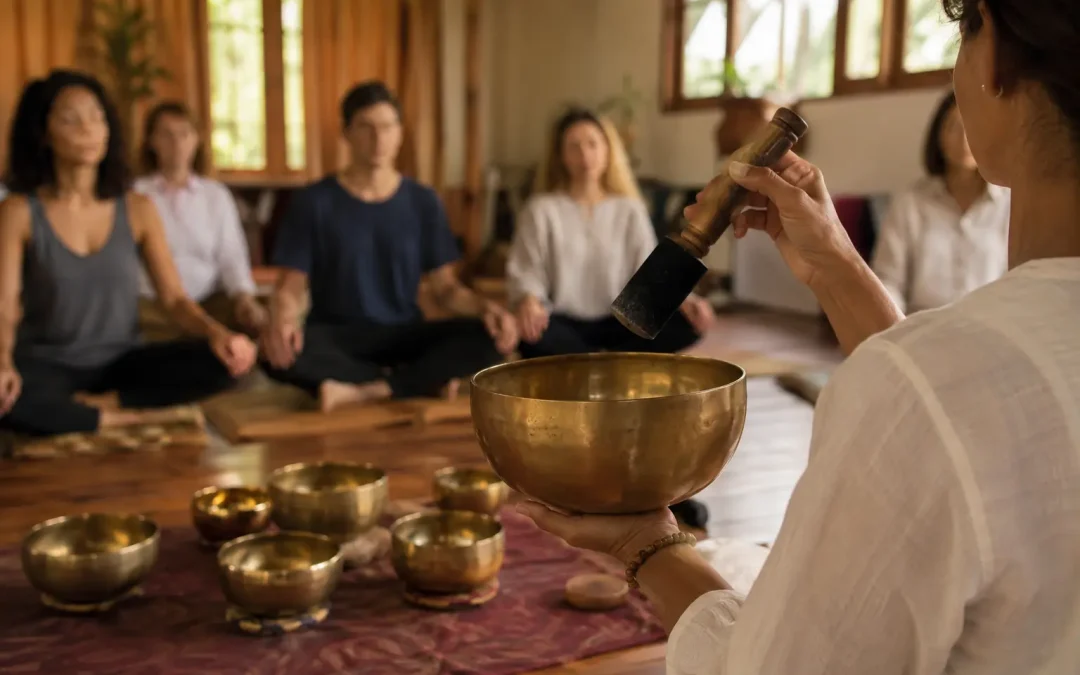
Before it ended up in candle-lit wellness studios, the singing bowl had a much older job. Monasteries, fire rituals and healing ceremonies, that’s where it started and it never really left Nepal and Tibet.
More people are paying attention to that history now than they used to. A 2025 healthcare research review found that Tibetan singing bowl practice is being studied as a low-cost, drug-free way to ease stress. That’s probably part of why singing bowl training in Nepal has picked up so much interest lately.
So here’s the real question beginners usually have. Not “what’s the course schedule,” but “what will I actually be able to do afterward.” That’s exactly what this article covers!
Why Nepal Is the Right Place for This?
You could learn a version of this practice almost anywhere now. However, Nepal is where the bowls, the chanting and the rituals attached to them actually come from, not somewhere they got repackaged for tourists.
An instructor here usually grew up around this practice. That’s the real difference singing bowl training Nepal offers compared to a two-hour workshop offered in different countries.
The 10 Skills You’ll Actually Walk Away With
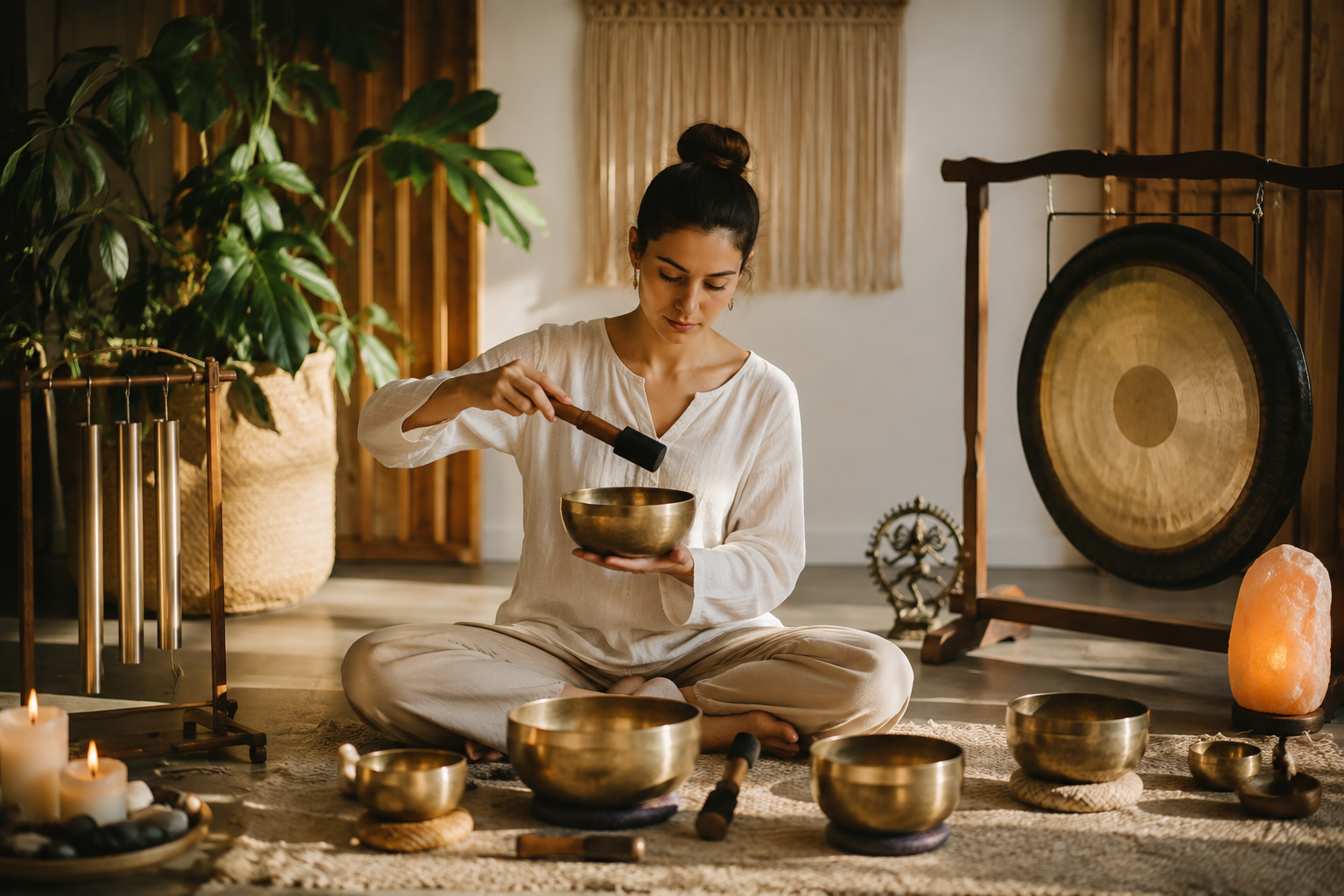
Nearly everyone holds the mallet wrong on day one. It’s almost a rite of passage, and it’s genuinely satisfying to watch that improve within a couple of sessions.
1. The Science and History Behind the Sound
Why does a metal bowl ring the way it does, and hold a tone for so long? You’ll get into the alloy, the shape and where the whole tradition actually traces back to.
2. Sound Frequency and the Seven Chakras
Each note on the scale is paired with a specific energy centre. Root, sacral, all the way up to crown, you’ll start recognising which note goes where.
3. Mallet Grip and Striking Technique
This one trips people up more than expected. The tone dies out fast if your grip or angle is off, so a good amount of early practice is just fixing that until the sound actually sustains.
4. Breath and Sound Working Together
Match your breathing to the vibration and the whole thing shifts. It stops feeling random, starts feeling like something you’re actually doing on purpose.
5. Self-Healing with the Bowl
This is usually why people show up in the first place. You’ll learn where to play the bowl and how, for your own stress relief, no one else needed in the room.
6. Singing Bowl Massage
Placing a vibrating bowl against the body is nowhere near the same skill as playing it in the air. Different placement points, different pressure and it takes some practice to get comfortable with both.
7. Basic Chakra Purification
Stress and bad habits are said to leave a kind of residue in the chakras over time. There’s a simple sequence taught for clearing that out using sound alone, nothing complicated.
8. Chakra Activation and Balance
Once purification makes sense, the next step is learning how a sustained tone can wake up a chakra that’s gone quiet and bring the whole system back into balance.
9. Running a Short Guided Meditation
Sound paired with meditation tends to hold attention better than sitting in silence does. By the end, most beginners can run a short session, either alone or for a friend or two.
10. Understanding how Sound Affects Mood
Some practitioners connect certain tones to brainwave entrainment, the idea that pulsing sound nudges the brain toward calmer states. The research isn’t fully settled, but you’ll leave understanding the theory well enough to explain it yourself.
Chakra and Sound Reference Table
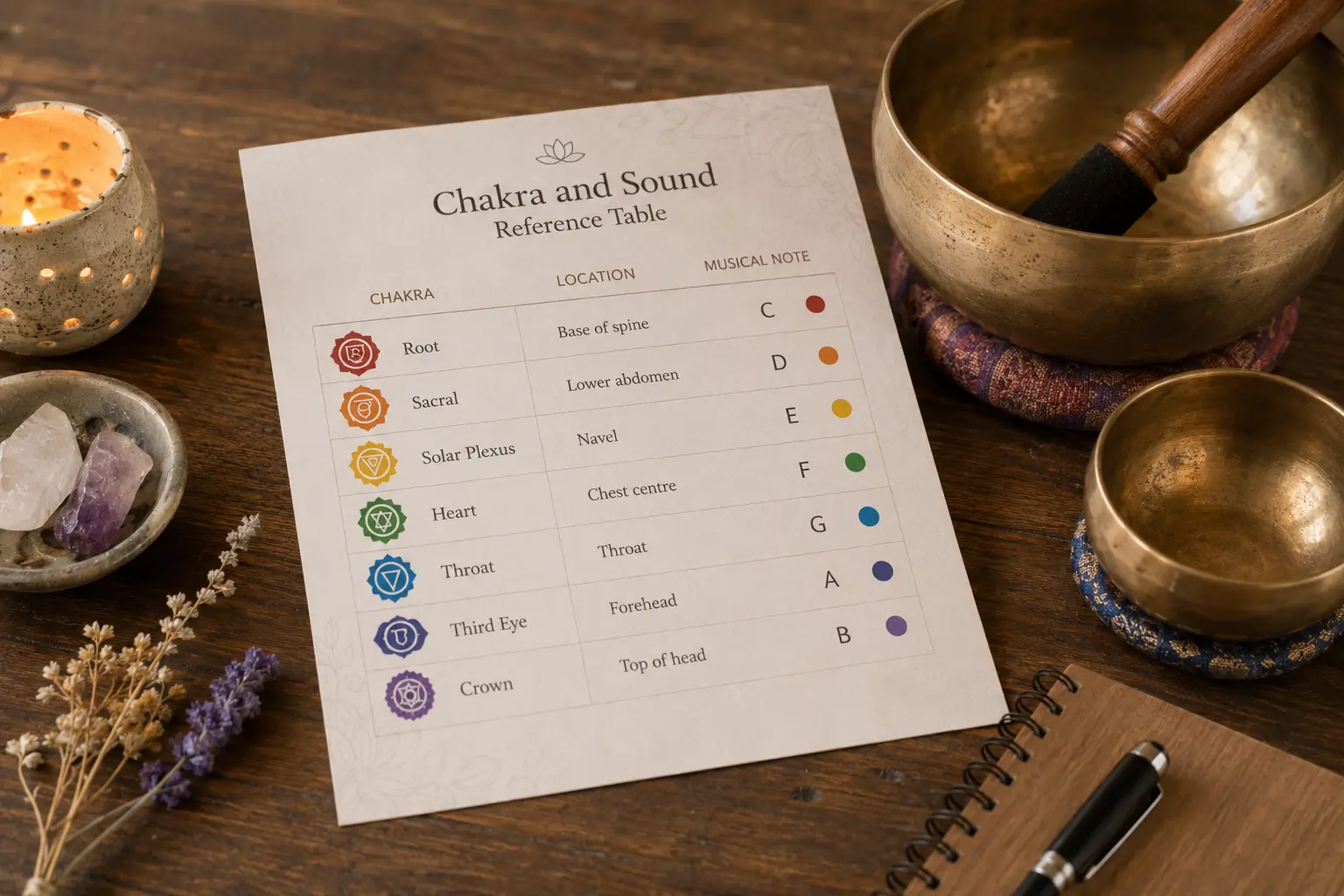
This chart gets repeated so often during training that most people end up memorising it without trying to:
| Chakra | Location | Musical Note |
| Root | Base of spine | C |
| Sacral | Lower abdomen | D |
| Solar Plexus | Navel | E |
| Heart | Chest centre | F |
| Throat | Throat | G |
| Third Eye | Forehead | A |
| Crown | Top of head | B |
What a Beginner Schedule Looks Like?
Most Level 1 courses run three days, starting with theory before moving into actual playing. Nepal Yoga Home’s Singing Bowl Training Level 1 follows roughly this shape, with 2 to 3 hour sessions each day.
- Day 1: Sound theory, chakra basics and first attempts at playing
- Day 2: Self-healing technique, breath coordination and introduction to massage
- Day 3: Chakra balancing, guided meditation and final review
No musical or yoga background are needed while going in. The whole course is built around starting from zero.
Where Can This Take You Next?
Level 1 isn’t just a taster course, it’s a real foundation.
From there, Advanced Singing Bowl Training pushes the same ten skills further into actual healing work.
A lot of travellers stack this with other practices while they’re already in the country. Here are some of the common ones that you can add with your singing bowl training in Nepal:
- Singing Bowl Meditation Training
- Singing Bowl Healing and Kundalini Yoga
- 21-Day Yoga, Massage, and Singing Bowl program
Ready to Start Your Singing Bowl Training in Nepal?
None of this requires prior experience. Just a few days and someone who actually knows the practice will help you get started. Nepal Yoga Home’s level 1 course covers what’s taught in this region and how this tradition began in the first place.
Maybe it’s personal stress relief you’re after. Maybe it’s the first real step toward becoming a sound healer. Either way, singing bowl training in Nepal is a practical place to start.
Frequently Asked Questions
Do I need any musical background to join?
No. Training starts from zero, so someone who’s never touched an instrument keeps up just as easily as someone with a music background already.
How long is the Level 1 course?
Usually three days, with 2 to 3 hour sessions that move from theory into hands-on work. A one-day version can sometimes be arranged if time’s tight, but three days gives you space to actually absorb it instead of rushing.
Will I get a bowl to practise with?
Yes, bowls are provided during the course, so there’s nothing you need to bring. If you’d rather take one home afterward, ask about purchasing your own, since size, alloy and tone vary quite a bit.
What comes after Level 1?
Level 1 covers the essentials, chakra theory, playing technique, self-healing and basic meditation. The advanced 6-night track builds on that with deeper healing work and practice geared toward working with others.
Can this be combined with yoga teacher training?
Yes. The 21-day program covers yoga teacher training, massage and singing bowl practice into one trip, which works well if you want a fuller skill set.