


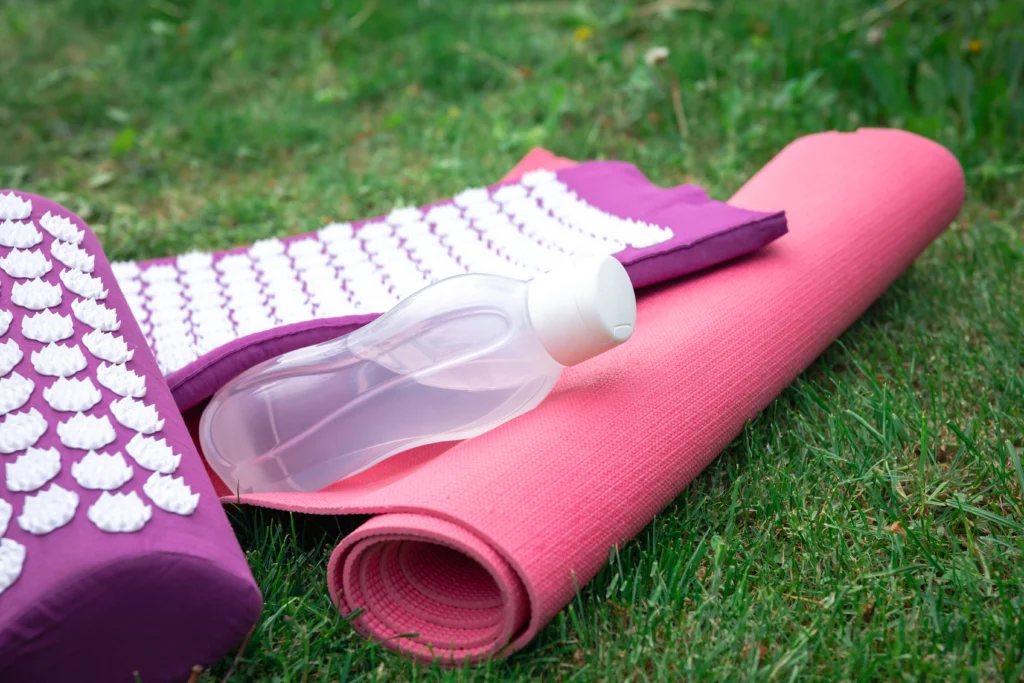
You open an online yoga store and the list never ends. Blocks, straps, bolsters, wheels and sandbags. It feels like you need a suitcase of gear before your first downward dog.
We want to save you that money. Most yoga props for beginners are optional, and a few simple items cover nearly everything you will do in your first months.
In this guide, we explain what each prop does, what you can swap with things at home, and what to buy first. Our teachers at Nepal Yoga Home use these tools daily with students from many countries.
Why Do Beginners Use Props at All?
A prop does not mean you are weak or bad at yoga. It meets your body where it is today.
Your muscles and joints are still learning new shapes. Yoga props for beginners bring the floor closer, support your alignment, and let you stay in a pose without strain.
In class, we see the same results again and again:
- Students reach the floor in Triangle Pose without collapsing their chest.
- Tight hips feel easier in seated poses.
- Knees and wrists get a break.
- Breathing stays calm instead of rushed.
Experienced practitioners keep using yoga props for beginners too. You will as well.
Yoga Props for Beginners at a Glance
| Prop | What it does | Buy now? | Home swap |
| Yoga mat | Gives grip and cushion | Yes | Non-slip rug on a flat floor |
| Two blocks | Bring the floor closer | Yes | Two firm books wrapped in cloth |
| Strap | Extends your reach | Yes | Scarf, dupatta or long belt |
| Blanket | Adds padding and lift | Yes | Folded towel or shawl |
| Bolster | Supports restful poses | Later | Two rolled blankets |
| Chair | Offers support in sitting and standing | Optional | Sturdy dining chair |
| Meditation cushion | Lifts your hips for sitting | Optional | Firm pillow |
Start with the first four. Add the rest only when a real problem shows up.
1. Yoga Mat: Your Foundation
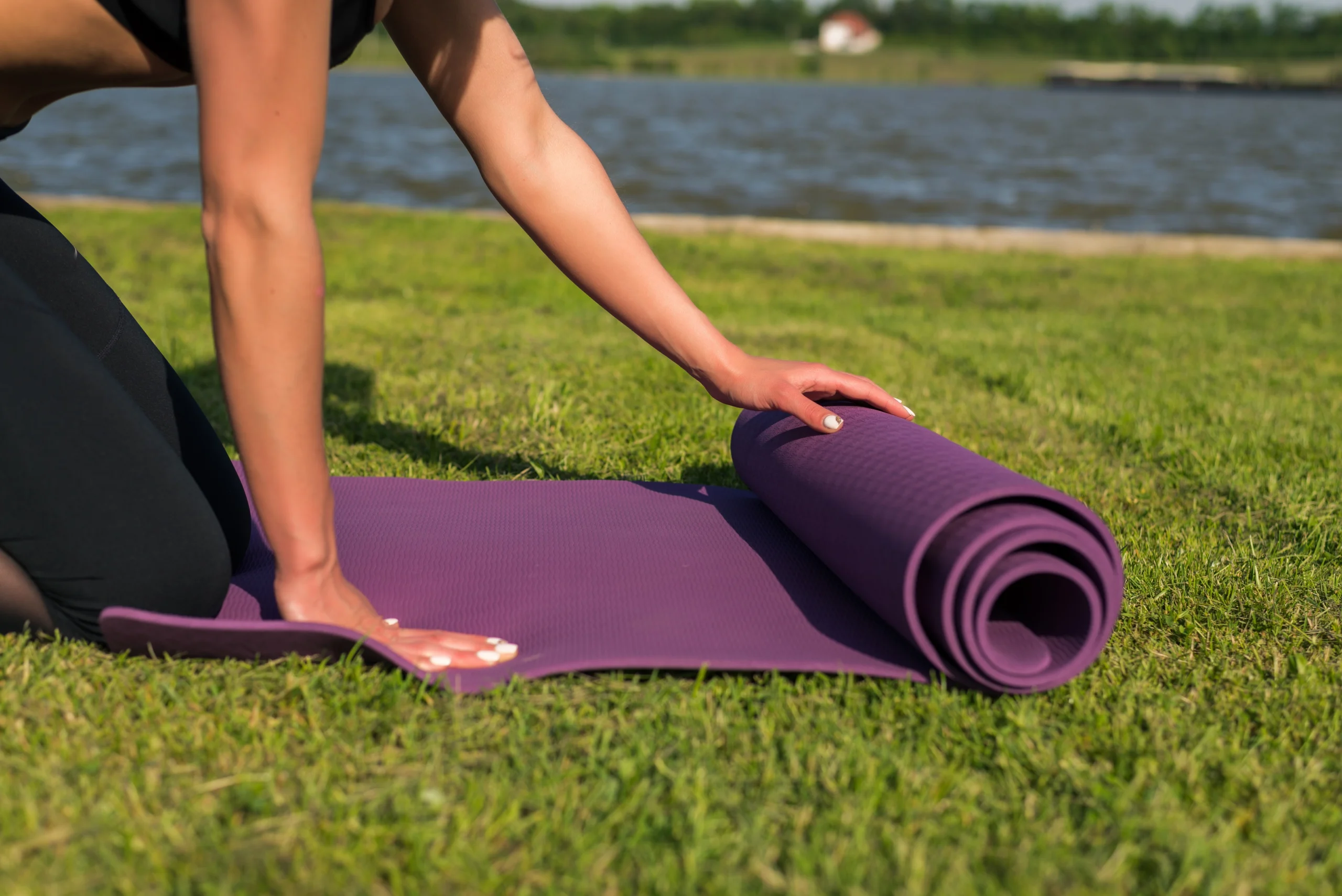
Your mat gives you grip and cushion. Thickness matters more than most people expect.
- 3 to 4 mm: Better balance feedback in standing poses.
- 4 to 5 mm: A good middle ground for most beginners.
- 5 mm and above: More padding for sensitive knees and wrists, but a little wobblier in balance poses.
Choose a mat that feels firm under your feet and kind under your knees. If your floor is hard, go slightly thicker. For most of our beginners, we suggest 4 to 5 mm.
2. Yoga Blocks: Buy Two
If you buy one thing beyond a mat, make it a pair of blocks.
You can use them in many ways:
- Rest your hand on a block in Triangle Pose when the floor feels far away.
- Sit on one in Easy Pose or Hero Pose to ease your knees and hips.
- Place one under your head or hips in restful poses.
Foam and cork both work:
| Material | Strengths |
| Foam | Lighter, cheaper, gentler under your head and hips |
| Cork | Denser, grippier, steadier when you lean your weight on it |
Foam is fine to start. Pick firm foam, because very soft blocks squash and lose their support. The standard size is 9 x 6 x 4 inches. You can also build your confidence with blocks in our 10-hour online yoga training.
3. Yoga Strap: Reach Without Forcing
A strap works like a longer arm. Loop it around your foot in a seated forward fold, and you can keep your spine long instead of rounding to reach.
- Choose a cotton strap with a metal buckle or D-ring.
- Six to eight feet suits most people. Taller students may prefer eight.
- No strap? A scarf or belt does the same job.
If you enjoy learning how to adjust poses safely, our 100-hour beginner yoga teacher training teaches prop use in detail.
4. Blanket: The Quiet Hero
A folded blanket does more than you would guess. Slip it under your knees in Child’s Pose. Sit on it to lift your hips in seated poses. Roll it under your ankles when they feel tight. Cover yourself with it during final rest.
Start with a firm household blanket. You can buy a dedicated yoga blanket later if you want one. For deeper rest, you might like our yoga nidra training.
Props to Add Later
Wait until your practice shows you what you need.
These are the common next steps:
- Bolster: It supports your back in reclined and restful poses. Two rolled blankets work in the meantime.
- Chair: It helps when sitting on the floor feels hard. Our seniors yoga retreat and chair yoga course use it every day.
- Meditation cushion: It lifts your hips so your back can stay tall. Learn more in our introduction to meditation.
- Eye pillow: It adds comfort in deep relaxation.
What You Can Skip for Now
- Yoga wheels and sandbags, which suit later stages.
- Ten-piece kits full of cheap gear.
- Special clothes. Anything you can move in works.
One good mat with a block and a strap beats a big budget kit. Keep this in mind when you start buying yoga props for beginners.
Five Cheap Ways to Start Today
- Fold a blanket to replace a bolster or a block.
- Use a scarf as a strap.
- Wrap two firm books in a towel for blocks.
- Practise near a wall for balance.
- Join a class first and see which props help your body. Then buy.
Our 5-hour basic online yoga class is a gentle place to try this from home.
Choose Props by Your Yoga Style
| Style | Props you will use most |
| Hatha | Mat, two blocks, strap and blanket |
| Vinyasa | Mat, two blocks |
| Restful practice | Blanket, bolster and eye pillow |
| Seniors or chair yoga | Chair, blanket and thick mat |
| Meditation | Cushion and blanket |
If you like flowing practice, explore Ashtanga Vinyasa yoga in Nepal. If you need gentler work for tight areas, our therapeutic yoga retreat can guide you.
Learn With Us at Nepal Yoga Home
Reading about props helps, but a teacher beside you helps more. Our yoga teachers can show you which prop suits your body and how to use it well.
Pick a stay that fits your time:
- A 3 nights, 4 days yoga retreat for a first taste.
- A one-week yoga class in Nepal to build a routine.
- A one-month yoga retreat in Kathmandu for deep practice.
Check our services and facilities for details on rooms and meals, and read our FAQ for common questions. When you are ready, book your stay.
Frequently Asked Questions
Do I need to buy yoga props for beginners right away?
No, a mat is usually enough on day one. Add a pair of blocks and a strap when you notice a pose feels out of reach.
Which yoga props for beginners should I buy first?
Buy a mat, two blocks and a strap. These three cover most beginner poses and cost far less than a full kit.
Are cork blocks better than foam blocks?
Cork is denser and steadier when you press your weight into it. Foam is lighter and softer, which makes it a fine starting choice.
What can I use instead of a yoga block or strap?
Two firm books wrapped in a towel can replace blocks. A scarf, dupatta or belt works well as a strap.
Do seniors need different props?
Seniors use the same basics, plus a sturdy chair and a thicker mat for comfort. Our teachers can adjust every pose to suit your body.