


A guest once told us she’d packed protein bars because she assumed the food would be “sad hostel food.” She left three kilos of them untouched and asked for the dal recipe on her last day.
That mix-up between expectation and reality is pretty common with first-time retreat guests, and it’s not really their fault. Nobody explains what a yoga retreat center in Nepal actually looks like day-to-day, so people fill the gap with guesses.
Here’s the short version: it’s not a boot camp. Mornings start slow, the food is plain, but it works, and there’s more unscheduled time than you’d expect from the photos on a booking site. Once the actual rhythm of a day makes sense, most of the nervousness just goes away.
Below is what a normal day at a retreat center in Kathmandu tends to look like, food included, based on how things run at Nepal Yoga Home.
Everything You Get in Your Yoga Retreat Center in Nepal
Each yoga retreat center in Nepal operates differently. However, there are some similarities in them based on daily schedule, food, yoga and meditation.
Here are seven things you’ll find:
1. Your Everyday Follows a Simple Rhythm
Every place can adjust or make changes in the timing slightly, but almost every yoga retreat center in Nepal builds the day around the same three anchors.
These include two yoga sessions, three meals and open gaps where nothing’s planned.
| Time | Activity |
| 6:00–7:00 AM | Wake up, herbal tea |
| 7:00–8:30 AM | Morning yoga and pranayama |
| 8:30–9:30 AM | Breakfast |
| 9:30 AM–12:00 PM | Free time, self-study, or workshop |
| 12:30–1:30 PM | Lunch |
| 1:30–4:00 PM | Rest, excursion or reading time |
| 4:30–6:00 PM | Evening yoga and meditation |
| 6:30–7:30 PM | Dinner |
| 8:00–9:00 PM | Group discussion or early sleep |
That gap after lunch isn’t filler. It’s the part that keeps the whole week from feeling like a checklist you’re racing through.
2. Mornings Start with Yoga
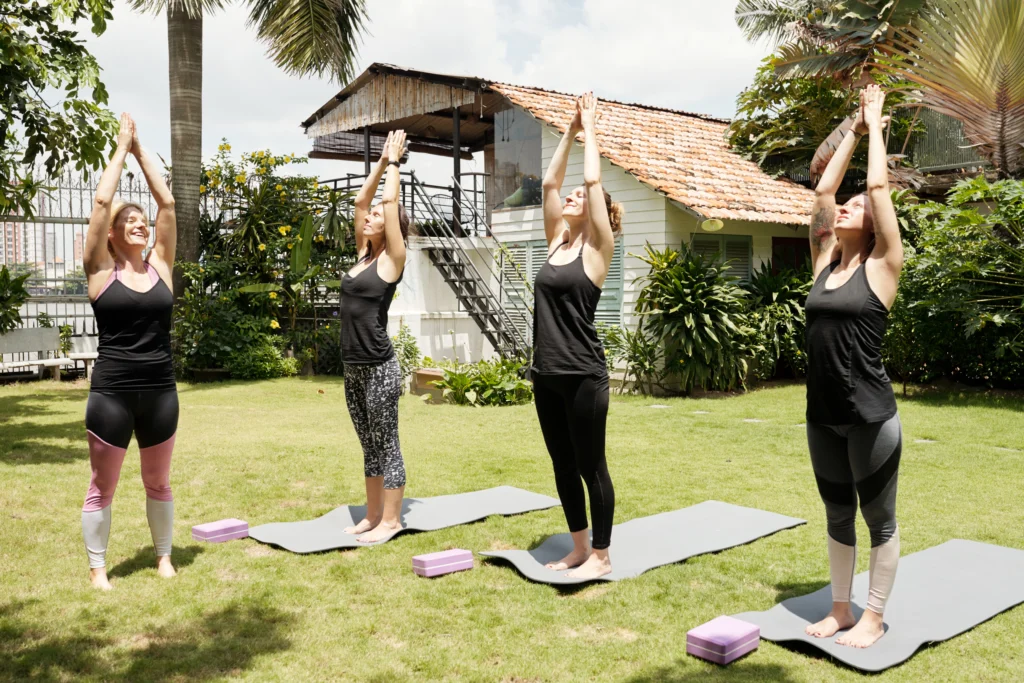
Practice comes first so essions usually starts before 7:30 AM, back when it’s still cool out and your brain hasn’t caught up with the day. You’re looking at 60 to 90 minutes of asana and pranayama, depending on which program you picked.
New to yoga? Nobody’s expecting you to keep pace with the guy who’s been practicing for fifteen years.
A decent teacher will actually:
- Give you a modification if your hips or hamstrings won’t cooperate
- Tell you why a posture matters, not just how to bend into it
- Notice who’s struggling and slow down without making a thing of it
The same philosophy runs through the longer programs too. Our yoga teacher training courses, where a total beginner and someone finishing their third YTT end up on mats next to each other and it’s fine.
3. Meals are Vegetarian, Simple and Timed Around Practice
Nothing heavy gets served at a yoga retreat center in Nepal. Vegetarian, cooked fresh and timed so lunch isn’t sitting in your stomach while you’re trying to meditate an hour later.
- Breakfast: Porridge, seasonal fruit, herbal tea and sometimes a light Nepali dish
- Lunch: Dal, rice, vegetables, yogurt or a small salad if it’s on offer that day
- Dinner: Lighter, served early enough that it’s actually digested before bed
Nobody goes hungry, that guest with the protein bars can confirm it. There’s just no late-night snacking or oily food dragging you down, since eating light tends to make sitting still (or moving through a full session) a lot easier.
Want something more intense than “eat simple”? That’s a separate program, an actual cleanse, and it’s covered on our yoga detox retreat page.
4. Meditation is Woven Through the Day
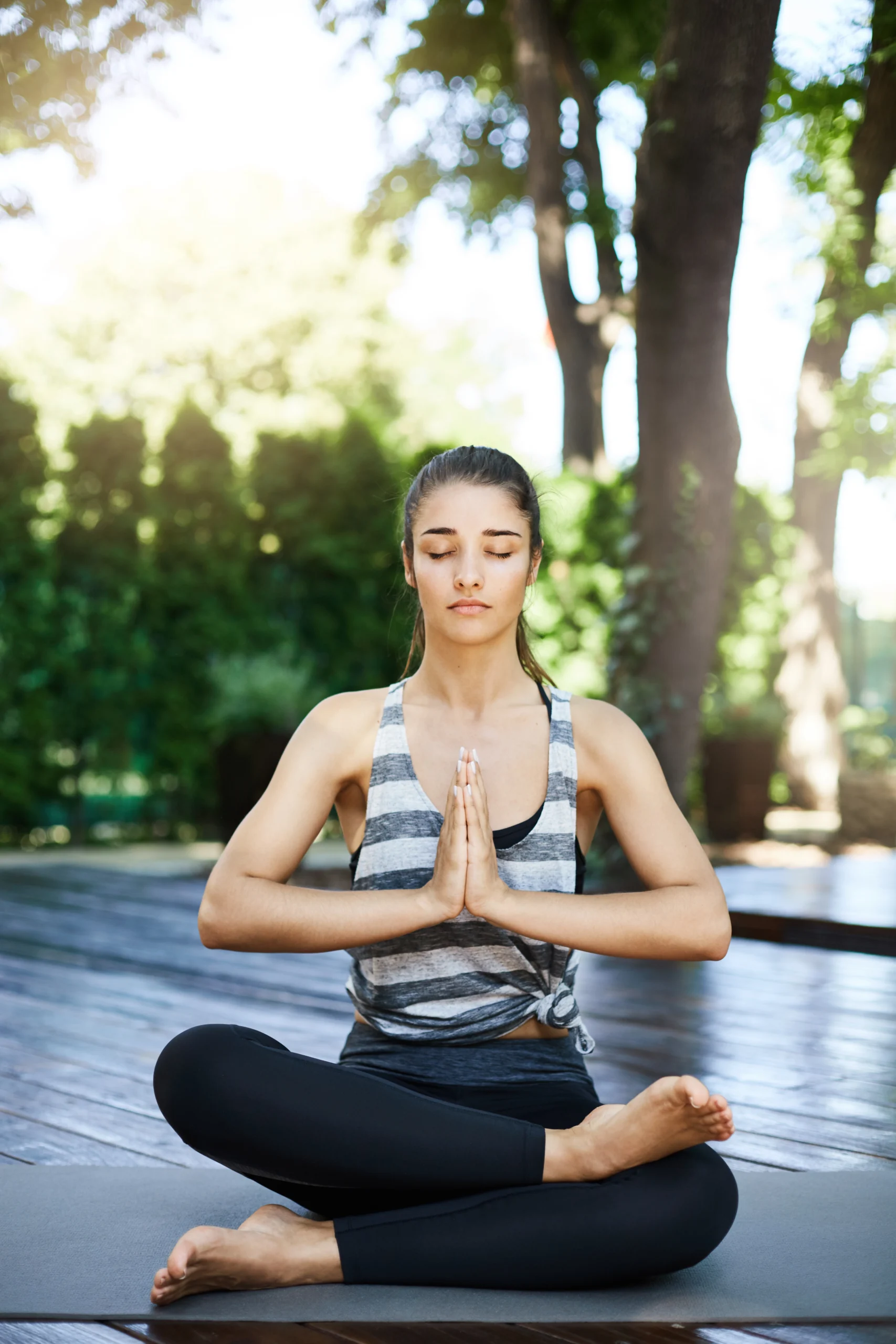
It’s not a once-a-day thing tucked into the evening. You’ll sit briefly after morning practice, then again for longer in the evening, guided. Breath-awareness, guided visualization and short silent sits.
What a Beginner Meditator Should Expect?
Your mind will wander a lot. For the first two or three days, probably the whole time. That’s not you failing at it, it’s just what happens. Teachers usually start with 10-minute sits and stretch it out from there. Stiff lower back, restless legs, both common early on, both fade as the week goes.
The National Center for Complementary and Integrative Health has noted regular meditation practice is linked to lower stress and sharper attention over time. Which tracks with why it’s treated as a daily habit here, not a once-a-week extra.
5. There’s Free Time Built Into the Schedule
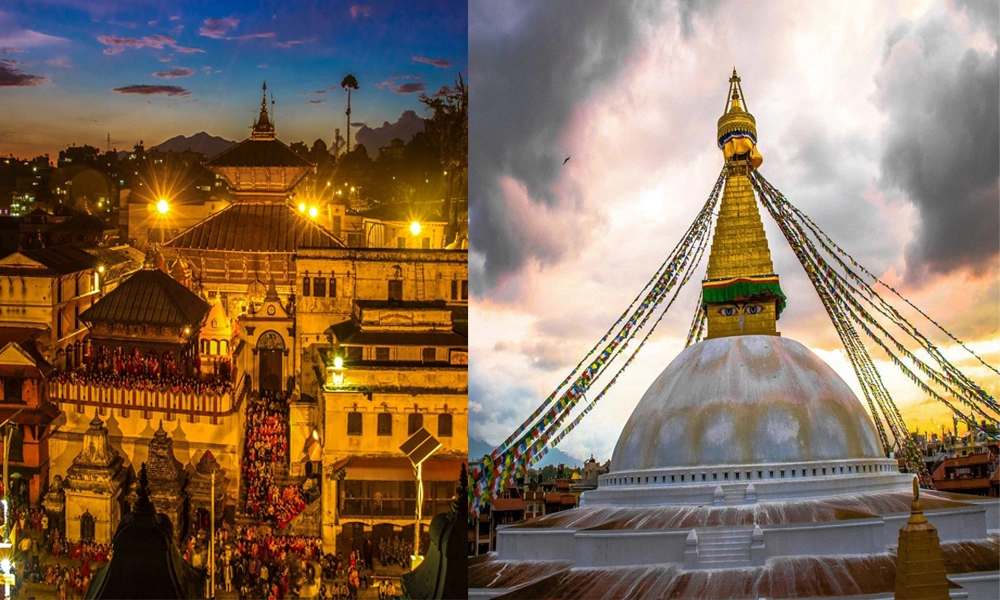
A retreat center that packs every hour full isn’t doing you any favors. Midday and early afternoon tend to sit open, for resting, journaling, or heading out somewhere. Boudhanath Stupa, Pashupatinath Temple and Swayambhunath, all short drives from most retreat centers around Kathmandu.
That gap isn’t wasted time. Your body needs it between sessions and your mind needs a break from being told what to do next, too. Otherwise you’re just moving from instruction to instruction without ever sitting with any of it.
6. Accommodation and Facilities Support the Practice
Yoga hall, dining room and guest rooms, usually all close together, so you’re not burning half the day walking between buildings. Expect a proper practice hall, simple rooms (nothing fancy, but clean), and shared or private bathrooms depending on the package.
Worth a look at our services and facilities page before booking, just so the room setup isn’t a surprise when you land.
7. Programs Range from a Few Days to Several Weeks
Length varies a lot depending on what you’re actually after:
- A short 3–4 day reset, fine if you just need a break from your normal routine
- A full week, like our 7-night, 8-day yoga retreat, if you want a real introduction to daily practice
- A longer stay, our one-month yoga retreat, for people chasing something deeper or planning to roll into teacher training after
Programs run through Yoga Alliance-certified teachers tend to hold a more consistent structure too, since those instructors trained against a set standard instead of whatever a given center decided on its own.
Find the Right Retreat Program at Nepal Yoga Home
If any of this sounds like your kind of week, next step’s just picking length and focus.
Our full lineup of yoga and meditation retreats in Kathmandu is a good place to start, or go straight to the booking page and check what’s open. It’s worth reading a few testimonials too. They’ll tell you more than a schedule ever will.
Frequently Asked Questions
Do I need prior yoga experience to join a retreat?
No. Most retreat centers build sessions around beginners as the default, not the exception, so modifications are always on offer. Nobody’s racing anybody. You move at your own pace and that’s just how it’s supposed to work.
How many yoga sessions are there per day?
Two, generally, morning and evening, with meditation folded into or right after each. Enough to fill the day without wrecking you by dinner. Ask if you want more, some centers will add sessions on request.
Is there free time during a yoga retreat center in Nepal, or is the schedule fully structured?
Yes, usually somewhere in the middle of the day. Rest, journaling, a short trip out, whatever you need it for. Packing every hour full defeats the whole point of going on retreat in the first place, so decent centers avoid doing that.
What should I pack for a yoga retreat center in Nepal?
Breathable clothes for yoga, a couple of warm layers for early mornings and evenings when the temperature drops fast, a reusable water bottle and your regular toiletries since amenities stay simple. Kathmandu’s elevation means bigger swings between day and night than you’d guess from the forecast. Bring a journal too, if that’s your thing.
Can I choose between group and private accommodation?
Yes, most places offer both. Comes down to budget versus how much quiet you want at the end of the day. Private rooms cost more, but they’re worth it if decompressing alone matters to you, and they tend to book out first in busier months, so don’t wait too long.