


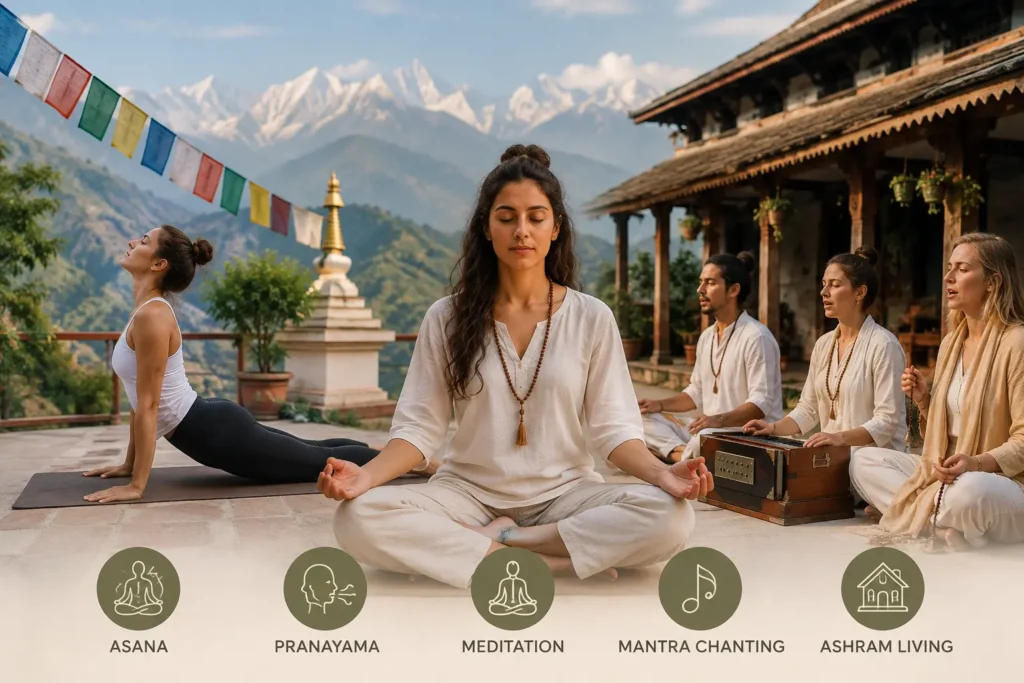
Say “yoga” to most people and a picture pops up straight away: a mat, an hour, some stretching, maybe a bit of sweat by the end. A yoga ashram in Nepal barely resembles that picture.
It takes up the whole day. Breath, posture, sitting still and chanting out loud, none of it gets treated as a separate class here. It’s all one thing, stitched together from sunrise onward.
The setting does a lot of the work too. That’s why Nepal Hoga Home is located on the hillside of the Nagarjun forest above the Kathmandu Valley, a forest that’s said to take its name from an enlightened monk who once meditated there.
This comprehensive blog is written for someone who’s never sat through a real meditation session, never chanted anything out loud, and feels a little unsure about the whole idea.
Why It Feels So Different From a Studio Class?
A studio class runs an hour. You will stretch, sweat a bit, drive home and mostly forget it happened by dinner.
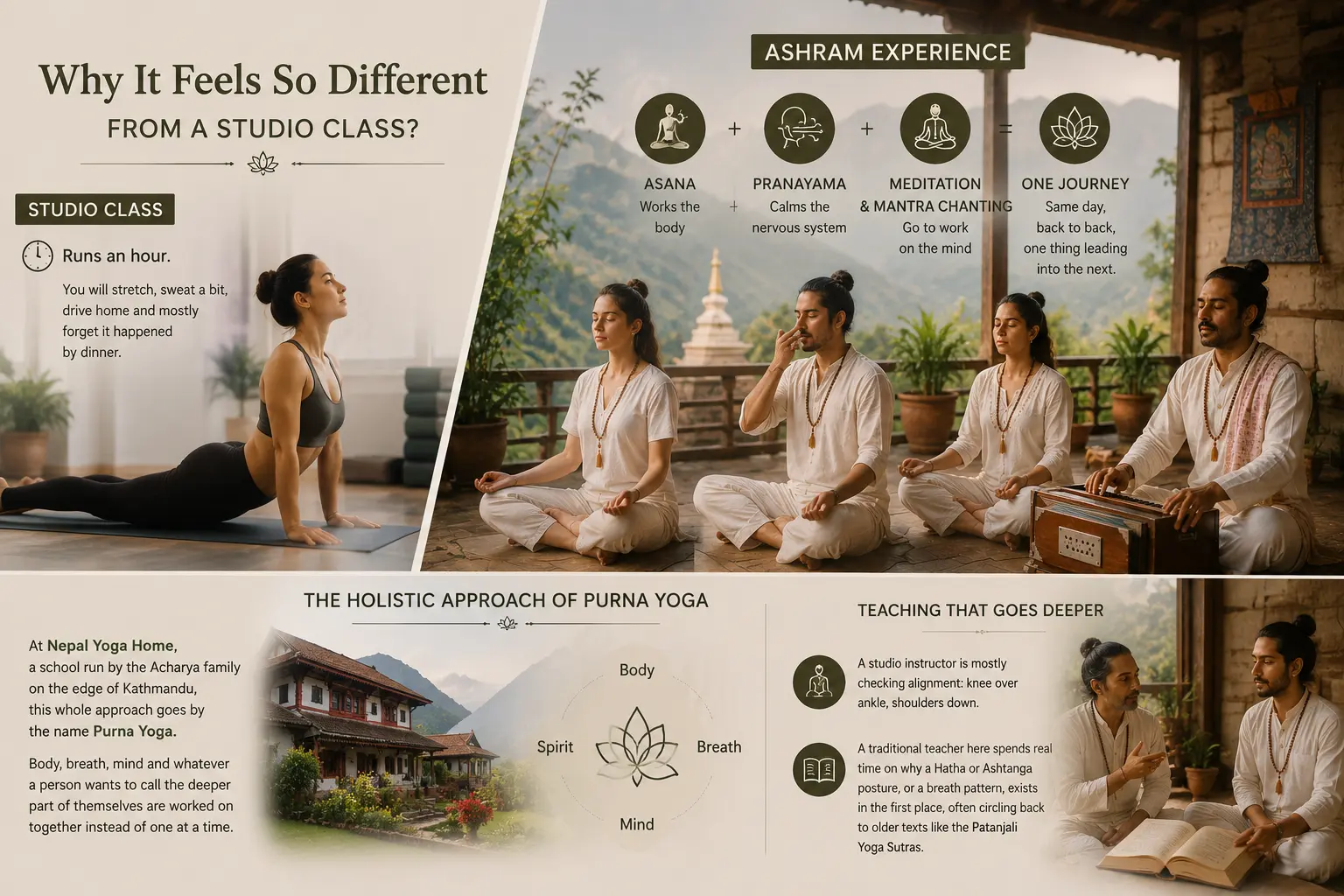
An ashram doesn’t run that way. Asana works the body, pranayama calms the nervous system down, meditation and mantra chanting go to work on the mind, and none of it is spread across separate sessions over separate weeks. Same day, back to back, one thing leading into the next.
At Nepal Yoga Home, a school run by the Acharya family on the edge of Kathmandu, this whole approach goes by the name Purna Yoga. Body, breath, mind and whatever a person wants to call the deeper part of themselves are worked on together instead of one at a time.
Even the teaching feels different. A studio instructor is mostly checking alignment: knee over ankle, shoulders down. A traditional teacher here spends real time on why a Hatha or Ashtanga posture, or a breath pattern, exists in the first place, often circling back to older texts like the Patanjali Yoga Sutras.
What Does Your Daily Rhythm Look Like?
Every ashram runs it a little differently, but the shape repeats itself almost everywhere.
| Time | What’s Happening |
| Early morning | Pranayama, then gentle asana as the sun comes up |
| Mid-morning | Shared vegetarian breakfast, then philosophy or study |
| Afternoon | Guided or silent meditation, often in the open garden set aside for individual practice |
| Evening | Mantra chanting and a closing prayer, sometimes with singing on the rooftop afterward |
Sundays are usually off, free for a wander into Kathmandu or just sitting on the terrace with the valley spread out below.
What Happens During Meditation at a Yoga Ashram in Nepal?
A session usually opens with a few minutes of settling the breath, then moves into either guided focus or plain silence, depending on the day.
New arrivals sit for 20 to 40 minutes, and nobody’s expected to have a flawless, quiet mind on the first try. Most don’t, and that’s fine.
Longer stays, a 21-day yoga and meditation retreat for instance, build the sitting time up slowly across the days instead of dropping newcomers straight into an hour of silence.
The Sound Part: Mantra Chanting
This tends to be the part that makes first-timers nervous before they even land. It looks strange right up until someone actually opens their mouth and tries it, and then, it just stops feeling that way.
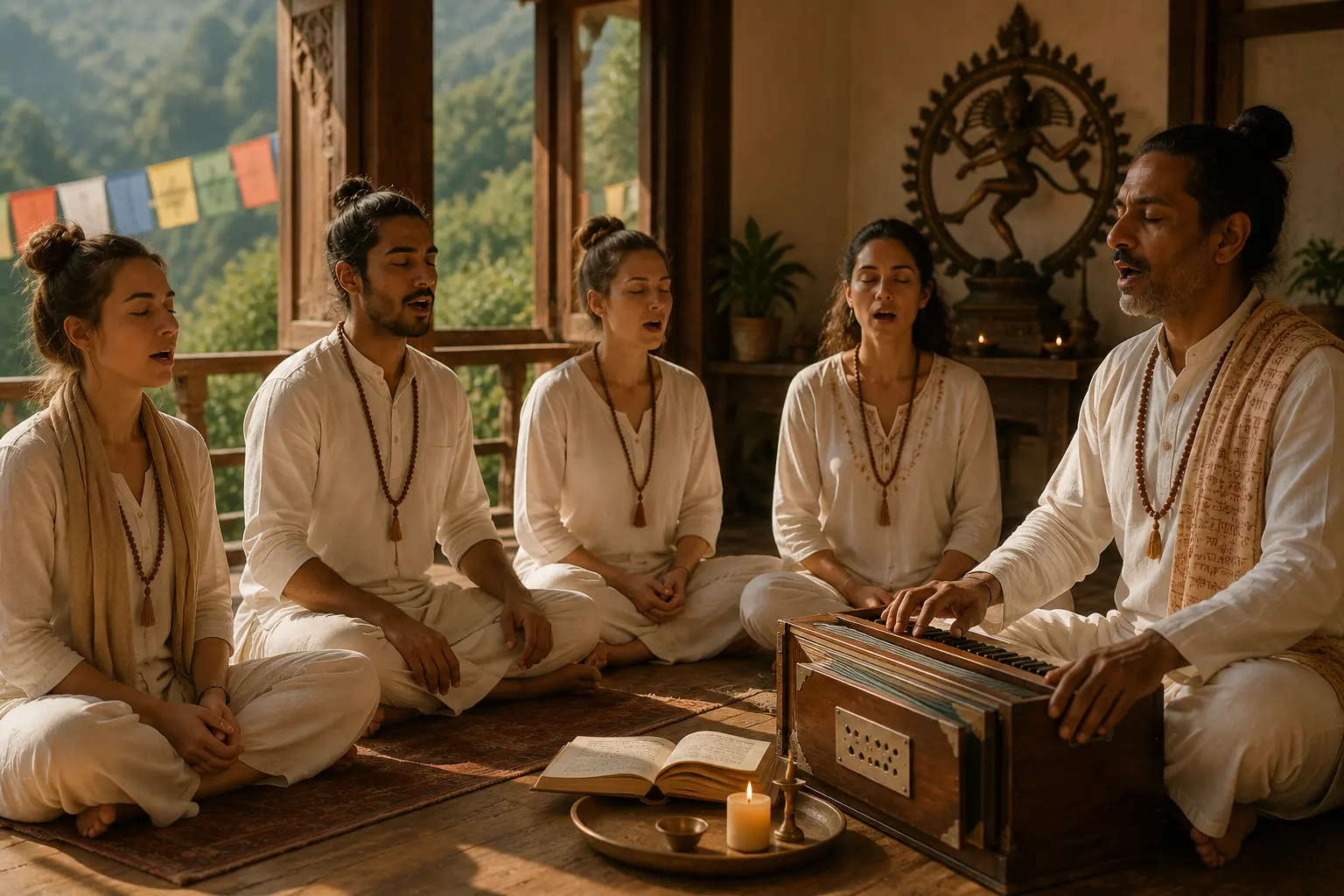
A mantra is a sound or phrase repeated with attention, nothing more complicated than that at its core. The word comes from Sanskrit, “man” for mind and “tra” for freeing, so a mantra is basically a tool for pulling the mind out of the loop it usually runs on all day.
A few that come up most often at a yoga ashram in Nepal:
- Om, the most basic sound there is
- Gayatri Mantra, chanted for clarity and wisdom
- Shanti Mantra, usually recited to close a session, asking for peace
There’s more behind this than tradition alone, as it turns out. A pilot fMRI study on PubMed/NCBI found that chanting Om out loud produced measurable deactivation in brain regions tied to stress and anxiety, an effect the researchers compared to vagus nerve stimulation therapy.
Who This Kind of Retreat Actually Suits?
People hear the word “ashram” and assume it’s only for lifelong yogis or the extremely spiritual. It really isn’t, not even close.
A few types it tends to suit well:
- Complete beginners with zero background in yoga or meditation
- Anyone genuinely burnt out and wanting real distance from a phone
- Travellers who’d rather have some structure than another loose sightseeing itinerary
- People more curious about the philosophy behind yoga than the postures themselves
- Anyone coming off a rough patch who wants a slower pace for a week or two
Anyone with a recent surgery, a serious heart condition, or an early pregnancy should mention it before booking, so the schedule can be adjusted.
There’s also an Ayurvedic doctor and massage on request, which some guests lean on to ease into the physical side of things if postures feel unfamiliar at first.
Nepal Yoga Home’s teacher training programmes and its founder, Dr. Prakash Acharya, can help work out what actually fits before anyone locks in dates.
Considering a Traditional Yoga Ashram in Nepal Retreat?
Reading about asana, meditation and mantra chanting only gets someone so far, honestly. The real shift happens the first morning it actually starts, sitting in a hall at sunrise, chanting next to a dozen strangers.
Nepal Yoga Home has been running programmes like this on the edge of the Nagarjun forest for years and holds Yoga Alliance registration for its teacher training standards.
Have a look at the retreat options, or head straight to booking if the dates are already decided.
Frequently Asked Questions
Is a Yoga Ashram Retreat Safe for Beginners?
Yes. Teachers adjust postures, breathing and meditation length based on where each person is actually starting from, so nobody’s stuck trying to keep pace with an advanced practitioner across the room. Built around meeting people where they are, not the other way round.
Anyone with a recent surgery, a serious heart condition or an early pregnancy should mention it before booking so the plan can be adjusted.
How Long Should a First Stay Be?
One to two weeks usually works best for a first visit, enough time to actually settle in rather than just get used to it and then leave. A shorter three or four day stay works as a taste test, while a 21-day retreat or a full month suits someone after a deeper reset, or planning to roll straight into teacher training afterward.
Is the Food Strictly Vegetarian?
Meals at most Nepal ashrams are simple and vegetarian. Dal, rice, seasonal vegetables and tea on tap through the day, all meant to keep energy steady through a full day of practice. Less about restriction, more about what actually works for the routine.
Can This Be Combined With Yoga Teacher Training?
Yes, plenty of people use a short ashram stay as a warm-up before a longer 200-hour teacher training course. Getting used to the rhythm, the meditation, and the chanting beforehand tends to soften the shock once the more intensive training actually begins.