


Meditation Retreat in Nepal: 7-Step Complete Guide to Finding Peace, Focus & Inner Awareness
When it’s 11 pm, you’re lying in bed, and your brain is replaying a meeting from Tuesday, an email you forgot to send and something awkward you said in 2019.
Does this sound familiar to you? Most of us just call it being busy. A weekend away doesn’t touch it and scrolling makes it worse. That’s roughly why people end up searching for a meditation retreat in Nepal.
The idea is simple. You leave your phone habits behind, sit in a quiet place, and let trained teachers walk you through breathing, posture and silence, one day at a time. No prior experience needed.
This guide is built around three things people usually want: peace, focus and inner awareness. Across seven steps, we’ll cover how to pick a retreat, what you’ll actually practise, what a day looks like, and how to keep going once you’re home.
Step 1: Work Out Which Style Suits You
Search for a meditation retreat in Kathmandu or Pokhara and you’ll find four main styles:
- Vipassana: Ten days of strict silence, usually donation-based. The classic pick for a silent meditation retreat in Nepal.
- Monastery courses: Tibetan Buddhist teachings, talks and long sitting sessions.
- Yoga and meditation: Breathwork, posture, chanting and sitting practice in one routine. Nepal Yoga Home sits here.
- Wellness and sound healing: Singing bowls, Ayurveda and gentler sessions.
Step 2: Understand Why Nepal Works
Nepal is where the Buddha was born, and the Kathmandu Valley is full of working monasteries. Hindu and Buddhist traditions sit side by side, so you’ll hear chanting at dawn and see prayer flags everywhere.
Head out to the forested Nagarjun foothills and it gets properly quiet. That setting does a lot of the work for you, which is why a meditation retreat in Nepal feels nothing like a class back home.
Step 3: Choose Your Length
A 10 day meditation retreat in Nepal is a popular first choice, but you’ve got options:
| Length | Best for | Option |
| 1 week | Testing the water | 1-week breathing and meditation |
| 10 days | A real reset | 10-day meditation holiday |
| 2 weeks | Building a routine | 2-week pranayama and meditation retreat in Kathmandu |
| 3 weeks | Going deeper | 3-week guided meditation |
| 1 month | Full immersion | One-month meditation retreat in Nepal |
Searching for a meditation retreat Nepal for beginners? Any row works, since the teaching starts with the basics.
Step 4: Practise for Peace, Focus and Inner Awareness
- Peace: Relaxation, slow pranayama and yoga nidra calm the body first. Slow the breath and the mind usually follows. Most people feel this in the first few days.
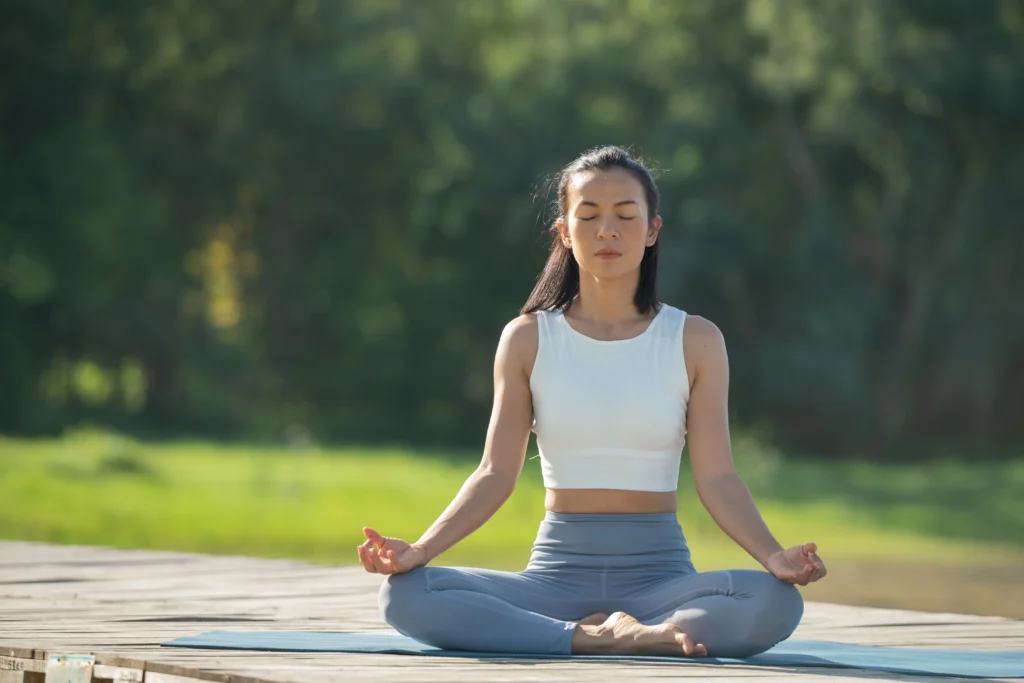
- Focus: A steady seat, hand mudras and mantra chanting give your attention something to hold. The mind still wanders. You just get quicker at noticing.
- Inner awareness: Once you’re settled, you watch your breath and thoughts without fighting them. Silent sitting and mindfulness belong here.
Step 5: What to Expect at a Meditation Retreat, Hour by Hour
Nepal Yoga Home’s rough daily flow looks like this:
- 7 am: yoga posture practice
- 8 am: breathing and meditation
- 9 am: breakfast, then free time
- 12 pm: relaxation and chanting
- 4 pm: self-practice or silent sitting
- 6 pm: philosophy and meditation
- 9 pm: silence
Timings shift with the teacher and the season.
Step 6: Plan the Season, Cost and Packing
- Season: The best time for a meditation retreat in Nepal is spring (March to May) or autumn (September to November). Monsoon is wetter, but indoor programmes keep running.
- Cost: The cost of a meditation retreat in Nepal depends on style, length and room type, so ask for inclusions in writing. Nepal Yoga Home’s course covers accommodation, three meals and herbal tea.
- Packing: Warm layers, loose clothes, a journal and any medication. Mornings get cold.
- Visa: Most travellers get one on arrival, but check current rules.
Step 7: Practise Safely and Take It Home
Don’t force your mind quiet. It backfires. Deep meditation isn’t right for everyone, especially with serious mental health conditions, and a retreat isn’t clinical treatment. If that’s you, talk to your doctor and the teachers first, or start with the gentler two-week stress management retreat.
Before you book, check:
- Who the teachers are and how long they’ve taught
- A written daily schedule
- What the fee covers
- Whether beginners are welcome
At home, keep it small. Ten to twenty minutes at the same time daily, or a 3-hour online meditation session for a bit of structure.
Conclusion
A meditation retreat in Nepal won’t fix your life in a week. What it gives you is a few reliable tools and enough quiet to try them. Peace comes first, focus follows, and awareness shows up when you stop chasing it. If you want a meditation retreat in Nepal that starts with the basics, Nepal Yoga Home is a good place to begin. Read what past students say on the testimonials page, then send your dates through the booking page.
Frequently Asked Questions
Do I need experience to join?
No, and most people arrive as complete beginners. Nepal Yoga Home’s course starts with basic breathing and sitting, then adds deeper techniques as the days pass. All you really need is some patience with yourself.
Is the retreat completely silent?
Only some are. Vipassana centres keep strict silence for ten days, while a yoga and meditation programme usually has guided classes with silent sitting built in. Check the daily schedule before you book so nothing surprises you.
How long should my first retreat be?
A week to ten days is plenty for a first go. It’s long enough to settle in without feeling trapped. If you love it, adding more time later is easy.
Is it safe if I have anxiety or trauma?
Many people find meditation calming, but deep practice doesn’t suit everyone. A retreat is no replacement for clinical care. Talk to your doctor and the teachers before you book.
What’s included in the fee?
At Nepal Yoga Home, you get accommodation, three meals a day and herbal tea, plus the daily classes. Room type changes the price. Always confirm inclusions in writing before you pay.